
About Frederick Judd Waugh
Lived 1861 – 1940 (aged 78). Frederick Judd Waugh was an American painter.
Frederick Judd Waugh (September 13, 1861 in Bordentown, New Jersey – September 10, 1940) was an American artist, primarily known as a marine artist. During World War I, he designed ship camouflage for the U.S. Navy, under the direction of Everett L. Warner.
Background and paintings Waugh was the son of a well-known Philadelphia portrait painter, Samuel Waugh. He studied at the Pennsylvania Academy of Fine Arts with Thomas Eakins, and at the Académie Julian in Paris with Adolphe-William Bouguereau. After leaving Paris, he moved to England, residing on the island of Sark in the English Channel, where he made his living as a seascape painter. In 1898 he was recorded as living in Heath and Reach, Bedfordshire.
In 1908, Waugh returned to the U.S., settling in Montclair Heights, New Jersey. He had no studio until art collector William T. Evans (a railroad financier and President of the dry goods firm, Mills Gibbs Corporation) offered him one in exchange for one painting a year. In later years, he lived on Bailey Island, Maine, and in Provincetown, Massachusetts.
Waugh’s marinescapes were highly acclaimed, garnering him the Popular Prize at the Carnegie International Exhibition for five years in a row, a feat accomplished by no other artist. In 1914, he was a judge of the art exhibit on Monhegan Island, ME during the 1914 Ter-Centenary celebration of the Voyage of Captain John Smith.
In addition to his marinescapes, Waugh sometimes published work in periodicals, such as The Green Sheaf, to which he contributed at least one illustration. He also produced paintings and sketches on legendary and mythological themes; see, for instance, his 1921 sketch “Levitation in Dream No. 3”, and his c.1912 painting “The Knight of the Holy Grail”.
Gallery
Camouflage Service In 1918, Waugh was recommended to serve as a camouflage artist (or camoufleur) for the U.S. Navy, as a member of the Design Section of its marine camouflage unit. That section was located in Washington, D.C., and was headed by American painter Everett L. Warner.
According to a biography of Waugh, “Many large ships, including the Leviathan, were painted according to his designs. Though the enterprise was of course a team effort in which no man played a solo part, he had every reason to be proud of his record. Only one ship with his system of camouflage was lost during the war”. a fairy tale in The English Illustrated Magazine; and, in 1916, the book The Clan of Munes. Intended as a work of American folklore aimed at children, the book lays out the fictional history and adventures of the “Munes, or tribe of American Fairies”, creatures Waugh regarded as a “gift to his fellow countrymen”. He reported that the idea for these driftwood-based fairies had come to him two summers previously when painting at Monhegan, Maine.
Together with his non-marine artworks, these pieces reflect Waugh’s lifelong interest in fairy lore and the supernatural. In an interview with New York City paper The Sun (4 November 1916, p. 9), he asserted that he “dreamed dreams and saw visions—real ones”, and described his history of writing fairy tales, along with his regret at burning the stories he had written while in London.
Don’t just read it —
keep it.
Full-length biographies made to live with: read them, listen on the way to work, watch them tonight.
- E-book
- Audio
- Video
Instant download · yours to keep · every purchase keeps this site free
Important facts
People in Frederick Judd Waugh's life
Named in this biography and alive at the same time

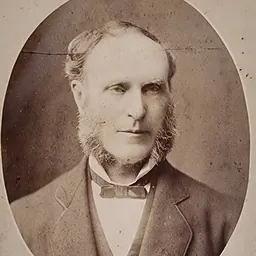

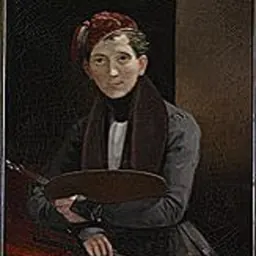
Related people
Same field, nearest in time
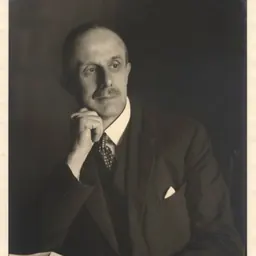
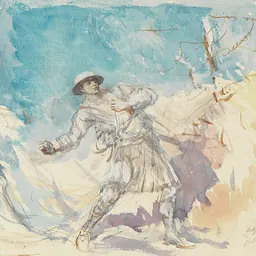


Contemporaries
People whose lives overlapped Frederick Judd Waugh's



Frequently asked questions
Who was Frederick Judd Waugh?
American artist (1861-1940)
When was Frederick Judd Waugh born?
Frederick Judd Waugh was born on 13 September 1861 in Bordentown City.
When did Frederick Judd Waugh die?
Frederick Judd Waugh died on 10 September 1940 in Barnstable County.
What was Frederick Judd Waugh's occupation?
Frederick Judd Waugh was a painter.
What nationality was Frederick Judd Waugh?
Frederick Judd Waugh was American.
Sources & further reading
· Wikipedia: Frederick Judd Waugh
· DBpedia: Frederick Judd Waugh
Cite this page
APA: Biography.guide. (2026). Frederick Judd Waugh. https://biography.guide/frederick-judd-waugh/
MLA: "Frederick Judd Waugh." Biography.guide, https://biography.guide/frederick-judd-waugh/.
Chicago: "Frederick Judd Waugh." Biography.guide. https://biography.guide/frederick-judd-waugh/.
Data last updated: 2026-09-26 · Spot an error? Report a correction.
Page generated 2026-09-27 05:13 UTC