
About Frederick J. Clarke
Lived 1915 – 2002 (aged 86). Frederick J. Clarke was an American military personnel.
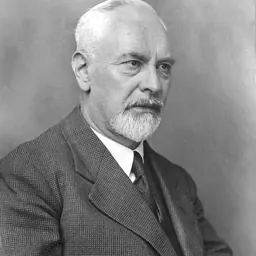
Frederick James Clarke (1 March 1915 – 4 February 2002) was a civil and military engineer with the United States Army Corps of Engineers. Clarke was one of three commissioners appointed to run the District of Columbia from 1960 to 1963. He rose to the rank of lieutenant General as the Chief of Engineers.
A 1937 graduate of the United States Military Academy at West Point, New York, where he graduated fourth in his class, Clarke earned a Master of Science degree in civil engineering from Cornell University in 1940. During World War II he commanded an engineer battalion on Ascension Island in the South Atlantic, and he supervised the construction of a military airfield there that became a key refueling point for transatlantic flights to Africa. He then served on the staff of the Army Service Forces. After the war ended he was area engineer of the Manhattan Project's Hanford Engineer Works, and was executive officer of the Armed Forces Special Weapons Project at Sandia Base.
As district engineer of the Trans-East District of the Corps from 1957 to 1959, he was responsible for military construction in Pakistan and Saudi Arabia. From 1960 to 1963 he was one of the three federally appointed commissioners that governed the District of Columbia and initiated the construction of the Washington Metro railway and subway system. As chairman of the District's zoning commission, he participated in early debates over the proposals to build a bridge near the Three Sisters Islands in the Potomac River. He was the Director of Military Construction in the Office of the Chief of Engineers from 1963 1965, the Commanding General of the Army Engineer Center and Commandant of the United States Army Engineer School at Fort Belvoir from 1965 to 1966, and Deputy Chief of Engineers from 1966 to 1969. As Chief of Engineers from 1969 to 1973 he guided the Corps as it devoted increased attention to the environmental impact of its work.
Early life
Clarke was born in Little Falls, New York on 1 March 1915. His father was a machine shop foreman at a local dairy equipment manufacturer. His mother died in the 1918 influenza pandemic. He had a sister. He was educated at a parochial elementary school and the local high school in Little Falls. Following his junior high school year he worked for Western Union during the summer, and after graduation he joined it full time as a teletype operator. He intended to save enough money to study engineering at the University of Michigan, and attempted to save for tuition. One day he saw an advertisement for a competitive examination for entry to the United States Military Academy at West Point, New York, and he took it. A local man who had graduated from West Point thirty years before gave him a letter of introduction to his local congressman, Representative James Wolcott Wadsworth Jr. of New York's 39th congressional district, who appointed him.
Clarke entered West Point on 1 July 1933.He graduated fourth in the class of 1937 on 12 June 1937 and was commissioned as a second lieutenant in the United States Army Corps of Engineers. He was assigned to the 5th Engineer Regiment at Fort Belvoir, Virginia, While at West Point he met and courted Isabel Van Slyke, who worked for the League of Nations Association as a research assistant. They were married in the Chapel of the Most Holy Trinity at West Point in September 1938. They had a son, Pat, and two daughters, Isabel and Nancy. On returning to the United States in 1959, her served for a year as chief of staff of the United States Army Engineer Training Center at Fort Leonard Wood, Missouri.
From 1874 to 1967, the District of Columbia was governed by three federally appointed commissioners (one a civil engineer, selected from the Army Corps of Engineers). On 1 August 1960, President Dwight D. Eisenhower appointed Clarke as the District's Engineer Commissioner. He was the technician-in-chief, called to address the problems such as traffic gridlock, economic development and low levels of funding. At one point early in his term, he was the only commissioner available for full-time duty, because one post was vacant and the other commissioner had suffered a heart attack. In the early 1960s, he participated in talks that led to the compact agreement for construction of the Washington Metro railway and subway system. As chairman of the District's zoning commission, he participated in early debates over the controversial proposal to build an interstate bridge near the Three Sisters Islands in the Potomac River, and over a planned freeway through the heart of the District.
After his term as Engineer Commissioner ended on 8 July 1963,
When Clarke retired from the Army on 1 July 1973 after 36 years of service, he was the last member of the West Point class of 1937 on active duty. and was buried in Arlington National Cemetery.
Dates of rank
Don’t just read it —
keep it.
Full-length biographies made to live with: read them, listen on the way to work, watch them tonight.
- E-book
- Audio
- Video
Instant download · yours to keep · every purchase keeps this site free
Important facts
People in Frederick J. Clarke's life
Named in this biography and alive at the same time



Related people
Same field, nearest in time



Contemporaries
People whose lives overlapped Frederick J. Clarke's



Frequently asked questions
Who was Frederick J. Clarke?
United States general (1915-2002)
When was Frederick J. Clarke born?
Frederick J. Clarke was born on 1 March 1915 in Little Falls.
When did Frederick J. Clarke die?
Frederick J. Clarke died on 4 February 2002.
What was Frederick J. Clarke's occupation?
Frederick J. Clarke was a military personnel.
What nationality was Frederick J. Clarke?
Frederick J. Clarke was American.
Sources & further reading
· Wikipedia: Frederick J. Clarke
· DBpedia: Frederick J. Clarke
Cite this page
APA: Biography.guide. (2026). Frederick J. Clarke. https://biography.guide/frederick-j-clarke/
MLA: "Frederick J. Clarke." Biography.guide, https://biography.guide/frederick-j-clarke/.
Chicago: "Frederick J. Clarke." Biography.guide. https://biography.guide/frederick-j-clarke/.
Data last updated: 2026-09-25 · Spot an error? Report a correction.
Page generated 2026-09-27 05:11 UTC