
Frederick Hewitt
Australian company director and politician
About Frederick Hewitt
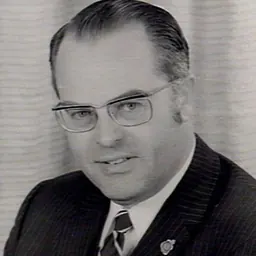
Lived 1908 – 1976 (aged 68). Frederick Hewitt was an Australian politician and business executive.
Frederick Maclean ("Mac") Hewitt (11 July 1908 – 22 November 1976) was an Australian company director and politician. He was a member of the New South Wales Legislative Council for the 21 years from 1955 to 1976 representing the Liberal Party, serving as Leader of the Liberal Party in the council as well as on the Askin cabinet as Minister for Child and Social Welfare and later as Minister for Labour and Industry. He continued to serve in the Lewis and Willis cabinets in the portfolios of Labour and Industry, Consumer Affairs and Federal Affairs. Following the Coalition loss at the 1976 election, Hewitt continued to serve as Deputy Leader of the Opposition and leader of the Liberal Party in the council until his retirement, before his death a few months later.
Early years and background Mac Hewitt (as he was commonly known) was born in Muswellbrook in 1908, the son of grazier Frederick James Hewitt and Ida May Watt. Hewitt received his early education at Muswellbrook Public School and when his family moved to Neutral Bay in Sydney he received his education at Neutral Bay Superior Public School, and Neutral Bay Junior Technical School. Leaving school at age sixteen, Hewitt commenced work with the Commercial Banking Company of Sydney and continued to work there until 1945. On 19 January 1939 Hewitt married Enid Brown and they had one daughter and one son. Following the war Hewitt became a company director for various companies including as assistant secretary of City and Suburban Timber Merchants (1954–1956), a director of Commonwealth New Guinea Timbers (1953–1968), and the Australian New Guinea Corporation (1961–1968).
On 11 March 1971, Hewitt was promoted to the more senior position as Minister for Labour and Industry. As the Minister responsible for industrial relations laws, Hewitt introduced the Industrial Arbitration (Amendment) Bill (1971), which introduced the secret ballot requirement for trade unions in polls on the question of strike action. This innovation, much to Hewitt's surprise, led to significant resistance from the trade union movement and the Labor Party. In response, Hewitt declared to the Sydney Morning Herald: "I'm NOT anti-union and I'm not a bogeyman. In fact I'm a bit astonished at the trauma [the bill] seems to have aroused." In the same article, The Herald opined that "A less bogeyman-like figure than Mr Hewitt would be hard to imagine. Unflappable he is called by one Cabinet colleague. Bland and imperturbable, with a dry sense of humour, he appears to be completely unmoved by the furore over the strike ballot legislation." A quiet and well-performing member of the cabinet, on 4 December 1973 Askin gave Hewitt an additional portfolio as the inaugural Minister for Consumer Affairs, and with Tom Lewis succeeding Askin as Premier, Hewitt was given the new position of Minister for Federal Affairs on 3 January 1975. As Minister for Federal Affairs, Hewitt led the Division of Federal Affairs within the Premier's Department and was responsible for inter-governmental relations between the State and Federal governments, this was the first time a government in Australia had created a portfolio with a specific responsibility for inter-governmental relations.
Later life He served in these roles through the ministry of Sir Eric Willis until the defeat of the government at the 1976 election, at which point he became the Deputy Leader of the Opposition in the Council. On his departure from the Ministry, Hewitt was permitted to retain the title "The Honourable" for life. However, Hewitt was to serve in opposition only briefly before his retirement on 31 July 1976. Hewitt was not able to enjoy retirement however as he died a few months later on 22 November 1976. On his death the new Premier Neville Wran said of Hewitt during his condolence motion in the Legislative Assembly: "He was a down-to-earth man and one who was well regarded, not only within the business world but also within the trade-union movement. Mac was a practical and realistic man. [...] It is a tragedy that Mac Hewitt's death came so soon after his retirement from the Legislative Council. He had earned his retirement. He had served his State and the Parliament and he had looked forward to many years in comfortable retirement – a retirement he had so justly earned."
Don’t just read it —
keep it.
Full-length biographies made to live with: read them, listen on the way to work, watch them tonight.
- E-book
- Audio
- Video
Instant download · yours to keep · every purchase keeps this site free
Important facts
People in Frederick Hewitt's life
Named in this biography and alive at the same time



Related people
Same field, nearest in time




Contemporaries
People whose lives overlapped Frederick Hewitt's


Frequently asked questions
Who was Frederick Hewitt?
Australian company director and politician (1908–1976)
When was Frederick Hewitt born?
Frederick Hewitt was born on 11 July 1908 in Muswellbrook.
When did Frederick Hewitt die?
Frederick Hewitt died on 22 November 1976 in Manly.
What was Frederick Hewitt's occupation?
Frederick Hewitt was a politician and business executive.
What nationality was Frederick Hewitt?
Frederick Hewitt was Australian.
Sources & further reading
Cite this page
APA: Biography.guide. (2026). Frederick Hewitt. https://biography.guide/frederick-hewitt-politician/
MLA: "Frederick Hewitt." Biography.guide, https://biography.guide/frederick-hewitt-politician/.
Chicago: "Frederick Hewitt." Biography.guide. https://biography.guide/frederick-hewitt-politician/.
Data last updated: 2026-09-20 · Spot an error? Report a correction.
Page generated 2026-09-27 05:22 UTC