
About Frederick Gutekunst
Lived 1831 – 1917 (aged 85). Frederick Gutekunst was an American photographer and war photographer.
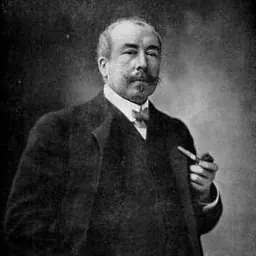
Frederick Gutekunst (September 25, 1831 – April 27, 1917) was an American photographer from Philadelphia, Pennsylvania. He opened his first photographic portrait studio with his brother in 1854 and successfully ran his business for sixty years. He grew to national prominence during the American Civil War and expanded his business to include two studios and a large phototype printing operation. He is known as the "Dean of American Photographers" due to his high quality portraits of dignitaries and celebrities. He worked as the official photographer of the Pennsylvania Railroad and received national and international recognition for his photographs of the Gettysburg battlefield and an innovative 10-foot long panoramic photograph of the Centennial Exposition.
Early life and education Gutekunst was born in 1831. His father was a cabinetmaker and the family name Gutekunst means "good art" in German. Most sources list Gutekunst's place of birth as Philadelphia. However, his obituary in the Photographic Journal of America lists Gutekunst's birthplace as Germany.
His father wanted young Frederick to become a lawyer and sent him to study law for six years under Joseph Simon Cohen, prothonotary to the Supreme Court of Pennsylvania. Gutekunst found the study of law "dry and uninteresting" and instead became interested in the emerging photographic technique of the daguerreotype. He was a frequent visitor to Marcus Aurelius Root's gallery and learned the craft of daguerreotype from photography pioneer Robert Cornelius. Gutekunst displayed an aptitude for chemistry and progressed the technique to convert a daguerreotype image unto a printable electrotype plate.
Frederick's father noticed his son's interest in chemistry and found an internship for him with a pharmacist, Frederick Klett. Gutekunst undertook a four-year apprenticeship with Klett and graduated from the Philadelphia College of Pharmacy in 1853. He joined the Franklin Institute and used their laboratory facilities to conduct scientific experiments. He created his own photographic plates coated with collodion and made ambrotypes of his friends in the back of the drug store. He kept detailed listings of those he photographed and one of the ledgers is housed at the Library Company of Philadelphia.
He worked as the official photographer of the Pennsylvania Railroad and in 1875 photographed structures and scenery
Gutekunst became known as the "Dean of American Photography" and was recognized for his photographs of the Gettysburg battlefield.
Gutekunst was as much artist as businessman and on a visit to Germany in 1878 he purchased the rights for the Phototype process.
Some of the products of this venture were illustrations for books such as the Biographical Album of Prominent Pennsylvanians, Artistic Houses, and Artistic Country Seats published by D. Appleton & Co. of New York. Also, Gutekunst began to use what we would now call a panoramic camera which took a photo of one hundred and eighty degrees and from which the studio could produce a print thirty-six inches in length.
On the morning of January 26, 1886, a fire started at 715–719 Arch St. which burned down the five-story building at that address. Additionally, the fire spread across the street to the Gutekunst establishment and caused approximately $10,000 in damage.
By 1893 Gutekunst had been in business almost forty years and an additional studio was needed for the growing enterprise. The new studio was established in an upscale part of Philadelphia at 1700 N. Broad St. with William Braucher A year before his death Gutekunst incorporated his business and some of the older employees became stockholders, but Braucher resigned at that time. Gutekunst had successfully run his photographic studio for sixty years.
Frederick Gutekunst died April 27, 1917. Eight weeks earlier he fell down the steps of his N. Bouvier residence returning to his studio after lunch at home. This fall and Bright's disease seem to have caused his death.
Gallery
Don’t just read it —
keep it.
Full-length biographies made to live with: read them, listen on the way to work, watch them tonight.
- E-book
- Audio
- Video
Instant download · yours to keep · every purchase keeps this site free
Important facts
People in Frederick Gutekunst's life
Named in this biography and alive at the same time

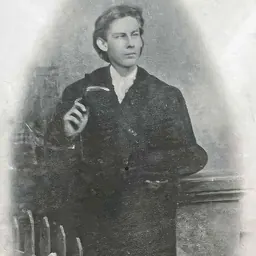
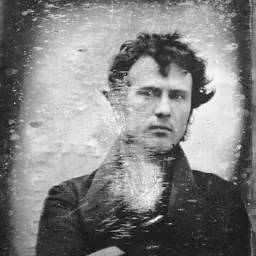
Related people
Same field, nearest in time
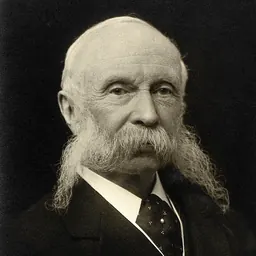
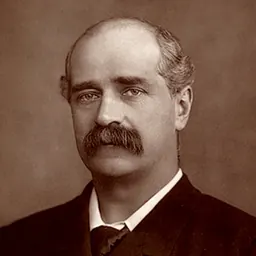


Contemporaries
People whose lives overlapped Frederick Gutekunst's





Frequently asked questions
Who was Frederick Gutekunst?
American photographer (1831-1917)
When was Frederick Gutekunst born?
Frederick Gutekunst was born on 25 September 1831 in Germantown.
When did Frederick Gutekunst die?
Frederick Gutekunst died on 27 April 1917 in Philadelphia.
What was Frederick Gutekunst's occupation?
Frederick Gutekunst was a photographer and war photographer.
What nationality was Frederick Gutekunst?
Frederick Gutekunst was American.
Sources & further reading
· Wikipedia: Frederick Gutekunst
· DBpedia: Frederick Gutekunst
Cite this page
APA: Biography.guide. (2026). Frederick Gutekunst. https://biography.guide/frederick-gutekunst/
MLA: "Frederick Gutekunst." Biography.guide, https://biography.guide/frederick-gutekunst/.
Chicago: "Frederick Gutekunst." Biography.guide. https://biography.guide/frederick-gutekunst/.
Data last updated: 2026-09-22 · Spot an error? Report a correction.
Page generated 2026-09-27 05:24 UTC