
Frederick Evans
Officer of the Royal Navy and hydrographer
About Frederick Evans
Lived 1815 – 1885 (aged 70). Frederick Evans was a hydrographer, military officer and geographer.
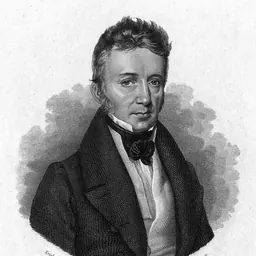
Sir Frederick John Owen Evans (9 March 1815 – 20 December 1885) was an officer of the Royal Navy. He became a distinguished hydrographer during his career and served as Hydrographer of the Navy.
Biography Evans, son of John Evans, a master in the Royal Navy, was born on 9 March 1815. He entered the navy as a second-class volunteer in 1828. After serving in and he was transferred in 1833 to , under Captain Richard Owen, and spent three years in surveying the coasts of Central America, the Demerara River, and the Bahama Banks. Evans subsequently served in the Mediterranean on board , the flagship of the Mediterranean Fleet, and then on , , , , and , passing through the different ranks of the 'master's' line, the officers then charged with the duties of navigation. In 1841 Evans was appointed master of , and for the next five years he was employed in surveying the Coral Sea, the Great Barrier Reef of Australia, and Torres Straits. Joseph Jukes, the geologist, was on board the Fly, and wrote an account of the expedition.
After a short spell of duty in the Isle of Man, Evans returned, in 1847, in , under Admiral Stokes, to New Zealand, where he was engaged for four years in surveying the Middle and South Islands. During the Crimean War he served in the Baltic Sea, receiving the special thanks of Sir Charles Napier for his share in piloting the fleet through Åland. and promoted to Knight Commander of the same order in the 1881 Birthday Honours. He was vice-president of the Royal Geographical Society from 1879 to 1881, and president of the geographical section of the British Association in 1876. After resigning the post of hydrographer, Evans was appointed one of the British delegates to the International Meridian Conference held at Washington, D.C., in 1885, to fix a prime meridian and universal day. Nearby, on Banks Peninsula, Mount Evans is also named after Evans. In Kaikiekie / Bradshaw Sound in Fiordland, it is likely that Evans Head is named after Evans.
List of publications Philosophical Transactions of the Royal Society
Other publications . Full text of the fourth edition (1875) available at The Internet Archive
Don’t just read it —
keep it.
Full-length biographies made to live with: read them, listen on the way to work, watch them tonight.
- E-book
- Audio
- Video
Instant download · yours to keep · every purchase keeps this site free
Important facts
more
Sir Frederick Evans, Evans, F.J., Frederick J.People in Frederick Evans's life
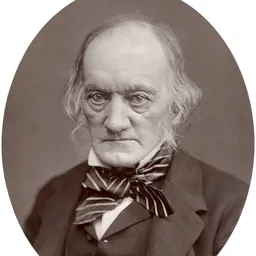
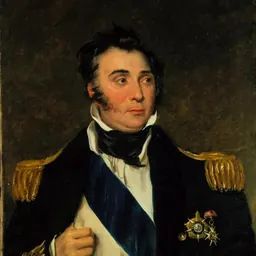
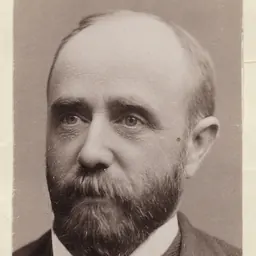
Named in this biography and alive at the same time



Related people
Same field, nearest in time



Contemporaries
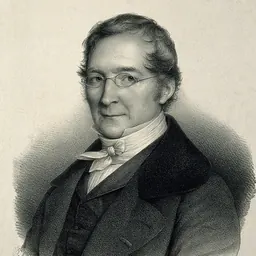
People whose lives overlapped Frederick Evans's

Frequently asked questions
Who was Frederick Evans?
officer of the Royal Navy and hydrographer (1815-1885)
When was Frederick Evans born?
Frederick Evans was born on 9 March 1815 in Southsea.
When did Frederick Evans die?
Frederick Evans died on 20 December 1885 in Kensington.
What was Frederick Evans's occupation?
Frederick Evans was a hydrographer, military officer and geographer.
Sources & further reading
· DBpedia: Frederick Evans (Royal Navy officer)
Cite this page
APA: Biography.guide. (2026). Frederick Evans. https://biography.guide/frederick-evans/
MLA: "Frederick Evans." Biography.guide, https://biography.guide/frederick-evans/.
Chicago: "Frederick Evans." Biography.guide. https://biography.guide/frederick-evans/.
Data last updated: 2026-09-20 · Spot an error? Report a correction.
Page generated 2026-09-27 05:22 UTC