
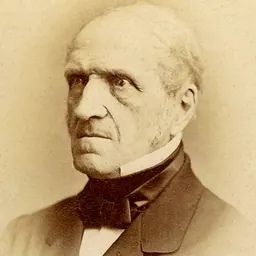
About Frederick Dixon-Hartland
Lived 1832 – 1909 (aged 77). Frederick Dixon-Hartland was a British politician.
Sir Frederick Dixon Dixon-Hartland, 1st Baronet, (1 May 1832 – 1909) was an antiquary, banker and a Conservative politician who sat in the House of Commons from 1881 to 1909. Life and work
Hartland was born in a small rural village, Charlton Kings, Gloucestershire, or close to Evesham, Worcestershire the son of Nathaniel Hartland and his wife Eliza Dixon of dissenting Christian sects, termed at the time nonconformists. He was educated at nearby Cheltenham College and in London at Clapham Grammar School.
Hartland was a traveller — he published Tapographia; or a collection of tombs of royal and distinguished families, collected during a tour of Europe. He was elected Fellow of the Society of Antiquaries and a Fellow of the Royal Geographical Society in 1854. in addition to his other home and agricultural holding at the time The Oaklands, Charlton Kings.
In business, he was a partner in Woodbridge Lace & Co and the Uxbridge Old Bank, a bank of a main historic market town in Middlesex for which town and its many nearby parishes he was MP – Middlesex centred on today's western and central London and for most purposes was abolished in 1965. In 1891, he sold the Smithfield Bank to Birmingham and Midland Bank
Dixon Hartland stood unsuccessfully at Hereford in 1880. He was elected as MP for Evesham the next year. He donated chancel gates and screens to St Mary's church also known as Cheltenham Minster at nearby Cheltenham. In 1885 he stood at Uxbridge with the same party and held the seat until his death in 1909. He was a Conservative.
Dixon Hartland was a County Alderman for Middlesex in 1889, a Deputy Lieutenant for the City of London, and a justice of the peace for Gloucestershire, Worcestershire and Middlesex. He was created a baronet on 3 October 1892.
In 1895 he was appointed Chairman of the Thames Conservancy. He married his second wife, 28 years his junior, in 1895 Agnes Chichester Christie. His latter-life London home was at 14 Chesham Place, Belgravia/Knightsbridge, and he died on 15 November 1909 at Glyndebourne, East Sussex.
Don’t just read it —
keep it.
Full-length biographies made to live with: read them, listen on the way to work, watch them tonight.
- E-book
- Audio
- Video
Instant download · yours to keep · every purchase keeps this site free
Important facts
Related people
Same field, nearest in time



Contemporaries
People whose lives overlapped Frederick Dixon-Hartland's




Frequently asked questions
Who was Frederick Dixon-Hartland?
British politician (1832-1909)
When was Frederick Dixon-Hartland born?
Frederick Dixon-Hartland was born on 1 May 1832 in Charlton Kings, Gloucestershire.
When did Frederick Dixon-Hartland die?
Frederick Dixon-Hartland died on 15 November 1909 in Glyndebourne.
What was Frederick Dixon-Hartland's occupation?
Frederick Dixon-Hartland was a politician.
What nationality was Frederick Dixon-Hartland?
Frederick Dixon-Hartland was British.
Sources & further reading
· Wikipedia: Frederick Dixon-Hartland
· DBpedia: Frederick Dixon-Hartland
Cite this page
APA: Biography.guide. (2026). Frederick Dixon-Hartland. https://biography.guide/frederick-dixon-hartland/
MLA: "Frederick Dixon-Hartland." Biography.guide, https://biography.guide/frederick-dixon-hartland/.
Chicago: "Frederick Dixon-Hartland." Biography.guide. https://biography.guide/frederick-dixon-hartland/.
Data last updated: 2026-09-21 · Spot an error? Report a correction.
Portrait: Wikimedia Commons · author & licence
Page generated 2026-09-27 05:01 UTC