
About Frederick Brearey
Lived 1816 – 1896 (aged 79–80). Frederick Brearey was a British physician and inventor.
Frederick William Brearey (born on 18 February 1816 in Stillingfleet and died on 31 January 1896 in London) was a British aeronautical inventor and pioneer. He cofounded the Aeronautical Society of Great Britain in 1866, now the Royal Aeronautical Society, and served as its Honorary Secretary for thirty years until his death. He is widely regarded as one of the pioneers and founding figures of aeronautics and heavier-than-air flight.
Brearey played a key role in proposing and organizing the First Aeronautical Exhibition at The Crystal Palace, Sydehnam, London, in 1868. This exhibition brought together 77 entries, including models, plans, machinery, and aerial apparatus illustrating contemporary experiments and concepts in flight. Although many contributions were experimental, the event heightened public and scientific interest in aerial navigation.
Throughout his tenure with the Aeronautical Society, Brearey maintained correspondence with leading innovators of the era and helped foster international exchange on flight research. Archival letters show his engagement with other experimenters, including James Glaisher and John Stringfellow, among others.
Brearey made a "wave action" aeroplane model driven by a rubber band. It had rigid spars (elsewhere called "bowsprits") which beat up and down, trailing undulating wings of fabric behind them, whose action propelled the model forward with "limited success." He filed for patents on this craft in Britain in 1879 and later in the U.S.
Brearey published more than 15 articles about aeronautical subjects from 1866 to 1883.
The 1880 and 1885 patents, as well as Brearey's correspondences, identify his location at Maidenstone Hill in Greenwich in the Hundred of Blackheath, Kent.
Life
Early life
Frederick William Brearey was born on 18 February 1816 at Stillingfleet, near Scarborough, Yorkshire in England. He was the fourth son of Henry Brearey, a barrister and coroner for the North Riding of Yorkshire. The Brearey family was well-regarded in the region, with Henry noted for his professional success and community impact, as reflected in contemporary obituaries. Henry was a friend of Sir George Cayley, the aristocratic scientist now regarded as the father of aeronautics. Members of Brearey's family witnessed Cayley’s early gliding experiments, and although Brearey later stated he had not been directly influenced by this as a child, Cayley's papers — published in Mechanics' Magazine — became a foundational source for his later work.
Now that public attention was directed to these scientific efforts, and that the balloon was becoming more than a toy, he [Brearey] would at once propose the formation of a society, to be supported by subscriptions and donations, by which experiments could be conducted in its own grounds, and with its own apparatus, for the furtherance of investigations in aërology locomotion.|author=British Association for the Advancement of Science, 1865.
The First Aeronautical Exhibition opened on 25 June 1868 at The Crystal Palace in Sydenham, London, and ran for the following ten days, attracting 77 entries from contemporary experimenters. Brearey coordinated the event's logistics, cataloguing exhibits into seven classes: light engines and machinery; complete working aerial apparatus; models; working models; plans and illustrative drawings; articles connected with aeronautics; and kites or similar devices. To emphasise experimental flight concepts, the exhibition included prises such as £50 from the Shipwrecked Mariners' Society for the best lifesaving kite and £100 from the Duke of Sutherland for a manned, non-balloon machine capable of ascending 120 feet—though the latter went unclaimed—along with an award for the lightest proportional engine, won by John Stringfellow's steam-driven triplane model. A special Jurors' Report documented the displays, providing critical evaluation of the submissions.
Brearey's letters and Society channels fostered international exchanges on flight research, positioning the organisation as a global clearing house for aeronautical knowledge from 1866 onward. He often corresponded with John Stringfellow. Archival records from the Society's collections document Brearey's role in coordinating such interactions, which extended to inventors like Frederick Marriott, the Society's first American member in 1871, who shared glider and airship concepts across the Atlantic. These efforts facilitated the exchange of patents, books, and experimental data, enhancing cross-border awareness of progress in ballooning and mechanical flight during the 1870s and 1880s. Through these networks, Brearey contributed to international collaboration by linking British experimenters with counterparts abroad, such as Otto Lilienthal in Germany and members of French aeronautical societies. In 1875, the Société d’Aviation in France awarded Brearey its Gold Medal in recognition of his efforts to disseminate aeronautical advancements globally, including reports on balloon observations tied to aerology studies and heavier-than-air trials.
Aeronautical research
In the late 1870s, Frederick Brearey developed an experimental model aeroplane based on what he termed the "wave action principle", representing one of his principal contributions to Victorian-era research into heavier-than-air flight. At a time when aeronautical inventors sought alternatives to balloons and conventional propellers, Brearey explored biomimetic propulsion inspired by the undulating motion of aquatic animals. His work aligned with broader debates within the Aeronautical Society of Great Britain, concerning the potential of flexible and non-flapping lifting surfaces.
Constructed around 1879, the wave action model was a small, lightweight demonstrator powered by a rubber-band motor. Its propulsion system employed rigid spars, or "bowsprits", driven to oscillate vertically, producing a travelling wave along attached fabric wings made of silk or similar material. Flexible lever arms extended from a slender, pointed fuselage, allowing vibrations to propagate rearward along the wings. This wave-like motion was intended to generate both lift and thrust by displacing air in a manner analogous to the movement of fish such as skates or rays, distinguishing the design from contemporary fixed-wing or propeller-driven models.
Later life and death In later life, as the membership of the Society dwindled, Brearey experienced severe financial hardship; contemporary legal records identify him as a patentee of no occupation who was imprisoned for debt in the Debtors' Prison for London and Middlesex, having resided at 6 College Place, now Maidenstone Hill, in Greenwich.
Don’t just read it —
keep it.
Full-length biographies made to live with: read them, listen on the way to work, watch them tonight.
- E-book
- Audio
- Video
Instant download · yours to keep · every purchase keeps this site free
Important facts
People in Frederick Brearey's life
Named in this biography and alive at the same time



Related people
Same field, nearest in time



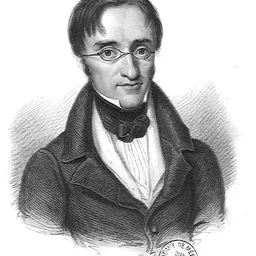
Contemporaries
People whose lives overlapped Frederick Brearey's




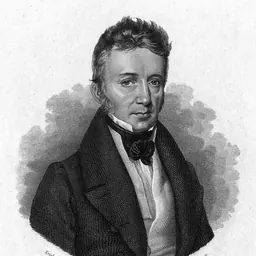
Frequently asked questions
Who was Frederick Brearey?
British aeronautical inventor
When was Frederick Brearey born?
Frederick Brearey was born in 1816 in Stillingfleet.
When did Frederick Brearey die?
Frederick Brearey died on 31 January 1896 in Cornhill.
What was Frederick Brearey's occupation?
Frederick Brearey was a physician and inventor.
What nationality was Frederick Brearey?
Frederick Brearey was British.
Sources & further reading
· Wikipedia: Frederick Brearey
Cite this page
APA: Biography.guide. (2026). Frederick Brearey. https://biography.guide/frederick-brearey/
MLA: "Frederick Brearey." Biography.guide, https://biography.guide/frederick-brearey/.
Chicago: "Frederick Brearey." Biography.guide. https://biography.guide/frederick-brearey/.
Data last updated: 2026-09-20 · Spot an error? Report a correction.
Page generated 2026-09-27 05:17 UTC