
Frédéric Blasius
French violinist, clarinetist, conductor, and composer
About Frédéric Blasius
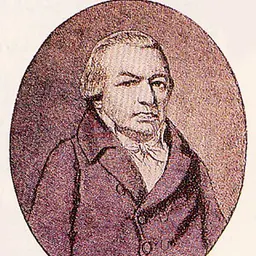
Lived 1758 – 1829 (aged 70–71). Frédéric Blasius was a French conductor, composer, musicologist, bassoonist and flautist.
Frédéric Blasius (24 April 1758, in Lauterbourg – 1829, in Versailles) was a French violinist, clarinetist, conductor, and composer. Born Matthäus (French: Matthieu, Mathieu) Blasius, he used Frédéric as his pen name on his publications in Paris.
Life and career Blasius was born in Lauterbourg, a town in the far northeast corner of France on the Rhineland border of Alsace. This frontier town had been fortified in the late 17th century by Louis XIV and had a large military presence, including many musicians. was from Rastatt in Baden. His father earned his living primarily as a master tailor, but was also a musician and gave his son his first lessons. The young Blasius also received lessons from military musicians; a position he held up to 1801 and again from 1804 to 1816
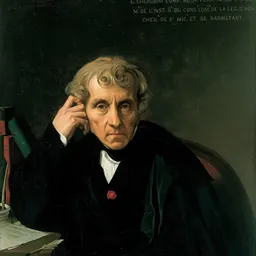
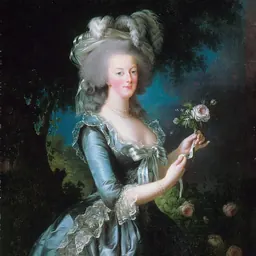
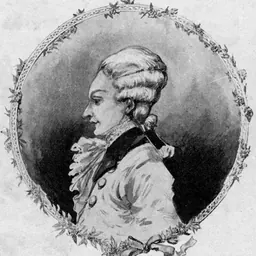
During the earlier period, from 1788 to 1801, the Opéra-Comique underwent significant challenges. Up to that time the theatre had had a virtual monopoly on the performance of French comic opera in Paris, but in 1788 Marie Antoinette gave a license to open a new theatre to her hairdresser and wig-maker, Léonard Autié. Autié sold his license to the Italian violinist Giovanni Battista Viotti, who hired Luigi Cherubini to be the director of the new company. The two men recruited actors from the provinces and singers from Italy. At first the new troupe was named the Théâtre de Monsieur after the king's brother, Louis-Stanislas-Xavier, comte de Provence, who had the court title of Monsieur, and who along with the queen promised their protection to the new group. Later, after a move from the Salle des Machines in the Tuileries Palace to the rue Feydeau, and the fall of the monarchy, it became commonly known as the Théâtre Feydeau.
Initially the Théâtre de Monsieur was forbidden to perform the same repertory as the Opéra-Comique, but this quickly changed. With the invasion of the Tuileries by a mob on 10 August 1792, the Italian singers returned to Italy, and Viotti fled to England. The Feydeau company, still under the direction of Cherubini, turned to performing French opéra comique. The competition between the two companies, forced the Opera-Comique to upgrade salaries in order to retain the best personnel. In 1794, Blasius' salary at the Opéra-Comique was increased from 2,000 livres to 2,600 livres.
An account of the year VII (1795) refers to the conductor of the Opéra-Comique as "le cit. [citoyen] Blasius", i.e., Citizen Blasius. The repertoire of the Opéra-Comique performing at the Salle Favart during these years testifies to its adherence to the values of the revolution, in contrast to its "rival and emulator", at the Feydeau, which remained true to its aristocratic origins and attracted opponents of the government. In 1793 Blasius had composed the music for a two-act trait historique by Auguste-Louis Bertin d'Antilly called Le Peletier de Saint-Fargeau, ou Le premier martyr de la République française. This piece, which was first performed by the Opéra-Comique at the Salle Favart on 23 February, was based on an event which had occurred only one month prior: Louis-Michel le Peletier, marquis de Saint-Fargeau, was assassinated on 20 January for having voted for the execution of Louis XVI, who was executed on the 21st. Early in 1794 Blasius was one of twelve composers, including Cherubini, who collaborated on a 3-act Revolutionary, patriotic comédie mêlée d'ariettes called Le congrès des rois. The composition, ordered by the Committee of Public Safety, was finished in just two days and first performed in the Salle Favart on 26 February 1794. Unfortunately, the work was not a success, and the Revolutionary purists found much to object to. After only two performances the authorities banned it altogether.
By 1801 the competition between the Opéra-Comique and the Théâtre Feydeau had reached an impasse, and it was decided to merge the two companies "by a legal act of union dated 7 thermidor an IX (26 July 1801)". The new corporation was to use the old name Opéra-Comique but perform at the newer theatre on the rue Feydeau. The merged company's first performance there was a program consisting of Étienne Méhul's Stratonice and Cherubini's Les deux journées which took place on 16 September 1801. It was in 1801 that Blasius first lost his position as conductor of the Opéra-Comique orchestra. Two of his own compositions, the mélodrames Adelson et Salvini and Don Pèdre et Zulika, were first performed at the Théâtre de la Gaîté in 1802. Later he worked at the Théâtre de la Porte Saint-Martin, where his Clodomire, ou La Prêtresse d'Irmunsul a three-act mélodrame was first performed on 5 May 1803. It included separate fingerings for the enharmonically equivalent notes of g-sharp and a-flat. Blasius also advocated using both lips to cover the upper and lower teeth, which modern players refer to as the "double-lip" embouchure: "take good care that [neither] the mouthpiece nor the reed is touched by the teeth. It is necessary to support the mouthpiece on the lower lip to cover the reed with the upper lip, without the teeth touching any of it." Clarinetists of this period typically played with the reed up, so this method avoided the teeth touching the reed. Moreover, this embouchure is normal for the double-reed instruments, oboe and bassoon, and clarinetists at the time often played these instruments as well. No. 1 in B flat No. 2 in E flat No. 3 in E flat Note: These works were written for military and social functions. Following well established French traditions, airs and popular ballads were brought together according to key without further connections. The only organizing principles appear to have been to have a lively piece to start and end and some diversity of character between the others.
Concertos Three violin concertos, including: Violin Concerto No. 1 in G major (1797 or 1798) Violin Concerto No. 2 in A major (c1797) Violin Concerto No. 3 in B-flat major (1801) Four clarinet concertos (1802–1805), Clarinet Concerto No. 2 Clarinet Concerto No. 3 Clarinet Concerto No. 4 Concerto for bassoon (after 1800) Sinfonia concertante for 2 horns, in E major (1795)
Quartets
String quartets Six Quatuors concertantes (string quartets: 2 violins, viola, and cello), Op. 3 (1780–1782) String quartets, Op. 10 (1785) Six string quartets, Op. 12 (1795) String quartets, Op. 19 (1795) Piano sonatas by Haydn, arranged for string quartet
Other quartets Three Quatuor concertantes for clarinet or violin I, violin II, viola and bass, Op. 1 No. 1 in F minor No. 2 in E-flat major No. 3 in B-flat major Three quartets for clarinet, violin, viola, and cello (1782–1784) Six quartets for clarinet, violin, viola, and cello, Op. 13 (1788?) Bassoon quartets, Op. 5 (ca. 1788) Quartet for clarinet, violin, viola, and cello, Op. 2 (1799) Overture for bassoon, violin, viola, and bass (incomplete) Overture for bassoon, violin, viola, and bass (c1810?) Six Quatuours concertants for bassoon, violin, viola, and bass, Op. 9 (1797), possibly by I. Blasius
Trios Three trios dialogués for clarinet, violin, and cello or bass, Op. 31 Ten trios for 2 clarinets and bassoon, Op. 2, incomplete Three trios for 2 violins and cello, Op. 48 Three trios for clarinet, horn, and cello, choisis dans les ouvrages du célèbre Michel [Yost]
Duets Duets (ca. 69) for 2 violins, including: Op. 4 Six duets, Op. 8 (1783) Op. 26 Three duets, Op. 28 Op. 29 (1796) Op. 30 (published by Offenbach) Three duets, Op. 32 No. 1 in G major No. 2 in B-flat major No. 3 in F major Op. 33 (Bibliothèque nationale de France) Op. 43 Op. 52 (ca. 1794) Twelve duets, Op. 53 (ca. 1794) Duets (ca. 64) for two clarinets, including: Op. 18 (1794) Op. 20 (1794) Op. 21 (1794–1796) Op. 27 Six grands duo dialogués, Op. 35 Op. 38 Op. 39 (1797/1798?) Op. 40 (1800) Six duets, Op. 46 Six easy duets (1796), from Nouvelle méthode de clarinet Twelve duets for two bassoons, including: Six duets, Op. 27 (1784) Six duets, Op. 51 Nos. I, II, III Nos. IV, V, VI Duet for violin and viola (1784?) Six duets for flute and violin, Op. 12 (1788)
Sonatas Six sonatas for piano with violin accompaniment (1783) Sonates (1797) Three sonatas for violin with cello accompaniment, Op. 40 (1800) Three sonatas for violin with cello accompaniment, Op. 41 (1800) No. 1 in A major No. 2 in B-flat major No. 3 in E-flat major Three sonatas for violin with bass accompaniment, Op. 43 (1801) Six sonatinas for violin with bass accompaniment, Op. 55 No. 1 in D major No. 2 in B-flat major No. 3 in A major No. 4 in C major No. 5 in G major No. 6 in F major Six sonatas for clarinet with viola or bass accompaniment, Op. 55 (1805) Six sonatas for bassoon with cello accompaniment, Op. 57 (ca. 1800) Six sonatas for flute with bass accompaniment Six études graduelles for flute with bass accompaniment, Op. 58 Three grandes sonates for violin with violin accompaniment, Op. 60 (1817?) Six grandes sonates for violin and violin accompaniment, Op. 66 Sonata for violin and piano (C. Pierre, ed. (1899). Musique des fêtes et cérémonies.) Pieces in Musique à l'usage des fêtes nationales (1794–1795) and Cartier's L'art du violon (1798)
Violin solo Caprices ou Étude for violin Preludes ou caprices for violin, dedicated to C. Lubbert
Stage works La paysanne supposée, ou La fête de la moisson, a 3-act comédie mêlée d'ariettes, was performed only once by the Opéra-Comique on 28 August 1788 in the Salle Favart. The opera was not well received, probably because the libretto, written by C. Dubois, was considered poor. A published score and libretto have not been found. L'amour hermite, a 1-act pièce anacréontique mêlée d'ariettes (piece with verse in the manner or style of Anacreon mixed with ariettas) with a libretto by P. Desriaux, was first presented on 31 January 1789 at the Théâtre des Beaujolais at the Palais-Royal. It was more successful and was published. The work is essentially a pastoral opera ballet and includes a ballet divertissement and a sleep scene, both of which were typical of the more serious operas usually presented at the Académie royale de musique. Prince Polastri, 1789, was mentioned in a letter from Duprat (Bibliothèque-Musée de l'Opéra, Paris). Nicolas Dalayrac published some orchestral material under the same title (an overture and two arias). Le Peletier de Saint-Fargeau, ou Le premier martyr de la République française, a 2-act trait historique with a libretto by Auguste-Louis Bertin d'Antilly, was first performed by the Opéra-Comique in the Salle Favart on 23 February 1793 [5 vent I], just a month after the historical events it dramatized. It was also called La mort de Saint-Fargeau and was given a total of four times at the Opéra-Comique. The score and the libretto have not been found. Africo et Menzola, a 3-act mélodrame with text by Coffin-Rosny, was first performed at the Théâtre de l'Ambigu-Comique on 10 March 1798. Don Pèdre et Zulika, a mélodrame, was first performed at the Théâtre de la Gaîté in 1802. The score has not been found. Fernando ou Les maures, a 3-act opera, now attributed to Joseph Wölffl, with a libretto by De Bussy, was performed once by the Opéra-Comique on 11 February 1805 [22 pluv XIII] in the Salle Favart. The score and the libretto have not been found. The title was recorded as Fernand ou Les maures in Magasin Encyclopédique: "It is an imitation of L'engant de la forêt by Guilbert de Pixérécourt".
Other vocal works Vive l'amour et la folie, couplets with text by C. Grenier (1795) Française, point de vengeance, couplets (1814) Messe for alto, tenor, baritone, bass voices and wind instruments
Theoretical works Méthode de clarinette (c1795), has not been located Nouvelle méthode de clarinette et raisonnement des instruments, principes et théorie de musique dédiés aux élèves du Conservatoire (1796) Méthode du basson (1800)
Recordings Harmoniemusik (Music for winds) Includes: François Henri Joseph Castil-Blaze: Sextet no. 1 in E-flat major Carl Maria von Weber: Adagio and rondo Matthieu-Frédéric Blasius: Suite d'harmonie no. 1–3 Performers: Charles Neidich, clarinet; Mozzafiato (music group) Program notes: David Montgomery and Charles Neidich, in English with German and French translations Label: Sony Classical, SK68263 (1996). Clarinet Concertos by The Mannheim School Includes: Matthäus Frederic Blasius: Clarinet Concerto No. 1 in C Major Six clarinet concertos by Carl Philipp Stamitz Other works for solo clarinet and orchestra by: Franz Anton Dimmler Joseph Fiala Johann Sebastian Demar Georg Friedrich Fuchs Franz Wilhelm Tausch Peter von Winter Performers: Karl Schlechta, clarinet and basset horn Kurpfälzisches Kammerorchester; Jiří Malát, conductor Label: Arte Nova 74321 37327 2 (5 CDs: 70:55, 62:30, 62:53, 62:03, 67:39) Music from France Includes: Darius Milhaud: Suite for violin, clarinet, and piano, Op. 157b Philippe Manoury: Michigan Trio Camille Saint-Saëns: Tarantella, originally for flute, clarinet and orchestra in A minor, Op. 6 Frédéric Blasius: Trio Dialogues, Op. 31 No. 1, originally for clarinet, violin, and cello or bass Betsy Jolas: Trio sopra et sola Facta Francis Poulenc: Suite from L'invitation au château Performers: Verdehr Trio (Elsa Ludewig-Verdehr, clarinet; Walter Verdehr, violin; Silvia Roederer, piano) Label: Dux 0525 (2005)
Don’t just read it —
keep it.
Full-length biographies made to live with: read them, listen on the way to work, watch them tonight.
- E-book
- Audio
- Video
Instant download · yours to keep · every purchase keeps this site free
Important facts
People in Frédéric Blasius's life
Named in this biography and alive at the same time




Related people
Same field, nearest in time

Contemporaries
People whose lives overlapped Frédéric Blasius's





Frequently asked questions
Who was Frédéric Blasius?
French violinist, clarinetist, conductor, and composer
When was Frédéric Blasius born?
Frédéric Blasius was born on 24 April 1758 in Lauterbourg.
When did Frédéric Blasius die?
Frédéric Blasius died in 1829 in Versailles.
What was Frédéric Blasius's occupation?
Frédéric Blasius was a conductor, composer, musicologist, bassoonist and flautist.
What nationality was Frédéric Blasius?
Frédéric Blasius was French.
Sources & further reading
Cite this page
APA: Biography.guide. (2026). Frédéric Blasius. https://biography.guide/frederic-blasius/
MLA: "Frédéric Blasius." Biography.guide, https://biography.guide/frederic-blasius/.
Chicago: "Frédéric Blasius." Biography.guide. https://biography.guide/frederic-blasius/.
Data last updated: 2026-09-26 · Spot an error? Report a correction.
Page generated 2026-09-27 05:16 UTC