
Freddie Steele
Footballer, football manager
About Freddie Steele
Lived 1916 – 1976 (aged 59). Freddie Steele was a British association football player, association football coach and athlete.
Frederick Charles Steele (6 May 1916 – 23 April 1976) was an English professional footballer who played as a forward for Stoke City and England. He also had spells at Mansfield Town and Port Vale as a player-manager, leading Vale to a league title. He remains a significant figure in the histories of both Stoke and Vale. His nephew is former England cricketer David Steele.
Club career
Stoke City Freddie Steele was signed for Stoke City in 1931, aged 15, by manager Tom Mather. He carried out work in the club's offices until he was old enough to turn professional. He scored his first goal for the club four days later, in a 3–0 victory over West Bromwich Albion at the Victoria Ground. His tally included five goals in a 10–3 victory over West Brom on 4 February, a club record victory.
He returned to the Potteries in 1945–46, scoring 49 goals in 43 games during the season. It his first coaching appointment with a senior side. However, he had previously coached in the youth teams at Stoke City. Under his guidance, the team won three, drew one and lost one of their five matches to finish as runners-up behind Fram. Steele was subsequently selected to manage the Iceland national team in its first international match against Denmark on 17 July 1946. Scottish coach Murdo McDougall, who had first moved to Iceland as Valur manager in 1937, was named as his assistant. Steele included several of his players from KR in the Iceland team, including Birgir Guðjónsson and Jón Örn Jónasson, but could not prevent the side losing 3–0 before a crowd of 8,000 spectators at the Melavöllur. Upon leaving Iceland on 17 August 1946, to return to England in time for the start of Stoke City's season, he spoke of how he had enjoyed his time in Iceland. He stated his desire to return the following summer, although the move never materialised.
Mansfield Town Steele assumed a player-manager role at Mansfield Town in 1949. He was prolific in front of goal, scoring 44 goals in 62 league and cup appearances – this scoring record made his job as manager much easier. The "Stags" finished eighth in the Third Division North in 1949–50. They then went on a 23-game unbeaten run, but could only end up finishing as the division's runners-up in 1950–51, seven points behind champions Rotherham United. Steele signed players such as defender Don Bradley, and wing-half's Oscar Fox and Sid Watson. Steele left Field Mill for Port Vale for a four-figure fee in December 1951, and Mansfield finished the 1951–52 season in sixth place under his successor George Jobey.
Port Vale Replacing the unpopular Ivor Powell in December 1951, Steele was a popular choice as the new player-manager. His team were bottom of the Third Division South table, However, he did not make any new signings, and he sold striker Walter Aveyard to Accrington Stanley for a four-figure fee. Steele turned around results using the players at his disposal, and Vale lost just four of their last twenty games of the season to finish a comfortable 13th.
Vale were moved to the Third Division North in 1952–53. Steele kept the playing squad as it was, deeming the players he inherited to have the potential to achieve promotion. However, they finished in second-place, one point behind Oldham Athletic, and so were not promoted. He sold Bert Llewellyn to Northampton Town for £7,000 and Arthur Longbottom to Millwall for £2,000; before boosting his strike-force with Tony Richards from Walsall for £9,000. He scored eight goals for his country in total, However, a knee injury sustained in 1937 meant that he did not play for his country again.
Style of play Steele was noted for his brilliant heading ability. He had a strong physique and was able to battle with defenders willing to get physical with him. He could play with both feet and had a good turn of pace.
Management style Roy Sproson later said that "he [Steele] was a great psychologist. He was also a tremendous tactician and, looking back, was years ahead of his time." Tactically, he brought his wingers back to play four across the midfield and had one side of his team as quick powerful tacklers and the other side as neat and skilful. He emphasised teamwork and fitness.
Sproson described Steele as a very tense individual who "would disappear for the last five minutes and was to be found hiding in the toilet." In appearance Steele "used to wear a tweed trilby, a pair of black and white hooped football stockings with his suit and let his hair grow long!"
Division!!Apps!!Goals!!Apps!!Goals!!Apps!!Goals
1934–35 First Division
1935–36 First Division
1936–37 First Division
1937–38 First Division
1938–39 First Division
1945–46
1946–47 First Division
1947–48 First Division
1948–49 First Division
224!!140!!27!!19!!251!!159
1949–50 Third Division North
1950–51 Third Division North
1951–52 Third Division North
53!!39!!9!!5!!62!!44
1951–52 Third Division South
1952–53 Third Division North
25!!12!!0!!0!!25!!12
302!!191!!36!!24!!338!!215
International
Managerial statistics
G!!W!!D!!L!!Win %
England British Home Championship: 1936–37
Don’t just read it —
keep it.
Full-length biographies made to live with: read them, listen on the way to work, watch them tonight.
- E-book
- Audio
- Video
Instant download · yours to keep · every purchase keeps this site free
Important facts
People in Freddie Steele's life
Named in this biography and alive at the same time








Related people
Same field, nearest in time
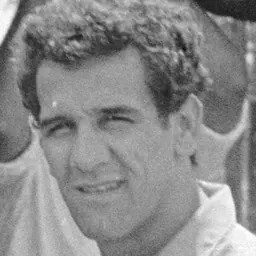
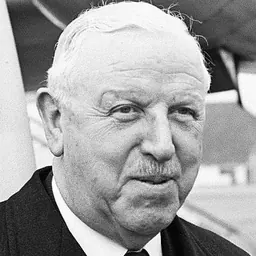
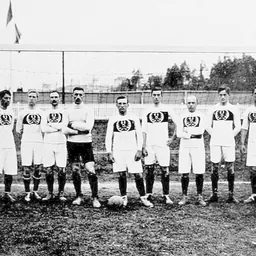



Contemporaries
People whose lives overlapped Freddie Steele's



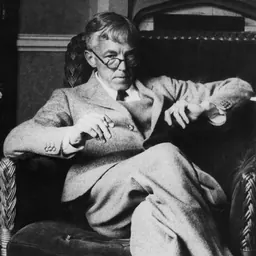
Frequently asked questions
Who was Freddie Steele?
Footballer, football manager (1916-1976)
When was Freddie Steele born?
Freddie Steele was born on 6 May 1916 in Stoke-on-Trent.
When did Freddie Steele die?
Freddie Steele died on 23 April 1976 in Newcastle-under-Lyme.
What was Freddie Steele's occupation?
Freddie Steele was an association football player, association football coach and athlete.
What nationality was Freddie Steele?
Freddie Steele was British.
Sources & further reading
· DBpedia: Freddie Steele (footballer)
Cite this page
APA: Biography.guide. (2026). Freddie Steele. https://biography.guide/freddie-steele/
MLA: "Freddie Steele." Biography.guide, https://biography.guide/freddie-steele/.
Chicago: "Freddie Steele." Biography.guide. https://biography.guide/freddie-steele/.
Data last updated: 2026-09-20 · Spot an error? Report a correction.
Page generated 2026-09-27 05:25 UTC