
About Fred Kilgour
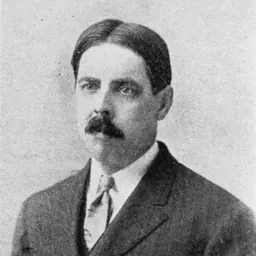
Lived 1914 – 2006 (aged 92). Fred Kilgour was an American military officer, librarian and businessperson.
Frederick Gridley Kilgour (January 6, 1914 – July 31, 2006) was an American librarian and educator known as the founding director of OCLC (Online Computer Library Center), an international computer library network and database. He was its president and executive director from 1967 to 1980.
Biography Born in Springfield, Massachusetts to Edward Francis and Lillian Piper Kilgour, Kilgour earned a bachelor's degree in chemistry from Harvard College in 1935 and afterward held the position as assistant to the director of Harvard University Library. He joined the Ohio College Association in 1967 to develop OCLC (Online Computer Library Center) and led the creation of a library network that today links 72,000 institutions in 170 countries. It first amassed the catalogs of 54 academic libraries in Ohio, launching in 1971 and expanding to non-Ohio libraries in 1977.
Today OCLC has a staff of 1,200 and offices in seven countries. Its mission remains the same: to further access to the world's information and reduce library costs. He was survived by his wife and their daughters, Marta Kilgour and Vajra Alison Kilgour of New York City, and Meredith Kilgour Perdiew of North Edison, New Jersey; and two grandchildren and five great-grandchildren.
OCLC Based in Dublin, Ohio, OCLC and its member libraries cooperatively produce and maintain WorldCat—the OCLC Online Union Catalog, the largest OPAC in the world. Under Kilgour's leadership, the nonprofit corporation introduced a shared cataloging system in 1971 for 54 Ohio academic libraries. Inaugurated in 1998 and awarded annually, it highlights research on information technology with a focus on "work that "shows the promise of having a positive and substantive impact on any aspect of the publication, storage, retrieval, and dissemination of information, or the processes by which information and data are manipulated and managed." using punched cards for library automation, Kilgour soon began experimenting in automating library procedures at the Harvard University Library, primarily with the use of punched cards for a circulation system. He also studied under George Sarton, a pioneer in the new discipline of the history of science, and began publishing scholarly papers. He also launched a project to build a collection of microfilmed foreign newspapers to help scholars have access to newspapers from abroad. This activity quickly came to the attention of government officials in Washington, D.C.
In 1961 he was one of the leaders in the development of a prototype computerized library catalog system for the medical libraries at Columbia, Harvard and Yale Universities that was funded by the National Science Foundation. In 1965, Kilgour was named associate librarian for research and development at Yale University. He continued to conduct experiments in library automation and to promote their potential benefits in the professional literature.
In his professional writings Kilgour was one of the earliest proponents of applying computerization to librarianship. He pointed out that the explosion of research information was placing new demands on libraries to furnish information completely and rapidly. He advocated the use of the computer to eliminate human repetitive tasks from library procedures, such as catalog card production. He recognized nearly 40 years ago the potential of linking libraries in computer networks to create economies of scale and generate "network effects" that would increase the value of the network as more participants were added.
OCLC has demonstrated the feasibility of sharing of catalog-record creation and has helped libraries to maintain and to enhance the quality and speed of service while achieving cost control—and even cost reduction—in the face of severely reduced funding. His work has a lasting impact on the field of information science.
The main office building on the OCLC campus is named after Kilgour. The main entrance road to the OCLC campus is named Kilgour Place.
OCLC created an annual award in Kilgour's name, the Kilgour Award, which is given to a researcher who has contributed to advances information science.
Awards In 1990 Kilgour was named Distinguished Research Professor of the School of Information and Library Science, the University of North Carolina at Chapel Hill, and served on the faculty until his retirement in 2004.
Kilgour was the author of 205 scholarly papers. He was the founder and first editor of the journal, Information Technology and Libraries. In 1999, Oxford University Press published his book The Evolution of the Book. His other books include The Library of the Medical Institution of Yale College and its Catalogue of 1865 and The Library and Information Science CumIndex.
He received numerous awards from library associations and five honorary doctorates. In 1978 he was honored with the Melvil Dewey Medal by the American Library Association and in 1982, the Association presented him with American Library Association Honorary Membership
In 1979 the American Society for Information Science and Technology gave him the Award of Merit. The citation read:
Works Kilgour F. G. (2004). "An experiment using coordinate title word searches. Journal of the American Society for Information Science and Technology 74–80. Frederick G. Kilgour: The Evolution of the Book, (New York: Oxford University Press, 1998) Kilgour Frederick G. 1985. Beyond Bibliography. London: British Library. Kilgour Frederick G. 1975. The Library and Information Science Cumindex. Los Altos Calif: R & D Press. Kilgour F. G. (1979). The impact of AACR 2 on the economic viability of libraries. O.C.L.C. Kilgour F. G. Drexel Conference on Data Processing in University Libraries Kilgour F. G. & Drexel Institute of Technology Graduate School of Library Science. (1967). Computers for university libraries. Drexel Press: Graduate School of Library Science Drexel Institute of Technology. Kilgour F. G. & Yale Medical Library. (1965). Computer applications in biomedical libraries. Yale Medical Library.
Don’t just read it —
keep it.
Full-length biographies made to live with: read them, listen on the way to work, watch them tonight.
- E-book
- Audio
- Video
Instant download · yours to keep · every purchase keeps this site free
Important facts
People in Fred Kilgour's life
Named in this biography and alive at the same time
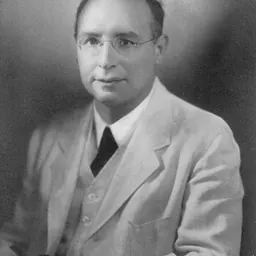
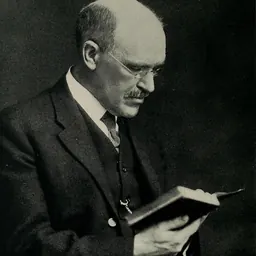


Related people
Same field, nearest in time
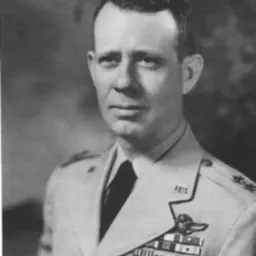

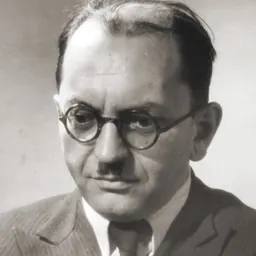



Contemporaries
People whose lives overlapped Fred Kilgour's

Frequently asked questions
Who was Fred Kilgour?
American librarian (1914-2006)
When was Fred Kilgour born?
Fred Kilgour was born on 6 January 1914 in Springfield.
When did Fred Kilgour die?
Fred Kilgour died on 31 July 2006 in Chapel Hill.
What was Fred Kilgour's occupation?
Fred Kilgour was a military officer, librarian and businessperson.
What nationality was Fred Kilgour?
Fred Kilgour was American.
Sources & further reading
Cite this page
APA: Biography.guide. (2026). Fred Kilgour. https://biography.guide/fred-kilgour/
MLA: "Fred Kilgour." Biography.guide, https://biography.guide/fred-kilgour/.
Chicago: "Fred Kilgour." Biography.guide. https://biography.guide/fred-kilgour/.
Data last updated: 2026-09-20 · Spot an error? Report a correction.
Page generated 2026-09-27 05:30 UTC