
About Fred Goodwill
Lived 1874 – 1969 (aged 95). Fred Goodwill was a British missionary, known for Bangalore, Kolar Gold Fields and Linguist.
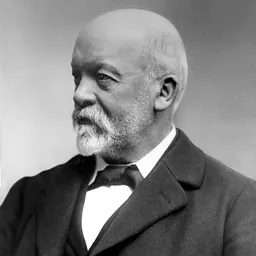
Fred Goodwill (20 February 1874 – 1 May 1969) was a British Methodist missionary stationed in Bangalore, British India, between 1899 and 1924, serving as the superintendent of the Wesleyan Tamil Mission, Bangalore, and Kolar Gold Fields. He is acknowledged for working for the cause of education of native women in the Bangalore Cantonment. The Goodwills Girls School located in Fraser Town, Bangalore Cantonment is named after him. He was a scholar of the Tamil Language, and was also fluent in Canarese (Kannada) and Telagu (Telugu). Fred is acknowledged as an authority on Tamil Shaiva Literature, with authors quoting from his research.
Fred Goodwill was a keen photographer and were also exhibited at the INTACH exhibition at Ulsoor. Many of his photos have been published in books published in British India and have also been published as Tucks India Series Postcards.
Early life
Fred was the youngest child of farmers Thomas and Elizabeth Goodwill. His birth was registered in the first quarter of 1874 (Volume 9, p. 85) at Great Ouseburn. Birmingham. The family was deeply religious, and Fred had a genuine interest in working as a missionary. In those days it was not uncommon for the youngest son to take up religious work as it was seen as being a respectable profession which provided a steady income, but there is no suggestion that this was the reason why Fred joined the ministry. Extract from the India's Daily Post "The marriage of Miss Alice Haynes, of Old Hill, Staffordshire with the Rev F. Goodwill, Superintendent of the Wesleyan Tamil Mission, took place at the Wesleyan Church, Tumkur on 10 September 1901. Indian Religions (especially Shaivism) and Tamil Literature being appointed as General Secretary of the Bangalore Tract and Book Society and being part of the inaugural function of the Hudson Memorial Church, Bangalore on 23 September 1904.
Fred seems to have been part of group of photography enthusiasts and could have traveled in groups taking pictures of life in India. Some of his pictures closely resemble the description of the photos in the Ellis Collection: Album depicting missionary life in South India, of the British Library. Many pictures of the Ellis Collection also mention Rev. Goodwill. The Ellis Collection was presented to the British Library by the British naturalist Arthur Erskine Ellis, son of Rev. Robert Arthur Ellis, who was also a Wesleyan minister posted at Bangalore, serving as pastor of the John's Hill Church (now Wesley English Church), Campus, around the same time as Fred.
Mythic Society
Fred Goodwill was one of the founding members of the Mythic Society, Bangalore (the council also included names such as the Maharaja of Mysore and the Maharaja of Baroda), with the society journal reporting that his talks attracted large audiences. Goodwill also researched for the Mystic Society and wrote for its quarterly journal, the early history of Kolar Gold Fields, Mysore, Bangalore and South India in general. His scholarly work on the 'Prison Song in Bangalore', based on the experiences of 'A Narrative of the Captivity and Sufferings of the Officers, Soldiers and Sepoys, who fell into the Hands of Hyder-Ali, after the Battle of Conjeveram (Kanchi), 10 September 1780', is acknowledged to be part of the history of Bangalore. In 2009, two of Fred Goodwill's articles – Nandidroog (1918); previously published in the Quarterly journal of the Mythic Society [volumes 1–100] were among the 30 articles chosen to be re-published from the 100 volumes of the journal, as Gems of Scholarships: Archaeology & Antiquities Selected Articles from QJMS [1909–2009], in association with the Indian Council of Historical Research (ICHR).
Girls Education at the Bangalore Cantonment
Education of the Indians, especially women's education was very close to his heart. In British India, education of the girl child was considered a taboo by Hindus as well as Indian Christians. Bangalore had had a Wesleyan Girls school since 1851, and Fred Goodwill built on its foundations and improved the school to a great extent. In 1906, Fred Goodwill began to assist the principal of the school Ms. Sisterson, eventually becoming its manager. His wife, Alice also got actively involved in educating the children and took time to teach needlework and crafts.
Contribution to Tamil
In his 26 years in India, Rev. Fred Goodwill contributed immensely to the education and progress of Tamil literature in Bangalore Cantonment. His name is associated with books on Tamil Literature published around that period in British India, and Fred Goodwill authored many academic articles on Tamil Literature, which were published in Journals. Fred's articles on Tamil literature are mainly on the Shaivism philosophy, Tiruvacakam, the poetry of the Shavite Saints Tirunavukkarasar, Manikkavacakar, Sundarar and Sambandar. Research done by Fred Goodwill is quoted by works of later authors of Dravidian culture, Shaiva Siddhanta and Ancient Tamil literature, along with that of George Uglow Pope. About the Tamil poetry and literature on Saiva Siddhanta he remarked "'Those who have studied the system unanimously agree that this eulogy is not a whit too enthusiastic or free worded. That the system is eclectic is at once apparent".
The Goodwills School still has a prize founded and named after Fred Goodwill for the student with the highest marks in Tamil in Year 10. His name carries respect and honour at the Wesley Tamil Church at Haines Road, Fraser Town Bangalore and at the Goodwills School. Girls School – Gnanamani Samuel, Mangalabooshanam, Kanagammal (Signed in Tamil) Sluhar Baqo – E. Nedusudan, Maggie Ammal, Juhei Daniel, Lily Nathanniel, John Dharura Rao Artillery Lines – P. William, Esther Booshanam, 3 (Blank) Doddapetta (Dodakattappa?) – G Rajaratnam, G. Moses, Esther Rajaratnam Jhopmadiliar Street Girls – Alice Inanomoni, Rachel Jacob, Manomani Theophilus, Asirvatham Samuel, Sundary David Polyar Street (Pulliyar Koil St.?) Girls – Mercy D Joshua, H. Nathaniel, Miriyamma Rao (signed in Telugu), J. D. Tyllambal, M. Amaravathi, I. J. Ioulesor Rama Rao – Sub Asst Inspector of Schools, City & Military Station, Bangalore.
Life in England
Fred Goodwill returned to a very different England, with the social order having undergo many changes. The privileged lifestyle enjoyed in India, could not be replicated in England. Fred was offered work in Cornwall, which he refused in favour of working in the Black Country. During his time he was reminded a lot of life in India, and sadly did not take any photos on returning to England. Fred's interest in languages, helped him to speak the Black Country accent. Fred read Old English and Middle English fluently, and these skills were self-taught. He continued to keep reading the bible in Tamil and sing Tamil and Canarese hymns. Additionally he would read the Bible in Latin, Greek and Hebrew. Fred was a keen reader of books, and as he grew older he could no longer go to the library, and his daughter Bessie would bring the books for him. Fred also loved music and was an accomplished piano player. He listened to classical music and was also a good singer. He absolutely hated television. He continued to write articulate letters to friends and neighbours, which show his varied interests. Fred continued preaching even in his nineties and in one of his letters talks about a service he took at Darlington Street and further talks about Synod meeting, where he is the Precentor. He used to end his letters with Warmly yours. A 'Pilgrim'. In another letter he is critical of the increasing violent robberies, young people not respecting the law and of young people's obsession with the Beatles. He talks about a TV show of the Beatles in presence of the Queen Mother and comments that their performance was 'below proof'.
His wife Alice died in 1955, and Fred had to engage a house keeper to look after the house. His son also named Fred became an army chaplain and then a vicar, and pre-deceased his father. His daughter Helen Margaret became a French teacher and his other daughter Bessie became a doctor. Even in his eighties, he would cycle to his daughter Bessie's house, six miles away in Codsall to trim the hedge, which was a tough job even for a young man. When he was 90 his house keeper retired, and Fred went on to live with his daughter Bessie and her husband John at their farm in Shropshire. He missed his independence, but kept himself busy walking around the farm. Fred Goodwill died in 1969, after breaking his arm in a fall.
Don’t just read it —
keep it.
Full-length biographies made to live with: read them, listen on the way to work, watch them tonight.
- E-book
- Audio
- Video
Instant download · yours to keep · every purchase keeps this site free
Important facts
People in Fred Goodwill's life
Named in this biography and alive at the same time





Related people
Same field, nearest in time


Contemporaries
People whose lives overlapped Fred Goodwill's

Frequently asked questions
Who was Fred Goodwill?
missionary
When was Fred Goodwill born?
Fred Goodwill was born on 20 February 1874 in Helperby.
When did Fred Goodwill die?
Fred Goodwill died on 1 May 1969 in Shropshire.
What was Fred Goodwill's occupation?
Fred Goodwill was a missionary.
What was Fred Goodwill known for?
Fred Goodwill was known for Bangalore, Kolar Gold Fields, Linguist and Tamil language.
What nationality was Fred Goodwill?
Fred Goodwill was British.
Sources & further reading
Cite this page
APA: Biography.guide. (2026). Fred Goodwill. https://biography.guide/fred-goodwill/
MLA: "Fred Goodwill." Biography.guide, https://biography.guide/fred-goodwill/.
Chicago: "Fred Goodwill." Biography.guide. https://biography.guide/fred-goodwill/.
Data last updated: 2026-09-20 · Spot an error? Report a correction.
Page generated 2026-09-27 05:22 UTC