
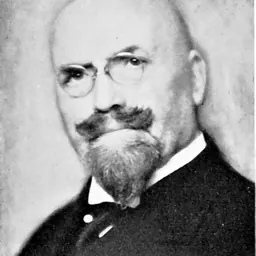
Arthur Erskine Ellis
British scientist, biologist and naturalist
About Arthur Erskine Ellis
Lived 1902 – 1983 (aged 80). Arthur Erskine Ellis was a zoologist, malacologist and biologist.
Arthur Erskine Ellis (1 October 1902 – 28 February 1983), often known as A.E. Ellis, was a British scientist, biologist and naturalist. Ellis is best known for his large number of malacological publications, including some which became essential texts on the subject of British non-marine malacology. To a lesser extent, Ellis published papers about other land invertebrates and various aspects of the fauna and flora of Britain. In addition Ellis had five ghost stories published.
Ellis was also a plant collector. From 1919 to 1961 he contributed specimens of spermatophytes to a number of different herbariums in Britain.
Stella Turk, the British naturalist said about Ellis, "It is difficult to categorise people. Should one even try? We are all multiple in a singular way!"; she also commented, "As might have been expected, he wrote his own obituary in which he gives a broad outline of his life and very lengthy bibliography", (J. Conch. 31 1983).
Taxa named in his honour Two taxa were named in Ellis' honour: Limicolariopsis ellisi Crowley & Pain, 1964 (Rev. Zool. Bot, Afr. 69: 191) -- a large African land snail Pisidium (Afropisidium) ellisi Dance, 1967 (J. Conch. 26: 178) -- a small freshwater clam
Publications
Books A.E. Ellis published several books which were the standard reference texts for identifying the non-marine Mollusca of Great Britain and Ireland during most of the 20th century: British Snails, a guide to the non-marine Gastropoda of Great Britain and Ireland, Pleistocene to Recent, 1926, reprinted in 1969, Oxford University Press Key to Land Shells of Great Britain British Freshwater Bivalve Mollusca (Synopses of the British fauna; new series, number 11)
Papers Publications on non-marine mollusca and obituaries of conchologists: JC = Journal of Conchology. PMS = Proceedings of the Malacological Society (London) 1924 Mollusca of Flamborough. JC 17: 149–153 1924 Notes on some British Helicidae, JC 17: 162–167 1924 Land Mollusca on the Mewstone, JC 17: 187–188 1924 Mollusca in the neighbourhood of Market Harborough, JC 17: 188–192, 212–219; 18:8 1925 Experimental acclimatisation of Sabinea ulvae (Pennant) to freshwater, Ann. & Mag. Nat. Hist. 15: 96–7 1925 The invalidity of Sabinea Sowerby. ibid. 16: 48–49 1926 Planorbis (Gyraulus) acronicus Férussac at Oxford. JC 18: 52–53 1926 British Snails. Clarendon Press (2nd edition, 1969). 1926 Helix draparnaudi Sheppard, and Planorbis draparnaldi Jeffreys. JC 18: 54 1926 Notes on some land Molluscs from Land's End. PMS 17: 123–6 1927 Variation in Trichia liberta (Westerlund).JC 18: 118 1927 Additional notes on the Molluscs of the Oxford district. JC 18: 137–8 1927 An abnormality in Lymnaea stagnalis (Linn.).JC 18: 139 1927 The snail as a zoological type, School Science Review No. 34: 102–110 1928 Vertigo moulinsiana (Dupuy) near Norwich. JC 18: 208 1928 Planorbis vorticulus Troschel in West Sussex. PMS 18: 127 1929 A garden fauna. JC 18: 312 1930 Mollusca on Gateholm. JC 19: 61 1931 A reclaimed saltmarsh. PMS 19: 278–9 1931 Molluscs of Wicken Fen [note]. JC 19: 170 1931 Notes on some Norfolk Molluscs. JC 19: 177–8 1931 (with D. Aubertin & G. C. Robson) The natural history and variation of the Pointed Snail, Cochlicella acuta (Müll.). Proc. Zool. Soc. Lond. for 1930: 1027–1055, pl. 1 1932 The habitats of Hydrobiidae in the Adur estuary. PMS 20: 11–18 1932 Further localities for Planorbis vorticulus Troschel. JC 19: 258–9 1939 A Surrey Bronze Age interment. JC 21: 90 1939 A discussion on the variation of Lymnaea, etc. PMS 23: 313 1940 The identification of the British species of Pisidium. PMS 24: 44–88, pl. 3–6 1940 Some Devon land snails. JC 21: 190 1941 The Mollusca of a Norfolk broad (presidential address). JC 21: 224–243 1941 Ecological notes. JC 21: 258–9 1941 Anodonta minima Millet in Norfolk. JC 21: 280 1942 Milax gracilis (Leydig) in woodland. JC 21: 325–6 1945 Limax flavus L. in a 'wild' habitat. JC 22: 135 1946 Milax sowerbyi (Fér.) in woodland. JC 22: 177 1946 On Potomida Swainson. PMS 27: 105–8, pl. 7 1946 Freshwater bivalves (Mollusca). Corbicula, Sphaerium, Dreissena. Linn. Soc. Synopses of the British Fauna, No. 4 1947 Freshwater bivalves (Mollusca): Unionacea. ibid. No. 5 1947 Retinella nitidula (Drap.) monstr. sinistrorsum. JC 22: 271 1947 Dimensions of Anodonta minima Millet. JC 22: 271 1948 The survey of Bookham Common. Land Mollusca of Bookham Common. London Naturalist for 1947: 56–59 1949 A Broadland slug [Agriolimax agrestis L.] Transactions of the Norfolk & Norwich Nature Society. 16: 388 1950 Succinea putris (L.) parasitized by Leucochloridium. JC 23: 107 1950 The type species of Testacella. JC 23: 115 1951 R. Winckworth, obituary. JC 23: 157–62 1954 Volvulus Oken. JC 23: 394 1959 E. W. Swanton, obituary. JC 24: 326 1961 Land and freshwater Mollusca in Norwich and its region, p. 73. British Association. Jarrold, Norwich 1961 H. H. Bloomer, obituary. Proc. Linn. Soc. Lond. 172nd session: part 1. 1962 British freshwater bivalve Molluscs. Linn. Soc. Synopses of British fauna, No. 13 1964 L. W. Grensted, obituary. JC 25: 291–3, pl. 20 1964 Arion lusitanicus Mabille in Cornwall. JC 25: 285–287 1964 Milax budapestensis (Hazay) in woodland. JC 25: 298 1965 Arion lusitanicus Mabille in Devon. JC 25: 345–347 1967 Agriolimax agrestis (L.): some observations. JC 25: 345–7 1978 British freshwater bivalve Molluscs, Linn. Soc. Synopses of British Fauna (New Series) No. 11
Conchological Society; Papers for Students No. 3 (1964). Key to land shells of Great Britain. No. 3 (2nd edition, 1974). Key to the land snails of the British Isles. No. 12 (1969). Key to British slugs
Publications in the Conchologists' Newsletter: 1961 Land and freshwater snails, additions to the British list, 3:12–13 1962 Biographical note, 4:16 1964 Some etymology, 9:50–51 1964 Sinistrosity, 9:53–54 1964 Snails extinct in England, but living abroad, 11:68–69 1964 Posting living molluscs, 11:68–69 1966 (with Stella Turk), Cornish localities for Arion lusitanicus 16:108 1967 Conkers and conchology, 20:138–139 1967 Nesovitrea hammonis and N. petronella, 21:6 1967 Unorthodox orthography, 22:15–16 1967 Poems on Conchology, 22:24–25 1968 Arion lusitanicus in Ireland, 25:40–41 1968 Metamerism, 25:47 1968 Pronunciation, 27:65–66 1969 Snail-eating dragons, 31:13 122 1970 Slugs and the poets, 35:185–186 1971 Names of British marine molluscs, 37:205–206 1971 Slugs and the poets, 39:233–234 1972 Blueprint for peace, 43:289 1972 Such numbers of snails, 43:289 1973 Who is Brittannia? What is She? 4.44:302 1973 Perils of the deep, 44:310 1973 Footnote to, Who is Britannia, 44:313 1973 An Old English Riddle, 45:316–317 1973 Hooper's hypothesis, 45:323 1973 Biographical and historical footnotes, 45:323 1973 Cochlea liberum, the snail in old nursery rhymes, 47:346–348 1974 Paradise lost? 49:373 1974 First record of Arion lusitanicus in Ireland, 49:384 1974 Review, From the diary of a snail, Günter Grass, 50:393–394 1974 First record of Arion lusitanicus in Ireland, 50:395 1974 Excelsior: the snail ascending, 51:398–399 1975 Place names with a molluscan flavour, 52:412–414 1975 Why collect shells? 53:434–435 1975 Pestalozzian conchology, a note, 54:449–450 1975 Shells as musical instruments, 55:460–461 1975 The snail in 19th century verse, 55:464–466 1975 Pestalozzian conchology, 55:469 1976 L'escargot, 58:519-520 1976 Molluscan place names: supplement, 58:520–521 1976 Correction to an Old English Riddle, 58:521 1977 Shells murmurs, 71:189-190. 62:33–34 1977 The mollusc in fables, 63:44–46 1978 Shakespeare and sea shells, 67:105–106 1979 Adventure of a snail hunter, 69:153–154 1979 Poem on the limpet, 71:182–183 1979 Snails and slugs in Shakespeare, 71:189–190 1981 Cassel's Natural History, 76:309–310. 1982 Celebrities in shells, 81:9 1982 Concerning Captain Thomas Brown, 82:35–36 1982 Sue Wells, international trade in ornamental shells, 83:56
Don’t just read it —
keep it.
Full-length biographies made to live with: read them, listen on the way to work, watch them tonight.
- E-book
- Audio
- Video
Instant download · yours to keep · every purchase keeps this site free
Important facts
People in Arthur Erskine Ellis's life
Named in this biography and alive at the same time





Related people
Same field, nearest in time



Contemporaries
People whose lives overlapped Arthur Erskine Ellis's




Frequently asked questions
Who was Arthur Erskine Ellis?
British scientist, biologist and naturalist
When was Arthur Erskine Ellis born?
Arthur Erskine Ellis was born on 1 October 1902 in Bengaluru.
When did Arthur Erskine Ellis die?
Arthur Erskine Ellis died on 28 February 1983 in Exeter.
What was Arthur Erskine Ellis's occupation?
Arthur Erskine Ellis was a zoologist, malacologist and biologist.
Sources & further reading
· Wikipedia: Arthur Erskine Ellis
· DBpedia: Arthur Erskine Ellis
Cite this page
APA: Biography.guide. (2026). Arthur Erskine Ellis. https://biography.guide/arthur-erskine-ellis/
MLA: "Arthur Erskine Ellis." Biography.guide, https://biography.guide/arthur-erskine-ellis/.
Chicago: "Arthur Erskine Ellis." Biography.guide. https://biography.guide/arthur-erskine-ellis/.
Data last updated: 2026-09-20 · Spot an error? Report a correction.
Page generated 2026-09-27 05:00 UTC