
About Fred Anderson
Lived 1929 – 2010 (aged 81). Fred Anderson was an American saxophonist, jazz musician and composer.
Fred Anderson (March 22, 1929 – June 24, 2010) was an American jazz tenor saxophonist who was based in Chicago, Illinois. Anderson's playing was rooted in the swing music and hard bop idioms, but he also incorporated innovations from free jazz. Critic Ben Ratliff called him "a father figure of experimental jazz in Chicago". Writer John Corbett referred to him as "scene caretaker, underground booster, indefatigable cultural worker, quiet force for good." In 2001, author John Litweiler called Anderson "the finest tenor saxophonist in free jazz/underground jazz/outside jazz today."
Biography
Anderson was born in Monroe, Louisiana. When he was ten, his parents separated, where he initially lived with his mother and aunt in a one-room apartment. He listened to Lester Young, Johnny Hodges, Dexter Gordon, Gene Ammons, and Illinois Jacquet, all of whom would influence his playing. He also heard Young and Parker in concert on multiple occasions. Unlike many musicians at the time, Anderson did not play with dance bands or school ensembles, and instead focused on practicing, taking private lessons, and studying music theory at the Roy Knapp Conservatory in Chicago, all the while supporting his family by working as a waiter. He also recalled: "Charlie Parker was one of the freest musicians I had ever heard... [his] technique was superb. Each one of the notes would just come out and hit you... His music was so involved. It was hard. It's still hard." At around this time, he began to develop a series of exercises which he incorporated into his daily practice routine, and which eventually became a book titled "Exercises for the Creative Musician".
In the early 1960s, Anderson began listening to and studying the music of Ornette Coleman, and immediately related Coleman's playing to that of Charlie Parker. He recalled: "When I heard Ornette Coleman back in those days... I knew exactly what he was doing. It wasn’t strange to me. I knew exactly where he was coming from." In 1963, Anderson began participating in weekly jam sessions in Chicago, where he met Roscoe Mitchell, Joseph Jarman, and Richard Abrams, with whom he began discussing the idea of forming a new organization to promote their music. with Anderson as one of its earliest members. (As per George E. Lewis, Anderson was not a charter member, but attended the early meetings and got in on the ground floor.) On August 16, 1965, Anderson played on the first AACM event as part of the Joseph Jarman Quintet, which also featured Brimfield as well as bassist Charles Clark and drummer Arthur Reed. In late 1966, Anderson participated in the recording of Jarman's debut album, Song For, and in 1968, he played on Jarman's As If It Were the Seasons. Both albums were released on the Delmark label.
In the late 1960s, when many of his AACM colleagues moved to Europe, Anderson chose to remain behind, supporting his wife and three young children by working at a rug company, practicing his instrument, and heading the AACM's Evanston chapter with Brimfield. Around 1972 he formed the Fred Anderson Sextet, with trombonist George E. Lewis, reedist Douglas Ewart, bassist Felix Blackmon, drummer Hamid Drake (then known as Hank), and vocalist Iqua Colson, all of whom were much younger than Anderson. Paul Steinbeck of the University of Chicago wrote: "These performers were a full generation younger than Anderson and comparatively inexperienced, yet he granted them considerable creative agency as members of his band... The expressive multiplicity and non-hierarchic social structure promoted by Anderson made his 1970s band resemble a 'mutuality' - a special kind of collective enterprise that requires its members to achieve a 'high degree of autonomy' while maintaining a sense of 'full partner[ship]'... Anderson's inclusiveness and ardent support of his collaborators' creative development performed a crucial leveling function, partially erasing generational boundaries and also re-focusing the group on their autonomous, continually unfolding expressive aims." According to jazz critic John Fordham, "The venue became a spiritual home to many musicians who shared the uncommercial player's perennial need for an intimate space run by, and for, the people who cared." He continued to record and tour throughout the 2000s, and continued mentoring countless younger musicians, including Harrison Bankhead, Nicole Mitchell, and Dee Alexander, stating "My role in the city is to keep young musicians playing. I will always have a place for them to play." He died on June 24, 2010, at the age of 81, and was survived by two sons, Michael and Eugene (a third son, Kevin, predeceased him), as well as five grandchildren and six great-grandchildren. He was scheduled to perform the day he died.
Discography
As leader
As sideman
With Muhal Richard Abrams SoundDance (Pi, 2011)
With The Art Ensemble of Chicago Peace Be Unto You (AECO, 2008)
With Joseph Jarman Song For (Delmark, 1967) As If It Were the Seasons (Delmark, 1968)
With Misha Mengelberg Two Days In Chicago (hatOLOGY, 1999)
With Neighbours Accents (MRC, 1978)
With Matana Roberts The Chicago Project (Central Control, 2008)
With Irene Schweizer and Hamid Drake Willisau & Taktlos (Intakt, 2007)
With Ken Vandermark and Territory Band-6 Collide (Okka Disk, 2007)
Don’t just read it —
keep it.
Full-length biographies made to live with: read them, listen on the way to work, watch them tonight.
- E-book
- Audio
- Video
Instant download · yours to keep · every purchase keeps this site free
Important facts
People in Fred Anderson's life
Named in this biography and alive at the same time



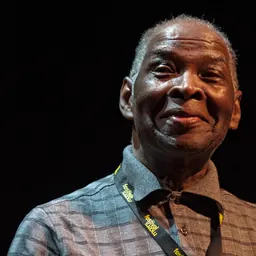
Related people
Same field, nearest in time
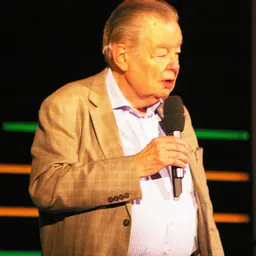
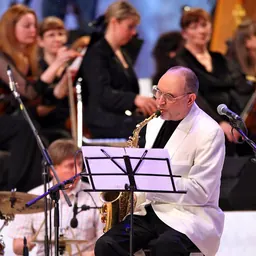
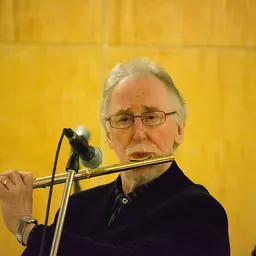

Contemporaries
People whose lives overlapped Fred Anderson's



Frequently asked questions
Who was Fred Anderson?
American saxophonist (1929–2010)
When was Fred Anderson born?
Fred Anderson was born on 22 March 1929 in Monroe.
When did Fred Anderson die?
Fred Anderson died on 24 June 2010 in Evanston.
What was Fred Anderson's occupation?
Fred Anderson was a saxophonist, jazz musician and composer.
What nationality was Fred Anderson?
Fred Anderson was American.
Sources & further reading
· DBpedia: Fred Anderson (musician)
Cite this page
APA: Biography.guide. (2026). Fred Anderson. https://biography.guide/fred-anderson-saxophonist/
MLA: "Fred Anderson." Biography.guide, https://biography.guide/fred-anderson-saxophonist/.
Chicago: "Fred Anderson." Biography.guide. https://biography.guide/fred-anderson-saxophonist/.
Data last updated: 2026-09-20 · Spot an error? Report a correction.
Page generated 2026-09-27 05:33 UTC