
Franz Xaver Schönwerth
German folklorist
About Franz Xaver Schönwerth
Lived 1810 – 1886 (aged 75). Franz Xaver Schönwerth was a German linguist, children's writer, collector of fairy tales, ethnologist and ministry official.
Franz Xaver von Schönwerth (16 July 1810 – 24 May 1886; born Franz Xaver Schönwerth, ennobled in 1859) was a Bavarian civil servant who was an important collector of folklore in the Upper Palatinate region.
Life and career
Schönwerth was born in Amberg as the first of five children of Joseph Schönwerth, a royal drawing professor. He entered the Erasmus Gymnasium there in 1821 and began university studies in 1832, first in construction at the Munich Academy of Art and in cameralism and mathematics, then from 1834 in law at the Ludwig-Maximilians-Universität München. He received his first permanent position with the administration of Upper Bavaria in 1840. In 1845, he became private secretary to Crown Prince Maximilian of Bavaria. In 1847, first the prince and then his wife Marie of Prussia entrusted him with managing their wealth, which he did well; during the upheavals of 1848, he disguised himself as an odd-job-man, loaded some 3 million thalers' worth of cash, securities, and valuables on a handcart, and took them to Nymphenburg Palace for safekeeping. In 1851 he was made a Regierungsrat; in 1852 he transferred to the Ministry of Finance as a Ministerialrat and in 1859 he was personally ennobled. His wife, Maria Margaretha Rath, was like him a native of the region and was able to provide him with much information about its folklore and traditions. He also drew on the knowledge of the family's housekeeper and her acquaintances in Munich, and showed an unusual ability to draw information from informants without prying, and in exchange for no more than coffee and cigars. His questionnaires and the care with which he recorded the dialect of responses served as models as folklore collecting became more objective and scientific; Grimm, with whom he corresponded from 1858 on, recommended his methods in a letter to Karl Julius Schröer and told the king that Schönwerth was the only person who could continue his and his brother's work after their deaths. Unlike Grimm, Schönwerth did not seek a unified picture of Germanic folk culture and its pre-Christian origins, but focussed on the distinct features of the Upper Palatinate; he held a now discredited view that the regional dialect showed close parallels to Gothic.
In 2009, unpublished material collected by Schönwerth, including some 500 folktales, was discovered in Regensburg by the Oberpfalz cultural expert Erika Eichenseer, who has published some of the tales.
Honours Schönwerth was made a knight of the Bavarian Order of St. Michael in 1851 and of the Bavarian Order of the Crown in 1859. He was an honorary member of a number of German historical associations.
A memorial plaque was placed on the Schönwerth family house in Amberg in 1889. The Staatliche Realschule in Amberg has been named for him since 2010, and a "Schönwerth summer" was held in the town in 2005.
The Franz Xaver von Schönwerth Gesellschaft (Society) was founded in 2008.
Publications Fr[anz Xaver] Schönwerth. Aus der Oberpfalz. Sitten und Sagen. 3 vols. Augsburg: Rieger, 1857, 1858, 1859. 2nd ed. repr. Volkskundliche Quellen 4, Hildesheim: Olms, 2007, F. X. v. Schönwerth. Sprichwörter des Volkes der Oberpfalz in der Mundart. From Verhandlungen des historischen Vereins von Oberpfalz und Regensburg 29. Stadtamhof: Mayr, 1873. Fr. X. von Schönwerth. "Johann Andreas Schmeller und seine Bearbeitung der baierischen Mundarten mit Bezugnahme auf das Oberpfälzische". Verhandlungen des historischen Vereins von Oberpfalz und Regensburg 28 (1872) 221–49
Posthumous editions Franz Xaver von Schönwerth. Die Rübenprinzessin und andere Märchen. Retold by J[ohann] B[aptist] Laßleben. Illustrations by Albert Reich. Kallmünz: Michael Laßleben. Karl Winkler (Ed.). Oberpfälzische Sagen, Legenden, Märchen und Schwänke. From Schönwerth's papers. Kallmünz: Michael Laßleben. Roland Röhrich (Ed.). Das Schönwerth-Lesebuch. Volkskundliches aus der Oberpfalz im 19. Jahrhundert. Oberpfälzer Sprachmosaik. Regensburg: Pustet, 1981. . Erika Eichenseer and Roland Röhrich (Ed.). Oberpfälzische Sagen und Märchen. Franz Xaver von Schönwerth centennial reader. Bezirk Oberpfalz. Regensburg: Mittelbayerische Zeitung, 1986. Franz Xaver von Schönwerth. Der rote Zwerg. 12 unbekannte Märchen aus der Oberpfalz. Illustrated by Irmingard Jeserick. Tr. Julia Weigl. Afterword by Lutz Röhrich. Ed. Franz Anton Niedermayr. Regensburg: Niedermayr, 2000. Franz Xaver von Schönwerth. Prinz Roßzwifl und andere Märchen aus der Sammlung von Franz Xaver von Schönwerth (1810–1886). Ed. Erika Eichenseer for the Schönwerth-Gesellschaft e.V. Illustrations by Barbara Stefan. Afterword by Daniel Drascek. Regensburg: Morsbach, 2010. . M. Charlotte Wolf (Tr.). Original Bavarian Folktales: A Schönwerth Selection: A Dual-Language Book. Mineola, New York: Dover. (GoogleBooks preview). Maria Tatar (Tr.). The Turnip Princess and Other Newly Discovered Fairy Tales. Penguin Classics. London / New York: Penguin, 2015. . Franz Xaver von Schönwerth. White As Milk, Red As Blood: The FORGOTTEN FAIRY TALES of Franz Xaver von Schönwerth. Alfred A. Knopf. Canada, 2018.
Don’t just read it —
keep it.
Full-length biographies made to live with: read them, listen on the way to work, watch them tonight.
- E-book
- Audio
- Video
Instant download · yours to keep · every purchase keeps this site free
Important facts
People in Franz Xaver Schönwerth's life
Named in this biography and alive at the same time
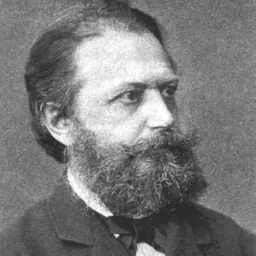



Related people
Same field, nearest in time
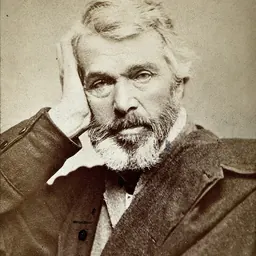
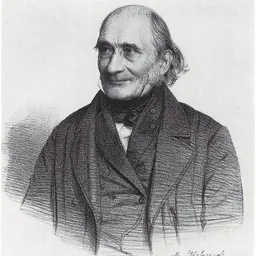

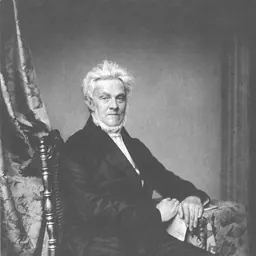
Contemporaries
People whose lives overlapped Franz Xaver Schönwerth's




Frequently asked questions
Who was Franz Xaver Schönwerth?
German folklorist (1810-1886)
When was Franz Xaver Schönwerth born?
Franz Xaver Schönwerth was born on 16 July 1810 in Amberg.
When did Franz Xaver Schönwerth die?
Franz Xaver Schönwerth died on 24 May 1886 in Munich.
What was Franz Xaver Schönwerth's occupation?
Franz Xaver Schönwerth was a linguist, children's writer, collector of fairy tales, ethnologist and ministry official.
What nationality was Franz Xaver Schönwerth?
Franz Xaver Schönwerth was German.
Sources & further reading
· Wikipedia: Franz Xaver Schönwerth
· DBpedia: Franz Xaver von Schönwerth
Cite this page
APA: Biography.guide. (2026). Franz Xaver Schönwerth. https://biography.guide/franz-xaver-schonwerth/
MLA: "Franz Xaver Schönwerth." Biography.guide, https://biography.guide/franz-xaver-schonwerth/.
Chicago: "Franz Xaver Schönwerth." Biography.guide. https://biography.guide/franz-xaver-schonwerth/.
Data last updated: 2026-09-20 · Spot an error? Report a correction.
Page generated 2026-09-27 05:32 UTC