
About Franz Wilhelm Kampschulte
Lived 1831 – 1872 (aged 41). Franz Wilhelm Kampschulte was a German historian, university teacher and german empire.
Franz Wilhelm Kampschulte (12 November 1831 – 3 December 1872) was a German historian.
Life Like his elder brother Heinrich, Franz Wilhelm Kampschulte, who was born into a moderately prosperous family, was intended by his parents for a career in the church from an early age. He attended successively three gymnasiums (secondary schools) in Brilon, Paderborn und Münster, acquiring a broad humanistic education, before moving on to study Roman Catholic theology for three years at the academy in Münster. Simultaneously he also studied history and philology. Another important field for him was the History of the University of Erfurt during the age of humanism and the reformation. A two volume work on the topic appeared in 1858 and 1860. It is considered groundbreaking in respect of Konrad Mutian, and on the origins of the Epistolæ Obscurorum Virorum, and therefore important for students and scholars of German humanism.
During the 1860s he turned his attentions to Calvin. The first volume of what was intended as a three volume work, entitled "John Calvin: his church and his state in Geneva" was printed in 1869. In it he described the political and religious conflicts in Geneva. The volume then addressed Calvin's development as a reformer, his first Geneva period, his banishment from the city and his return in 1541. The themes for the second volume included Calvin's further struggles and eventual triumph in Geneva. Kampschulte died on 3 December 1872, apparently from the lung disease by which he had been troubled ever since his childhood, still working on the second volume, reportedly with his quill pen in his hand. The third volume never appeared.
Reflections Kampschulte was a conscientious, cautious and persistent researcher. Just a few weeks before his death he was still working away in the archives at Bern on research for his second volume on the career of John Calvin.
He was a friend of Franz Heinrich Reusch and Theodor Stumpf, whose theological conclusions he broadly shared. He rejected the concept of Papal infallibility, powerfully re-asserted in 1869 at the First Vatican Council by Pope Pius IX.
Don’t just read it —
keep it.
Full-length biographies made to live with: read them, listen on the way to work, watch them tonight.
- E-book
- Audio
- Video
Instant download · yours to keep · every purchase keeps this site free
Important facts
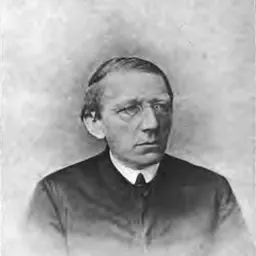
People in Franz Wilhelm Kampschulte's life
Named in this biography and alive at the same time
Related people
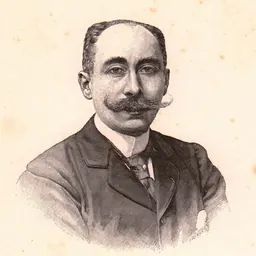
Same field, nearest in time




Contemporaries
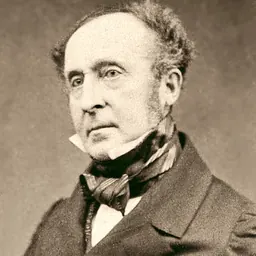
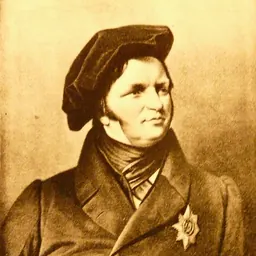
People whose lives overlapped Franz Wilhelm Kampschulte's


Frequently asked questions
Who was Franz Wilhelm Kampschulte?
German historian (1831–1872)
When was Franz Wilhelm Kampschulte born?
Franz Wilhelm Kampschulte was born on 12 November 1831 in Wickede.
When did Franz Wilhelm Kampschulte die?
Franz Wilhelm Kampschulte died on 3 December 1872 in Bonn.
What was Franz Wilhelm Kampschulte's occupation?
Franz Wilhelm Kampschulte was a historian, university teacher and german empire.
What nationality was Franz Wilhelm Kampschulte?
Franz Wilhelm Kampschulte was German.
Sources & further reading
· Wikipedia: Franz Wilhelm Kampschulte
· DBpedia: Franz Wilhelm Kampschulte
Cite this page
APA: Biography.guide. (2026). Franz Wilhelm Kampschulte. https://biography.guide/franz-wilhelm-kampschulte/
MLA: "Franz Wilhelm Kampschulte." Biography.guide, https://biography.guide/franz-wilhelm-kampschulte/.
Chicago: "Franz Wilhelm Kampschulte." Biography.guide. https://biography.guide/franz-wilhelm-kampschulte/.
Data last updated: 2026-09-22 · Spot an error? Report a correction.
Page generated 2026-09-27 05:07 UTC