
About Franz Salmhofer
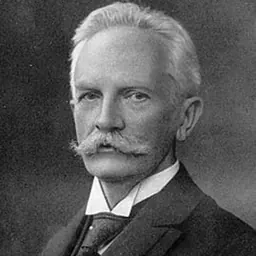
Lived 1900 – 1975 (aged 75). Franz Salmhofer was an Austrian composer, conductor, poet, clarinetist, theatre manager and actor.
Franz Salmhofer (22 January 1900 – 22 September 1975) was an Austrian composer, clarinetist and conductor. He studied the clarinet, composition and musicology in Vienna. Salmhofer served successively as Kapellmeister of the Burgtheater, Director of the Vienna State Opera and Director of the Vienna Volksoper and composed a number of works, few of which are played today.
Biography Born in Vienna, Austria, Salmhofer came from a modest background, his father being a pianist and his mother a cook. His father became an invalid following service in the First World War and his son had to use his musical talent to assist in providing for the family. Salmhofer was educated at the Admont Abbey in the province of Styria from 1909-1914, where he was a choirboy, and in 1916 went on to study musicology, clarinet and composition at the Institute for Musicology at the University of Vienna where he was a pupil of Franz Schreker, Franz Schmidt and Guido Adler. He was part of a class that included Ernst Krenek, Wilhelm Grosz, Karol Rathaus, Joseph Rosenstock, , , Paul Pisk and Jascha Horenstein. Thereafter he worked as a choir conductor and organist. In 1929 he was appointed Kapellmeister of the Burgtheater where he served until 1945 when he became the first post-war Director of the Vienna State Opera, a post he filled until 1953. In this position he worked at several temporary locations until the war-damaged Opera House could be restored. Thereafter he was Director of the Vienna Volksoper until his retirement in 1963.
Director of the State Opera Salmhofer's appointment as the post-War Director of the Vienna State Opera in 1945 came as somewhat of a surprise, but can be attributed to several factors. His predecessor, Karl Böhm, a friend of Joseph Goebbels, had been removed due to his Nazi sympathies. Salmhofer had not been a Nazi sympathiser and his works had come close to being banned during that period. In addition he had had to protect his first wife whose background did not comply with the Nazi race laws. His time at the Burgteater had also given him wide experience in managing a theatre and he had a considerable reputation as a composer and musician and was known for his fervent love of Austria, an advantage during the period of revival of national identity. The first post-war performance of the Staatsoper, Mozart's Figaro, took place at the Volksoper under the baton of Salmhofer and at the request of the Russian occupying forces on 1 May 1945.
As a director he was able to revive the theatre that had been damaged during allied bombing of Vienna and which was temporarily relocated to the Theater an der Wien, where it remained for the following decade.
Music During his lifetime Salmhofer wrote over 300 works for stage, working mainly in the genres of ballet and opera. He could be termed a 'late romantic' as he took romanticism as a starting point and frequently drew inspiration from folk traditions. Some also regarded him as a 'progressive', but he was careful to avoid controversial themes that in the political mood of the 1930s and 1940s could have led to sanction of his works and, like many others of his generation, immigration or exile from his home country. He was one of the most widely performed composers of his generation.
List of major compositions Opera: Faust (1927) Ballet: Das Lockende Phantom (1927) Ballet: Der Taugenichts in Wien (1930) Ballet: Das Weihnachtsmärchen (1931) Ballet: Österreichische Bauernhochzeit (1933) Opera: Dame im Traum (1935) Film Score: Last Love (1935) Opera: Iwan Tarassenko - Version 1 (1938) Opera: Das Werbekleid Salzburg (1943) Film Score: Das andere Leben (1948) Opera: Iwan Tarassenko - Version 2 (1948) Film Score: Das Siegel Gottes (1949) Film Score: Der Wallnerbub (1950) Songs: Heiteres Herbarium (1951) Opera: Dreikönig (1970)
Honours and awards City of Vienna Music Prize (1926 & 1960) Austrian State Prize for Composition (1937) Karl Renner Prize (1954) Silver Decoration of the state of Vienna (1960) Honorary Member of the Austrian Federal Theatre (1963) Federal Capital of Vienna Medal of Honour in gold (1965) Ring of Honour of the City of Vienna (1970)
Eponyms Two places in Vienna bear Salmhofer's name:
Salmhoferstraße (Inzersdorf area south of the city centre) Franz-Salmhofer-Platz (The square in front of the Volksoper).
Don’t just read it —
keep it.
Full-length biographies made to live with: read them, listen on the way to work, watch them tonight.
- E-book
- Audio
- Video
Instant download · yours to keep · every purchase keeps this site free
Important facts
People in Franz Salmhofer's life
Named in this biography and alive at the same time




Related people
Same field, nearest in time



Contemporaries
People whose lives overlapped Franz Salmhofer's



Frequently asked questions
Who was Franz Salmhofer?
Austrian musician (1900–1975)
When was Franz Salmhofer born?
Franz Salmhofer was born on 22 January 1900 in Vienna.
When did Franz Salmhofer die?
Franz Salmhofer died on 22 September 1975 in Vienna.
What was Franz Salmhofer's occupation?
Franz Salmhofer was a composer, conductor, poet, clarinetist, theatre manager and actor.
What nationality was Franz Salmhofer?
Franz Salmhofer was Austrian.
Sources & further reading
Cite this page
APA: Biography.guide. (2026). Franz Salmhofer. https://biography.guide/franz-salmhofer/
MLA: "Franz Salmhofer." Biography.guide, https://biography.guide/franz-salmhofer/.
Chicago: "Franz Salmhofer." Biography.guide. https://biography.guide/franz-salmhofer/.
Data last updated: 2026-09-26 · Spot an error? Report a correction.
Page generated 2026-09-27 05:14 UTC