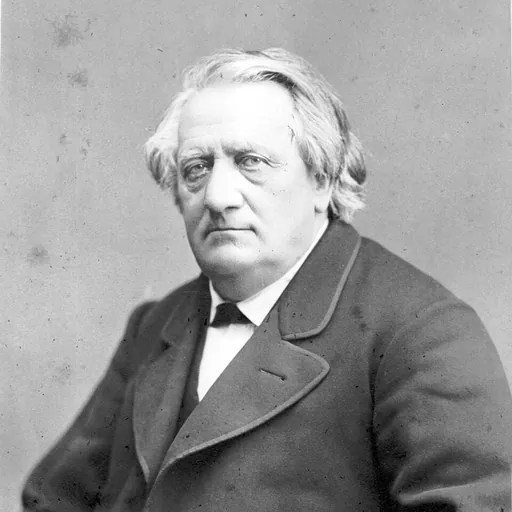
About Franz Lachner
Lived 1803 – 1890 (aged 86). Franz Lachner was a conductor and composer.
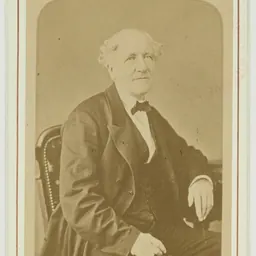
Franz Paul Lachner (2 April 180320 January 1890) was a German composer and conductor.
Biography Lachner was born in Rain am Lech to a musical family (his brothers Ignaz, and Vinzenz also became musicians). He studied music with Simon Sechter and Maximilian Stadler. He conducted at the Theater am Kärntnertor in Vienna where he met Beethoven and Schubert. In 1834, he became Kapellmeister at Mannheim. As a result of composers' aesthetic comparisons of Beethoven's symphonic output with efforts afterwards, in 1835, there was a competition in Vienna for the best new symphony sponsored by Tobias Haslinger of the music publishing firm with no fewer than 57 entries. Lachner received first prize with his 5th Symphony Sinfonia passionata, or Preis-Symphonie and became royal Kapellmeister at Munich, becoming a major figure in its musical life, conducting at the opera and various concerts and festivals. His career there came to a sudden end in 1864 after Richard Wagner's disciple Hans von Bülow took over Lachner's duties. Lachner remained officially in his post on extended leave for a few years until his contract expired.
Work
Lachner was a well-known and prolific composer in his day, though he is not now considered a major composer. His work, influenced by his friends Ludwig van Beethoven and Franz Schubert, is regarded as competent and craftsman-like, but is now generally little known. Among his greatest successes were his opera Catarina Cornaro (1841, preceding Donizetti's opera by three years), his Requiem, and his seventh orchestral suite (1881).
In the present day it may be his organ sonatas (Opp. 175, 176, 177) and chamber music, in particular his music for wind instruments, that receive the most attention, though his string quartets and some of his eight symphonies have been performed and recorded. His songs, some of which are set to the same texts that Schubert used, contributed to the development of the German Lied.
For performances of Cherubini's Médée in Frankfurt in 1855, Lachner composed recitatives to replace the original spoken dialogue, and it was this version, translated into Italian, which was used in many twentieth-century revivals and recordings of that opera, most notably those with Maria Callas in the title role.
Don’t just read it —
keep it.
Full-length biographies made to live with: read them, listen on the way to work, watch them tonight.
- E-book
- Audio
- Video
Instant download · yours to keep · every purchase keeps this site free
Important facts
People in Franz Lachner's life
Named in this biography and alive at the same time
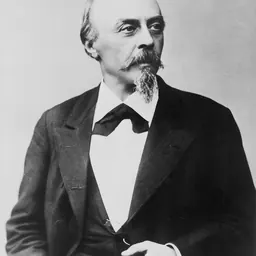
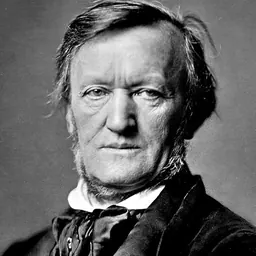


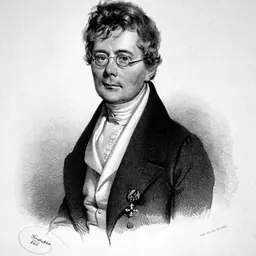


Related people
Same field, nearest in time



Contemporaries
People whose lives overlapped Franz Lachner's





Frequently asked questions
Who was Franz Lachner?
German composer and conductor (1803-1890)
When was Franz Lachner born?
Franz Lachner was born on 2 April 1803 in Rain.
When did Franz Lachner die?
Franz Lachner died on 20 January 1890 in Munich.
What was Franz Lachner's occupation?
Franz Lachner was a conductor and composer.
What nationality was Franz Lachner?
Franz Lachner's recorded nationality: German Reich.
Sources & further reading
Cite this page
APA: Biography.guide. (2026). Franz Lachner. https://biography.guide/franz-lachner/
MLA: "Franz Lachner." Biography.guide, https://biography.guide/franz-lachner/.
Chicago: "Franz Lachner." Biography.guide. https://biography.guide/franz-lachner/.
Data last updated: 2026-09-20 · Spot an error? Report a correction.
Page generated 2026-09-27 05:09 UTC