
About Franz Karl Ginzkey
Lived 1871 – 1963 (aged 91). Franz Karl Ginzkey was an Austrian poet, writer, children's writer, military officer and officer (armed forces).
Franz Karl Ginzkey (8 September 1871, Pola, Austrian Littoral, Austria-Hungary (now Pula, Croatia) – 11 April 1963, Vienna) was an Austro-Hungarian (then Austrian) officer, poet and writer. His arguably most famous book Hatschi Bratschis Luftballon (Hatschi Bratschi's Balloon) captivated generations of children.
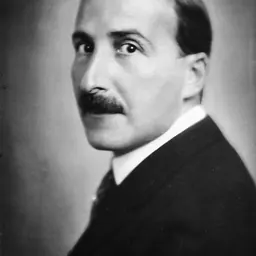
Life Ginzkey, son of a Bohemian German professional officer of the Austrian Navy, was in the imperial army until 1897. During that period he was intermittently also commander of the as barracks used (Rainer-infantry regiment) Fortress Hohensalzburg. From 1897 to 1914 he worked as a cartographer at the Militärgeographischen Institute (Militarygeographic institute) in Vienna, afterwards in the war archive. Since 1920, he was a retired military member and then worked as a freelance writer. At the time of the Austro-Fascism, he was (for the professional group of artists) from 1934 to 1938 Member of the Council of State and after 1938 came to terms with the leaders of National Socialism and even joined the NSDAP. He was friends with Max Mell and Stefan Zweig, and furthermore with Anton Faistauer and Carl Zuckmayer. Moreover, Ginzkey participated in the founding of the Salzburg Festival and for decades was a member of its board of trustees. Since 1944 he lived in Seewalchen at Lake Attersee.
After the end of war Ginzkeys Die Front in Tirol (The front in Tyrol) (Fischer, Berlin, 1916) was blacklisted in the Soviet zone of occupation.
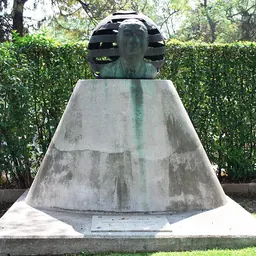
On his 100th birthday a Franz-Karl-Ginzkey monument was erected in Seewalchen at Lake Attersee.
He rests in a grave of honor at the Vienna Central Cemetery (Group 32 C, Number 25).
Ginzkey is numbered among the circle of newromantic poets and novelists. One of his literary discoverers was Peter Rosegger. A part of his work shows great connection to Salzburg. This witness the following works:
Wie ich Herr auf Hohensalzburg ward When I was master at Hohensalzburg Altsalzburger Bilder nach 10 Federzeichnungen (gemeinsam mit Ulf Seidl ) Altsalzburger images after 10 pen drawings (together with Ulf Seidl) Jakobus und die Frauen (1908) Jacob and the Women Der seltsame Soldat (1925) The strange soldier Der Heimatsucher (1948) The home searcher Das Antlitz Salzburgs (1933) The face of Salzburg Salzburg und das Salzkammergut (1934) Salzburg and the Salzkammergut Prinz Tunora (1934) Prince Tunora Salzburg, sein Volk und seine Trachten (1934) Salzburg, its people and its costumes
In 1968 the square between Alpenstraße (Alpine street) and Adolf-Schemel-Straße (Adolf-Schemel street) in the Salzburg district of Salzburg-Süd (Salzburg-South) (Alpinsiedlung) was named in his honor Ginzkeyplatz.
Literary works (a selection) Hatschi Bratschis Luftballon, 1904 Der von der Vogelweide, 1912 Der Wiesenzaun. Erzählung, 1913 Aus der Werkstatt des Lyrikers. Vortrag, 1913 Den Herren Feinden! Ein Trutz- und Mahnlied, 1914 Die Front in Tirol, 1916 Der Gaukler von Bologna, Roman, 1916 Befreite Stunde. Neue Gedichte, 1917 Der Doppelspiegel. Betrachtungen und Erzählungen, 1920 Rositta, 1921 Der Prinz von Capestrano, 1921 Von wunderlichen Wegen. 7 Erzählungen, 1922 Brigitte und Regine, Novelle, 1923 Die Reise nach Komakuku. Geschichten aus seltsamer Jugend, 1923 Der Weg zu Oswalda. Erählung, 1924 Der seltsame Soldat, 1925 Der Kater Ypsilon. Novellen, 1926 Der Gott und die Schauspielerin, 1928 Florians wundersame Reise über die Tapete, 1931 Drei Frauen. Rosita - Agnete - Oswalda, 1931 Gespenster auf Hirschberg. Aus der hinterlassenen Handschrift des Majors von Baltram, 1931 Das verlorene Herz. Ein Märchenspiel, 1931 Magie des Schicksals. Novelle, 1932 Das Antlitz Salzburgs, 1933 Prinz Tunora, Roman, 1934 Salzburg und das Salzkammergut, 1934 Salzburg, sein Volk und seine Trachten, 1934 Liselotte und ihr Ritter oder Warum nicht Romantik?, Roman, 1936 Sternengast. Neue Gedichte, 1937 Der selige Brunnen. Eine Raphael Donner-Novelle, 1940 Meistererzählungen, 1940 Erschaffung der Eva. Ein epischer Gesang, 1941 Zeit und Menschen meiner Jugend, 1942 Taniwani. Ein fröhliches Fischbuch, 1947 Der Heimatsucher. Ein Leben und eine Sehnsucht, 1948 Genius Mozart, 1949 Die Geschichte einer stillen Frau, Roman, 1951 Der Träumerhansl, 1952 Altwiener Balladen, 1955 Der Tanz auf einem Bein. Ein Seitensprung ins Wunderliche, 1956 Franz Karl Ginzkey. Ausgewählte Werke in vier Bänden, 1960
Decorations and awards 1921 Adolf Mejstrik Prize for poetry from the German Schiller Foundation 1932 Honorary doctorate from the University of Vienna 1941 Ring of Honour of the City of Vienna 1954 Literary Prize of the City of Vienna 1957 Grand Austrian State Prize for Literature, with Heimito von Doderer 1957 Austrian Decoration for Science and Art Ring of the city of Salzburg
In 1968, Ginzkeyplatz was named in his honour in the Salzburg district of Salzburg-Süd (Alpensiedlung) between Alpenstrasse und Adolf-Schemel-Strasse. Ginzkey's 100th birthday in 1971 was marked by a Franz-Karl Ginzkey monument on the Attersee Seewalchen.
Don’t just read it —
keep it.
Full-length biographies made to live with: read them, listen on the way to work, watch them tonight.
- E-book
- Audio
- Video
Instant download · yours to keep · every purchase keeps this site free
Important facts
People in Franz Karl Ginzkey's life
Named in this biography and alive at the same time





Related people
Same field, nearest in time
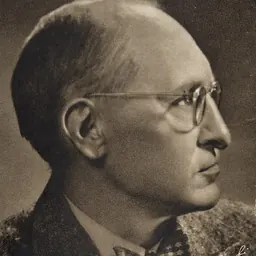
Contemporaries
People whose lives overlapped Franz Karl Ginzkey's
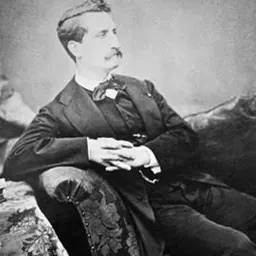



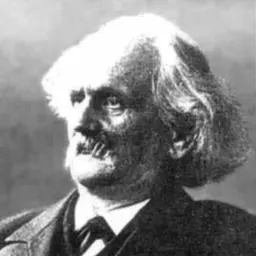
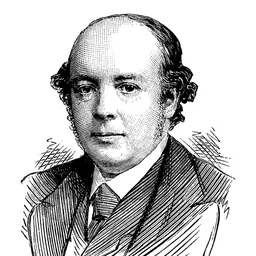
Frequently asked questions
Who was Franz Karl Ginzkey?
Austrian writer (1871–1963)
When was Franz Karl Ginzkey born?
Franz Karl Ginzkey was born on 8 September 1871 in Pula.
When did Franz Karl Ginzkey die?
Franz Karl Ginzkey died on 11 April 1963 in Vienna.
What was Franz Karl Ginzkey's occupation?
Franz Karl Ginzkey was a poet, writer, children's writer, military officer and officer (armed forces).
What nationality was Franz Karl Ginzkey?
Franz Karl Ginzkey was Austrian.
Sources & further reading
· Wikipedia: Franz Karl Ginzkey
Cite this page
APA: Biography.guide. (2026). Franz Karl Ginzkey. https://biography.guide/franz-karl-ginzkey/
MLA: "Franz Karl Ginzkey." Biography.guide, https://biography.guide/franz-karl-ginzkey/.
Chicago: "Franz Karl Ginzkey." Biography.guide. https://biography.guide/franz-karl-ginzkey/.
Data last updated: 2026-09-22 · Spot an error? Report a correction.
Page generated 2026-09-27 05:32 UTC