
About Franz Boos
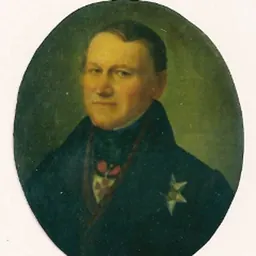
Lived 1753 – 1832 (aged 78). Franz Boos was an Austrian explorer, gardener and botanist.
Franz Boos (23 December 1753 in Frauenalb – 9 February 1832 in Vienna) was an Austrian gardener-botanist in the Age of Enlightenment, a voyager and collector of natural history specimens for Emperor Joseph II of Austria, who reigned from 1765 to 1790.
Boos came from a gardening family that lived in the Grand Duchy of Baden, his father being head gardener in Rastatt, his son Joseph Boos (1794–1879) being an assistant gardener at the Schönbrunn Palace. Franz began his career in 1771 as a gardener to Prince Leopold of Dietrichstein in Seelowitz (Moravia). From 1774 to 1775 he worked at the famous gardens of Prince Johann I of Liechtenstein in Lednice (also in Moravia) then, in 1776, he became assistant gardener at the Imperial and Royal Court Gardens of Schönbrunn Palace in Vienna.
Franz Boos is best known for successful voyages to America, the Caribbean and South Africa during which he collected a wide range of natural history specimens for the parks and gardens, menagerie, and Cabinet of the Emperor's palace at Schönbrunn. The Emperor had appointed Franz Joseph Märter (1753–1827) as organiser and leader of this voyage of scientific exploration. Franz Boos, an under-gardener at the time, was selected as the primary collector specialising in tropical plants for the greenhouses. When Boos sailed to the Isle de France (now Mauritius) and Bourbon (Reunion), he was a passenger of the then unknown merchant sailor Nicolas Baudin. The knowledge gained from Austrian Boos was later combined with French horticultural and botanical expertise which lead Baudin to the forefront of scientific exploration and research as the century moved into the upheaval of Revolutionary Wars. with Joseph-François Charpentier de Cossigny. The naturalists were initially to go as part of an Austrian round the world voyage dedicated to scientific research. This had been urged by the eminent savant, Ignaz von Born who, at the Emperor’s invitation, nominated five naturalists to go on the Cobenzell, a ship owned by William Bolts. The intended Imperial expedition was reported in the German press in July 1782:The all-encompassing mind of the Kaiser attracts every kind of merit. While he abolishes the old abuses, gives new laws and makes happy his people, he also recognizes how much the sciences and useful arts contribute to the benefit of the state. In accordance with these ideas, he has caused several savants and artists, the Sub-director of the Natural History Cabinet, Heydinger, the Professor of Natural History, Märter, the Palace Gardiner, Boos, and the Imperial Painter, Moll, to undertake a voyage round the world through the several lands of the two Indies, to perfect the various branches of natural science and to make new discoveries and observations in these fields. The ship designated for this illustrious expedition, the Graf von Cobenzl, will be supplied with necessaries and be in readiness by the beginning of August. This voyage did not take place, and Märter and his companions sailed from Le Havre for Philadelphia in 1783 on the General Washington. In March 1784 Boos traveled with Märter to the island of Providence in the Bahamas, and from there on collecting trips to Guanahani and other islands. In September he left the island group, returning to Charleston in South Carolina, sending his collections (mostly live plants) back to Vienna in May 1785 and returning himself to Vienna via Holland in September 1785. At Charleston in South Carolina Boos collected many rare plants. Greenhouses at Schönbrunn already displayed an impressive collection of plants from the Jacquin's explorations in the Antilles and South America made from 1754 to 1759.
Plants were shipped to the Austrian Consul in Holland who then forwarded them upriver and overland to Vienna. Scholl eventually returned to Vienna in 1799 with his large collection of living plants and seed from Erica species. Present-day botanist Dr Kiehn and staff at the Schönbrunn Botanical Gardens believe that the ericas now growing at the Belvedere Palace Garden date back over 200 years to the Boos and Scholl collections as there is no evidence of any other collections being grown. Both the Belvedere Palace and Schönbrunn Palace Gardens were damaged by bombing at the end of the Second World War but though most of the glasshouse plants were destroyed at the end of the war many survived because they were purposely propagated for other gardens and glasshouses.
Association with Nicolas Baudin When Boos travelled from the Cape to Isle de France, and from there to Trieste carrying the natural history collections it was on the ship Pepita commanded by Nicolas Baudin, at that time a merchant mariner. Baudin was interested in the collections which included many specimens from the Pamplemousses Botanical Garden on the Isle de France (Mauritius). From Boos Baudin learned much about the transport of live plants and animals and the storage of natural history specimens, knowledge that he would later use in the scientific exploration of New Holland (Australia), and elsewhere, for Napoleon. The arrival of the Pepita, under its formal name, Josepha,was reported in the press: Vienna, 21 July. According to letters from Trieste, the French freighter Josepha, Cap. Boudin, coming from the East Indies has anchored in the harbour there with various animals and plants for the Emperor's menagerie at Schoenbrunn, for his gardens and for his Natural History Cabinet. These animals and plants have been collected by order of His Majesty with the greatest care by Mr. Boos, Imperial Court Gardener, which he has sought out in the Isles of France and Bourbon, in Madagascar and at the Cape of Good Hope.
Plant collections Boos collected in Europe, Austria, South Africa, Madagascar, Pennsylvania, South Carolina and the West Indies his collections probably in the British Museum of Natural Historia and Vienna.
Other achievements and honours On his return from Africa, Boos replaced Jacquin as Director of the Schönbrunn parks and gardens. After the death of Richard van der Schot, and because of his achievements, in 1790 Emperor Leopold II appointed Boos Director of the Schönbrunn Menagerie and the so-called "Dutch Palace Garden", then in 1807 Director of all the Courtyards. In 1810 he was admitted to the Imperial Council to eventually retire in 1827. Boos’s successor as Director of the Courtyard Gardens and Menagerie at Schönbrunn was Bredemeyer who, in 1793 was appointed Head Gardener, a post he held from 1827 until his death in 1839. Apart from his many plant and animal introductions Boos also prepared a plan of the courtyard gardens of Schönbrunn in 1780 shortly after they had been completed. Together with his son Joseph Boos, also a keen gardener and botanist at Schönbrunn he published, in 1816, a catalogue of the cultivated and wild plants grown during his time at Schönbrunn (Schönbrunn's flora, the cultivated plants of the Royal Dutch botanical courtyard garden at Schönbrunn (published by Geistinger, Vienna and Trieste). The later Düsseldorf garden artist Maximilian Friedrich Weyhe while training as a gardener studied with Franz Boos in Vienna. Boos was a childhood friend of Peter Joseph Elder a senior gardener since 1788 in Brühl (Rhineland) and Head of the Botanical Garden of the University of Bonn and gave his son Peter Joseph (who later became famous landscape gardener) a job at Schönbrunn. In 1905 Franz Boos Lane in Hietzing, Vienna, was named after him.
Don’t just read it —
keep it.
Full-length biographies made to live with: read them, listen on the way to work, watch them tonight.
- E-book
- Audio
- Video
Instant download · yours to keep · every purchase keeps this site free
Important facts
People in Franz Boos's life
Named in this biography and alive at the same time
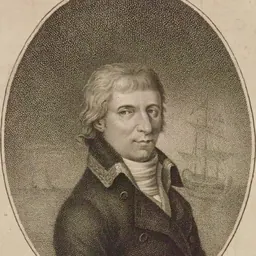
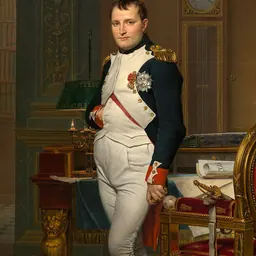


Related people
Same field, nearest in time



Contemporaries
People whose lives overlapped Franz Boos's





Frequently asked questions
Who was Franz Boos?
botanist (1753-1832)
When was Franz Boos born?
Franz Boos was born on 23 December 1753 in Frauenalb Monastery.
When did Franz Boos die?
Franz Boos died on 23 February 1832 in Vienna.
What was Franz Boos's occupation?
Franz Boos was an explorer, gardener and botanist.
What nationality was Franz Boos?
Franz Boos was Austrian.
Sources & further reading
Cite this page
APA: Biography.guide. (2026). Franz Boos. https://biography.guide/franz-boos/
MLA: "Franz Boos." Biography.guide, https://biography.guide/franz-boos/.
Chicago: "Franz Boos." Biography.guide. https://biography.guide/franz-boos/.
Data last updated: 2026-09-20 · Spot an error? Report a correction.
Page generated 2026-09-27 05:08 UTC