
Franklyn Barrett
Australian film director and cinematographer
About Franklyn Barrett
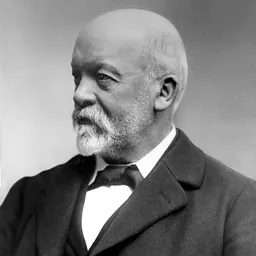
Lived 1873 – 1964 (aged 90–91). Franklyn Barrett was an Australian film director, cinematographer and producer.
Walter Franklyn Barrett (1873 – 16 July 1964), better known as Franklyn Barrett, was an Australian film director and cinematographer. He worked for a number of years for West's Pictures. It was later written of the filmmaker that "Barrett's visual ingenuity was to be the highlight of all his work, but... his direction of actors was less assured".
Early life and career Barrett was born in Loughborough, Leicestershire, England, and was raised by his aunt. He was a professional violin player and amateur photographer and claims to have seen the first exhibit of motion pictures at the Empire Theatre in London.
Barrett moved to New Zealand with his brother and father to work as a clerk for the latter. He began to experiment with shooting movies, and in 1901 won a prize of £15 for some of his photos. Barrett accompanied the Duke of York on his 1901 tour of Australia in capacity as photographer. He was the first person to film the Melbourne Cup from start to finish in 1904, and shot several "scenic movies" for the New Zealand and New South Wales railways.
Barrett joined the Melbourne office of Pathé Frères in 1908. He toured through the South Pacific taking films for them. Barrett stayed with them when West's Pictures took over in 1911. He helped build their new studio. His first film for the company appears to have been a film of the stage play The Christian (1911) followed by All for Gold, or Jumping the Claim, although All for Gold was released first. Barrett said in October 1911, "I have had more pleasure in cinematographing All for Gold, for West's than in all the others [films he made] put together." Barrett continued to make documentary or scenic films for West's such as the 1911 Melbourne Cup. He made a series of thrillers for the company, often with the same cast: The Strangler's Grip (1912), The Mystery of the Black Pearl (1912), The Eleventh Hour (1912) and A Silent Witness (1913).
In 1913 West's merged with Australasian Films and Barrett joined the Fraser Film Release and Photographic Company, for whom he directed A Blue Gum Romance (1913) and The Life of a Jackeroo (1913). He also shot Pommy Arrives in Australia (1913) for director Raymond Longford. In December 1913 Barrett left on an overseas trip for two years.
Barrett returned to Australia in December 1915 having bought the rights to the novel The Pioneeers, which he then adapted into a film. He worked as a cinematographer on films such as The Joan of Arc of Loos (1916), Raymond Longford's The Mutiny of the Bounty (1916) and Jack Gavin's The Murder of Captain Fryatt (1917). Barrett intended to make a film with Dorothy Brunton but when she became unavailable obtained the rights to The Monk and the Woman (1917). He made the war film Australia's Peril (1917) and shot footage for A Romance of the Burke and Wills Expedition of 1860 (1918).
Barrett was cinematographer (and possibly uncredited director) on the first two movies from Snowy Baker, The Enemy Within (1918) and The Lure of the Bush (1918), co producing the latter. Around this time he and the author of "Lure of the Bush", Percy Reay, registered for copyright "The Adventures of Barry Lupino Detective". He directed the film adaptation Struck Oil (1919) of the stage hit.
In 1920 he was part of the Golden Wattle Film Syndicate which made the film adaptation of the stage success The Breaking of the Drought, written by Reay and directed by Barrett. Barrett then formed his own film company with solicitor Barry Kenward, with whom he made three features: A Girl of the Bush (1921), Know Thy Child (1921) and A Rough Passage (1922). This company folded in May 1922.
Later career Barrett moved into theatre management, running the Capitol Theatre in Canberra in 1925, then various cinemas for Hoyts Theatres from 1927 onwards. In the mid 1920s he was associated with the Australian Motion Picture Producers Association. He spoke in support of the local industry and in 1925 expressed interest in some projects he still wished to make but these were never filmed. In 1930 Barrett wrote, "the value of Australian-made pictures lies in the fact that they must be different. Point for point, we cannot hope' to compete with the splendid productions w" are receiving from across the Pacific Ocean...But if we stick to the type of dhat. isnatural to us, comparisons cannot be-made' and we have a big chance of interesting the overseas market."
He died at Randwick, New South Wales on 16 July 1964, and was cremated.
Franklyn and Mabel's house at 6 Barrett Place Randwick, their home from 1911 to 1926, has a Bicentennial commemorative plaque.
Select filmography Dummy Mace (1901) – cinematographer, director – a staged 3 round boxing match A Message from Mars (1903) – cinematographer, director Ally Sloper as a conjuror (1903) – cinematographer, director Ally Sloper on Holiday (1903) – cinematographer, director Johnson's Juggernauts (1912) (short) The Strangler's Grip (1912) – cinematographer The Mystery of the Black Pearl (1912) – cinematographer The Eleventh Hour (1912) – cinematographer A Silent Witness (1912) – cinematographer, director The Life of a Jackeroo (1913) – cinematographer, director Pommy Arrives in Australia (1913) – cinematographer A Blue Gum Romance (1913) – cinematographer, director The Pioneers (1916) – cinematographer, director The Joan of Arc of Loos (1916) – cinematographer The Mutiny of the Bounty (1916) – cinematographer The Murder of Captain Fryatt (1917) – cinematographer The Monk and the Woman (1917) – director Australia's Peril (1917) – cinematographer, director The Enemy Within (1918) – cinematographer A Romance of Burke and Wills Expedition of 1860 (1918) – cinematographer The Lure of the Bush (1918) – cinematographer Struck Oil (1919) – director The Breaking of the Drought (1920) – cinematographer, director A Girl of the Bush (1921) – cinematographer, director Know Thy Child (1921) – cinematographer, director A Rough Passage (1922) – cinematographer, director
Don’t just read it —
keep it.
Full-length biographies made to live with: read them, listen on the way to work, watch them tonight.
- E-book
- Audio
- Video
Instant download · yours to keep · every purchase keeps this site free
Important facts
People in Franklyn Barrett's life
Named in this biography and alive at the same time


Related people
Same field, nearest in time

Contemporaries
People whose lives overlapped Franklyn Barrett's


Frequently asked questions
Who was Franklyn Barrett?
Australian film director and cinematographer
When was Franklyn Barrett born?
Franklyn Barrett was born in 1873 in Loughborough.
When did Franklyn Barrett die?
Franklyn Barrett died in 1964 in Sydney.
What was Franklyn Barrett's occupation?
Franklyn Barrett was a film director, cinematographer and producer.
What nationality was Franklyn Barrett?
Franklyn Barrett was Australian.
Sources & further reading
Cite this page
APA: Biography.guide. (2026). Franklyn Barrett. https://biography.guide/franklyn-barrett/
MLA: "Franklyn Barrett." Biography.guide, https://biography.guide/franklyn-barrett/.
Chicago: "Franklyn Barrett." Biography.guide. https://biography.guide/franklyn-barrett/.
Data last updated: 2026-09-20 · Spot an error? Report a correction.
Page generated 2026-09-27 05:28 UTC