
Franklin Stahl
American molecular biologist, geneticist
About Franklin Stahl
Lived 1929 – 2025 (aged 95). Franklin Stahl was an American geneticist, molecular biologist, university teacher and biochemist, known for Meselson-Stahl experiment.
Franklin William Stahl (October 8, 1929 – April 2, 2025) was an American molecular biologist and geneticist. With Matthew Meselson, Stahl conducted the famous Meselson-Stahl experiment showing that DNA is replicated by a semiconservative mechanism, meaning that each strand of the DNA serves as a template for production of a new strand.
Stahl was a professor of biology at the University of Oregon's Institute of Molecular Biology in Eugene, Oregon.
Background Stahl was born in Boston, Massachusetts on October 28, 1929, and grew up in nearby Needham, Massachusetts. Like his two older sisters, graduated from the public schools of Needham. In 1951, he was awarded an AB degree in biology from Harvard College, and matriculated in the biology department of the University of Rochester. His interest in genetics was cemented in 1952 by his introduction to bacterial viruses (phages) in a course taught by A. H. (Gus) Doermann at the Cold Spring Harbor Biological Laboratory. In 1956, he received a PhD in biology for his work with Doermann on the genetics of T4 phage. In 1955, he undertook postdoctoral studies with Giuseppe Bertani (in the Phage group) at Caltech (Pasadena) with the aim of learning some bacterial genetics.
Career Stahl subsequently turned his attentions to collaborations with Charley Steinberg and Matt Meselson. With Steinberg, he undertook mathematical analyses of T4 growth, mutation, and genetic recombination. With Meselson, he studied DNA replication in Escherichia coli. That study produced strong support for the semiconservative model proposed by Jim Watson and Francis Crick. After his retirement in 2001, he lived with Jette and four llamas in Eugene, where he continued to submit research papers and participated in University of Oregon governance.
Stahl's post-retirement activities included assisting the U.S. Department of Justice in identifying the 2017 Jewish Community Center anti-Semitic bomb threat perpetrators. This inquiry led Stahl to solve the inexplicable presence of silica and iron in the 2001 anthrax letters. The details are set forth in Stahl v. FBI, Civil No. 1:23-cv-02918-JMC (D.C. District Court 2024).
Personal life and death In 1955, Stahl married Mary Morgan, after they had only dated for a week. In phage T4: With H. Foss and others, demonstrations of genetic linkage circularity and its relation to genetic heterozygosis. With N. Murray and others, the determination, by genetic methods, of the direction of mRNA synthesis on cotranscribed pairs of genes. In Lambda: With M. Stahl and others, the discovery and analysis of the genetic element, Chi, that stimulates nearby genetic recombination in bacteria. With M. Stahl and others, the mutual dependence of DNA replication and genetic recombination. These studies utilized the method of density gradient centrifugation that was developed for the test of the semiconservative model of DNA replication. In Yeast: With H. Foss and others, the demonstration of two functional pathways for genetic recombination in wild-type budding yeast.
Theoretical contributions With C. Steinberg, formulations of phage growth, recombination and mutation. With J. Szostak and others, the interpretation of genetic recombination in terms of the repair of double-strand DNA breaks. With R. Lande, E. Housworth and others, mathematical formalizations of recombination in higher organisms.
Selected honors 1997- Fellow, American Academy of Microbiology
1996 Thomas Hunt Morgan Medal (from Genetics Society of America)
1986- Associate Member EMBO
1985- American Cancer Society Research Professor
1985-1990 MacArthur Fellow
1981- Member, American Academy of Arts and Sciences
1976- Member, National Academy of Sciences
1975-76; 1985-1986 Guggenheim Fellow
1969-70 NIH Special Postdoctoral Fellowship
Honorary Doctor of Science: Oakland University and University of Rochester
Don’t just read it —
keep it.
Full-length biographies made to live with: read them, listen on the way to work, watch them tonight.
- E-book
- Audio
- Video
Instant download · yours to keep · every purchase keeps this site free
Important facts
People in Franklin Stahl's life
Named in this biography and alive at the same time
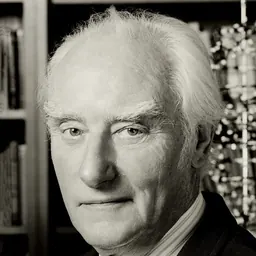
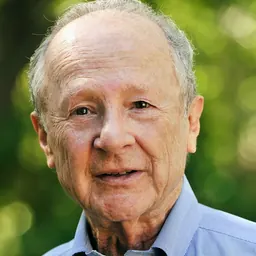

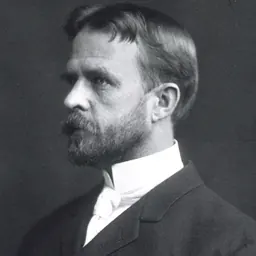



Related people
Same field, nearest in time
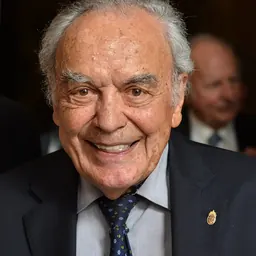

Contemporaries
People whose lives overlapped Franklin Stahl's


Frequently asked questions
Who was Franklin Stahl?
American molecular biologist, geneticist
When was Franklin Stahl born?
Franklin Stahl was born on 8 October 1929 in Boston, Needham.
When did Franklin Stahl die?
Franklin Stahl died on 2 April 2025 in Eugene.
What was Franklin Stahl's occupation?
Franklin Stahl was a geneticist, molecular biologist, university teacher and biochemist.
What was Franklin Stahl known for?
Franklin Stahl was known for Meselson-Stahl experiment.
What nationality was Franklin Stahl?
Franklin Stahl was American.
Sources & further reading
Cite this page
APA: Biography.guide. (2026). Franklin Stahl. https://biography.guide/franklin-stahl/
MLA: "Franklin Stahl." Biography.guide, https://biography.guide/franklin-stahl/.
Chicago: "Franklin Stahl." Biography.guide. https://biography.guide/franklin-stahl/.
Data last updated: 2026-09-20 · Spot an error? Report a correction.
Page generated 2026-09-27 05:16 UTC