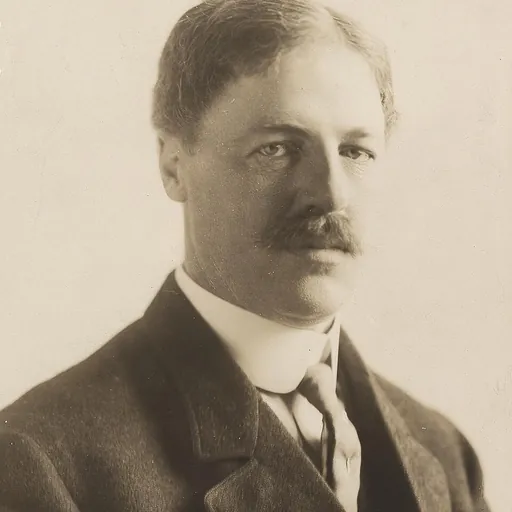
About Frank Weston Benson
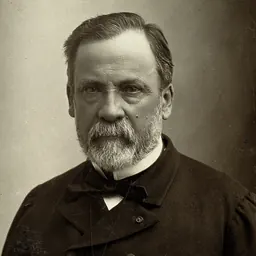
Lived 1862 – 1951 (aged 89). Frank Weston Benson was an American painter and graphic artist.
Frank Weston Benson, frequently referred to as Frank W. Benson, (March 24, 1862 – November 15, 1951) was an American artist from Salem, Massachusetts, known for his Realistic portraits, American Impressionist paintings, watercolors and etchings. He began his career painting portraits of distinguished families and murals for the Library of Congress. Some of his best known paintings (Eleanor, Museum of Fine Arts, Boston; Summer, Rhode Island School of Design Museum) depict his daughters outdoors at Benson's summer home, Wooster Farm, on the island of North Haven, Maine. He also produced numerous oil, wash and watercolor paintings and etchings of wildfowl and landscapes.
In 1880, Benson began to study at the School of the Museum of Fine Arts, Boston under both Otto Grundmann and Frederic Crowninshield. In 1883 he travelled to Paris to study at the Académie Julian. He enjoyed a distinguished career as an instructor and department head at the School of the Museum of Fine Arts, Boston. He was a founding member of the Ten American Painters, American Academy of Arts and Letters and The Guild of Boston Artists.
Biography
Early life Frank Weston Benson was born to George Wiggin Benson, a successful cotton broker, and Elisabeth Poole, from families who founded Salem, Massachusetts. Benson obtained his appreciation of the sea from his grandfather, Captain Samuel Benson. When he was 12, he was given a sailboat
Artistic studies An avid birdwatcher and wildfowl hunter, Benson wanted to be an ornithological illustrator. one of his first oil paintings, after a hunting trip. Capitalizing on what he learned, Benson held drawing classes in Salem and painted landscapes during the summer of 1882. He traveled to Paris and studied at the Académie Julian from 1883 to 1884 with Edmund Tarbell and Joseph Lindon Smith; Joseph Lindon Smith and Benson shared an apartment.
Impressionism, particularly the work of Claude Monet, played a role in the development of Benson's own American Impressionistic style. He capitalized on Monet's color palette and brush strokes and keenly depicted "reflected light", yet maintained some detail in the composition. Per Chambers, Benson represented American people with an "ideal of grace, of dignity, of elegance."
Benson's watercolors reminded some critics of Winslow Homer's works. While there, Benson became engaged to the daughter of friends from Salem, Massachusetts, Ellen Perry Peirson. They married in 1888 when Benson had established himself in his career taught until 1913. and the miniaturist Bertha Coolidge.
Works
William H. Gerdts, art historian, wrote of Benson's work in his introduction to Faith Andrews Bedford's biography of the painter: "Frank Benson painted some of the most beautiful pictures ever executed by an American artist. They are images alive with reflections of youth and optimism, projecting a way of life at once innocent and idealized and yet resonant with a sense of certain, selective realities of contemporary times."
Realism Benson opened his first studio in Salem in 1886 with his friend, Phillip Little, and began painting portraits, The summer home afforded a great view of the bay and surrounding area. Near the house was an old orchard, large fields provided plenty of space for the children to play and for a garden, and the property stood beside a wooded area.
Wildlife The second U.S. Federal Duck Stamp (1935), based on a painting by Benson Before Benson began his Impressionist paintings of his family, he made many seascape and landscape paintings. Regarding his artistic mastery, Peabody Essex Museum curator Dean Lahikainen commented: "Benson was a unique artist, in that he had mastered so many different mediums and subjects. And from his early works right until the very end, light is what he was interested in."
Wash paintings At the Cape Cod hunting cabin that he purchased with his brothers-in-law, Benson began working with black-and-white wash in the 1890s. The works were a commercial success, so much so that Benson was not able to keep up with the demand. Benson was a member of the Society of American Graphic Artists, known as The Society of American Etchers from 1915 - 1947, based in New York City and participated in many exhibitions.
Watercolorsthumb|Camp, 1921 Benson's watercolor paintings began on a Canadian fishing trip in 1921.
To date the highest price brought at auction for an oil painting by Benson is $4.1 million, realized at Sotheby's in 1995.
On October 19, 2006, a watercolor painting by Benson was sold at auction for $165,002. The painting was anonymously donated to an Oregon Goodwill Industries site, most likely without the owner's knowing of its value. Bidding on the shopgoodwill.com website started at $10, and increased after the work was authenticated.
Figure in a Room
Benson's Figure in a Room, a 1912 realistic oil painting of a woman standing behind a small table in a room, was involved in a controversy that surfaced long after the death of the artist. The Detroit Club apparently purchased the painting in 1914, following an exhibit held there by Benson. At some time during the next several decades, the painting was replaced on the club's premises by an excellent fake or forgery, which was inserted into the painting's original frame. The original Benson was eventually obtained by a collector named Donald Purdy, and later by the New Britain Museum of American Art. The fake Benson painting remaining with the Detroit Club was finally sold for $38,500 to an attorney and his wife, at an auction held by Christie's in 1986. When the new owners began their own research of the painting many years later, they learned that the New Britain Museum had a strikingly similar painting from Benson in their collection; the couple's subsequent attempt to sell the painting ended when Sotheby's (who also learned of the New Britain painting) pronounced it to be a probable fake. A lawsuit was filed against Christie's, alleging negligence and/or fraud; but a Delaware Court ruled in favor of the defendants, opining that the auctioneer's fiduciary responsibility was with the seller rather than with the purchaser. The court also noted that Christie's six-year warranty of authenticity, clearly communicated, had long since expired. Today, the two "Figure in a Room" paintings involved in this controversy hang side by side at the New Britain (CT) Museum; visitors are invited to decide for themselves which is real and which is fake. Benson scholar, Faith Andrews Bedford, notes that the frame is a hand-carved frame by Wilfred Thulin, one of the members of the famed Boston school of arts and crafts framemakers. She has recently donated to the museum the mandarin coat worn by the model in the painting.
Exhibitions and shows 1885 - After the Storm at the Royal Academy in London 1889 - National Academy of Design in New York, won first prize for Orpheus 1891 - First private show of Benson's work, Chase Gallery, Boston with Edmund C. Tarbell 1894 - First known wildfowl exhibition, exhibited Swan Flight 1897 - With nine other men, held their own exhibition in New York City 1898 - First exhibition as the Ten American Painters in New York City 1899 - Second exhibition as the Ten American Painters in New York City, including Children in the Woods, the first Impressionist painting exhibited by Benson 1900 - The Sisters was presented at the Paris Exposition Universelle and won a silver medal 1904 - First known exhibition of a still life by Benson 1912 - First known showing of black and white wash drawings, Ten American Painters show 1913 - First one-man show devoted to wash drawings of wildfowl, Copley Society of Art, Boston 1915 - Benson's etchings were exhibited for the first time, The Guild of Boston Artists 1915 - First one-man show devoted to etchings, George Gage Gallery 1915 - First one-man show devoted to etchings in New York, Kennedy Galleries 1916 - First one-man show devoted to etchings outside of the United States, British Museum 1922 - First exhibition of his watercolors in New York, Boston and Cleveland 1945 - His last one-man exhibition of etchings at Arthur Harlow & Sons Gallery, New York 1950 - His final exhibition at the Pennsylvania Academy of the Fine Arts
Awards that Benson won include: 1889 Third Hallgarten Prize, National Academy in New York for Orpheus 1906 Thomas R. Proctor Prize, National Academy 1924 Frank G Logan prize 1926 - Elected a Fellow of the American Academy of Arts and Sciences 1937 - First documented showing as a member of the Society of American Graphic Artists
Don’t just read it —
keep it.
Full-length biographies made to live with: read them, listen on the way to work, watch them tonight.
- E-book
- Audio
- Video
Instant download · yours to keep · every purchase keeps this site free
Important facts
People in Frank Weston Benson's life
Named in this biography and alive at the same time



Related people
Same field, nearest in time


Contemporaries
People whose lives overlapped Frank Weston Benson's




Frequently asked questions
Who was Frank Weston Benson?
American painter (1862–1951)
When was Frank Weston Benson born?
Frank Weston Benson was born on 24 March 1862 in Salem.
When did Frank Weston Benson die?
Frank Weston Benson died on 15 November 1951 in Salem.
What was Frank Weston Benson's occupation?
Frank Weston Benson was a painter and graphic artist.
What nationality was Frank Weston Benson?
Frank Weston Benson was American.
Sources & further reading
· Wikipedia: Frank Weston Benson
· DBpedia: Frank Weston Benson
Cite this page
APA: Biography.guide. (2026). Frank Weston Benson. https://biography.guide/frank-weston-benson/
MLA: "Frank Weston Benson." Biography.guide, https://biography.guide/frank-weston-benson/.
Chicago: "Frank Weston Benson." Biography.guide. https://biography.guide/frank-weston-benson/.
Data last updated: 2026-09-22 · Spot an error? Report a correction.
Portrait: Wikimedia Commons · author & licence
Page generated 2026-09-27 05:01 UTC