
About Frank Benson
Lived 1858 – 1939 (aged 81). Frank Benson was a British actor, tennis player, stage actor, film actor, theatre director and film director.
Sir Francis Robert Benson (4 November 1858 – 31 December 1939) was an English tennis player and an actor-manager. He founded his own company in 1883 and produced all but two of William Shakespeare's plays. His thirty-year association with the Shakespeare Memorial Theatre and the annual Shakespeare Festival in Stratford-upon-Avon laid down foundations for the creation of the Royal Shakespeare Company after his death.
Benson's company toured widely, with few London seasons, and became a training ground for several generations of young performers, including Henry Ainley, Oscar Asche, Lilian Braithwaite, Isadora Duncan, Nigel Playfair, Nancy Price, Harcourt Williams and Moffat Johnston.
Benson was the older cousin of the Oscar-nominated and Tony-winning actor Basil Rathbone, to whom he bore a strong resemblance.
Life and career Early years
Benson was born at Eden House, Tunbridge Wells, Kent, on 4 November 1858, the third son and fourth child of William Benson (1816–1887), a barrister, and his wife, Elizabeth, née Soulsby Smith (1830–1892). From there he went to New College, Oxford in 1878, where he distinguished himself as an athlete (winning the Inter-university three miles) and as an amateur actor. In 1880 he mounted a successful production of Aeschylus's Agamemnon, given in the original Greek; Benson played Clytemnestra. Benson then studied with Hermann Vezin and was encouraged by Ellen Terry, who persuaded Henry Irving to take Benson on to play Paris in Romeo and Juliet at the Lyceum in 1882. Irving was unimpressed and did not extend the young actor's contract. Terry suggested that Benson should join a touring company where he could gain more experience and better parts than in London. He joined first Miss Alleyne's company, and then that of Walter Bentley, which performed Shakespeare and classic comedies in the north of England and Scotland. The Times described the circumstances in which Benson came to take over the company in 1883: blockindent|One night the manager was missing, and so were the salaries. A quick interchange of telegrams between Benson and his father; the necessary money was received; and the company ... became not Bentley's but Benson's. From then until 1919 Benson presented all but five of the annual Stratford seasons, having taken the role of manager from 1888.
Each year, Benson gave one new production at Stratford, which was given on Shakespeare's birthday and became known as the Birthday Play. These productions, often of rarely performed plays, were subsidised by Flower or his fellow governors of the theatre, who paid for the design and making of the costumes and sets. Benson was then able to tour the production with his other plays. The extension of the Stratford repertoire rescued many Shakespeare plays from neglect, such as Timon of Athens, The Winter's Tale and King John, although the most popular plays were regularly staged as well. The three most successful at the box office were The Merchant of Venice, The Taming of the Shrew and The Merry Wives of Windsor, which were presented so often that members of Benson's company called their repertoire The Merry Shrews of Venice.
Benson's productions were not avant-garde: he liked traditional staging and design, but he was the first producer of modern times to give Hamlet uncut, he purged the text of Richard III from Colly Cibber's additions, and brought Richard II back into the regular repertory. During his thirty-year association with Stratford, Benson staged all but two of Shakespeare's plays. (The missing two were Titus Andronicus and Troilus and Cressida.)
When not at Stratford, the Benson company's repertoire included some non-Shakespearean classics and modern plays, but Shakespeare predominated. Benson's mission, in the words of The Times was: blockindent|to carry Shakespeare far and wide over the United Kingdom, to dissolve, in cathedral city, in dingy manufacturing town, and in centres of agricultural life, the lingering prejudice against the stage play, to rescue Shakespeare from death in school examinations, and the never-opened gift-book on parlour tables, and to give a glimpse of the meaning and the value of art.
London Although Benson's chief successes were gained out of London he sought recognition in the West End. It ran for what was then a record 110 performances. Benson, who hated long runs and preferred a repertory system, added The Taming of the Shrew, Hamlet, and Othello to the season, but according to the theatre historian J. P. Wearing this confused a London public unfamiliar with repertory seasons, and Benson lost money. the first instance of an actor being knighted in a theatre.
First World War and later years Benson staged patriotic performances of Henry V during the early years of the war, but longed to make a more tangible contribution to the war effort. He was rejected for active service because of his age. He temporarily abandoned the stage and drove an ambulance in France, receiving the Croix de Guerre on the battlefield for rescuing wounded men on the front line. His wife ran a canteen for soldiers in France.
After the war Benson made his last appearance at Stratford in 1919, and then toured South Africa in 1921–22. At about this time he had an affair with an actress, Geneviève Smeek, also known as Townsend (1898–1927); the Bensons separated although they did not divorce. An injury caused by a bicyclist in March 1933 ended Benson's career. He was awarded a civil list pension and retired to Kensington, London, where he died on 31 December 1939, aged 81. After a private funeral he was cremated at Golders Green crematorium. A memorial service at St Martin-in-the-Fields on 12 January 1940, led by the Bishop of London, was attended by large numbers of the theatrical profession, with readings and an address by Old Bensonians.
Notes, references and sources
Don’t just read it —
keep it.
Full-length biographies made to live with: read them, listen on the way to work, watch them tonight.
- E-book
- Audio
- Video
Instant download · yours to keep · every purchase keeps this site free
Important facts
People in Frank Benson's life
Named in this biography and alive at the same time


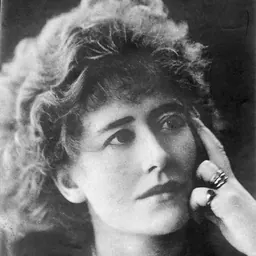

Related people
Same field, nearest in time
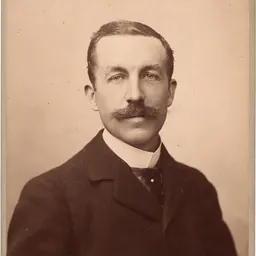


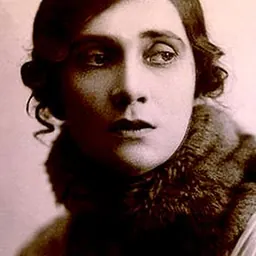
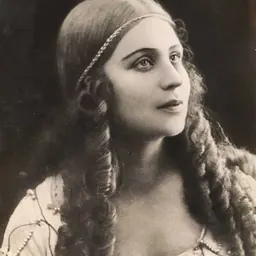
Contemporaries
People whose lives overlapped Frank Benson's



Frequently asked questions
Who was Frank Benson?
English actor and theatre manager (1858–1939)
When was Frank Benson born?
Frank Benson was born on 4 November 1858 in Royal Tunbridge Wells.
When did Frank Benson die?
Frank Benson died on 31 December 1939 in London.
What was Frank Benson's occupation?
Frank Benson was an actor, tennis player, stage actor, film actor, theatre director and film director.
What nationality was Frank Benson?
Frank Benson was British.
Sources & further reading
· DBpedia: Frank Benson (actor)
Cite this page
APA: Biography.guide. (2026). Frank Benson. https://biography.guide/frank-benson/
MLA: "Frank Benson." Biography.guide, https://biography.guide/frank-benson/.
Chicago: "Frank Benson." Biography.guide. https://biography.guide/frank-benson/.
Data last updated: 2026-09-20 · Spot an error? Report a correction.
Page generated 2026-09-27 05:32 UTC