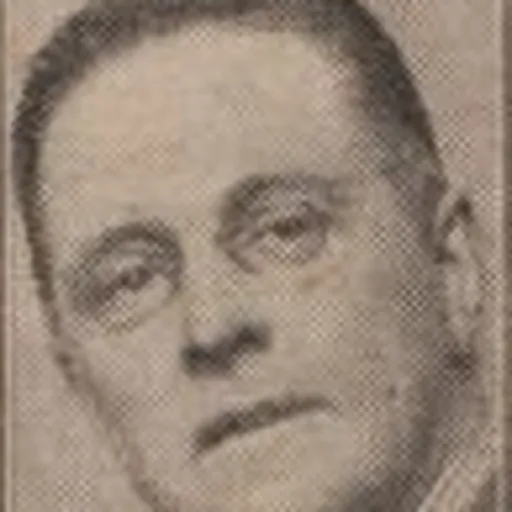
About Nigel Playfair
Lived 1874 – 1934 (aged 60). Nigel Playfair was a stage actor, playwright, film actor, theatrical producer, actor and director.
Sir Nigel Ross Playfair (1 July 1874 – 19 August 1934) was an English actor and director, known particularly as actor-manager of the Lyric Theatre, Hammersmith, in the 1920s.
After acting as an amateur while practising as a lawyer, he turned professional in 1902 when he was 28. After a time in F. R. Benson's company he made steady professional progress as an actor, but the major change in his career came in 1918, when he became managing director of the Lyric, a run-down theatre on the fringe of central London. He transformed the theatre's fortunes, with a mix of popular musical shows and classic comedies, some in radically innovative productions, which divided opinion at the time but which have subsequently been seen as introducing a modern style of staging.
Life
Family background Playfair was born in the parish of St George Hanover Square, Westminster, on 1 July 1874, the younger son of the five children of the obstetric physician William Smoult Playfair (1835–1903), and his wife, Emily, née Kitson (1841–1916). The Oxford Dictionary of National Biography says that the doctor is notable nowadays for "his unintended contribution to medical ethics" by breaching the confidentiality of one of his patients, and for popularising the Weir Mitchell "rest-cure", a treatment criticised by Charlotte Perkin Gilman in The Yellow Wallpaper. Nigel Playfair's paternal uncles included Lyon Playfair, 1st Baron Playfair, scientist and politician, and Lambert Playfair, soldier, diplomat and naturalist. His maternal uncle was James Kitson, 1st Baron Airedale, industrialist and politician, named after his father, Nigel's grandfather, James Kitson, the pioneering railway engineer. Nigel's cousin was Robert Hawthorn Kitson, a painter who settled in Taormina, Sicily.
Early years He was educated at Winchester, Harrow, and University College, Oxford, where he took a third-class honours degree in modern history (1896). In 1903 he played his first professional Shakespeare role, Dr Caius in Herbert Beerbohm Tree's production of The Merry Wives of Windsor at His Majesty's Theatre. The Era called it "a satire on cheap gentility which would have delighted Thackeray.
Playfair joined F. R. Benson's company touring in the West Indies, chiefly in comic Shakespearian parts.
Lyric, Hammersmith in 1918 the author Arnold Bennett, who had been active in the theatre before the war, resumed his theatrical interest. He became chairman, with Playfair as managing director, of the Lyric Theatre, Hammersmith. A biographer of Playfair writes that the Lyric was "a derelict playhouse in what was then little more than a slum … this theatre seemed the last place in the world where high-class entertainment could possibly succeed". But the theatre prospered. Among the productions were Abraham Lincoln by John Drinkwater, and The Beggar's Opera, which, in Frank Swinnerton's phrase, "caught different moods of the post-war spirit", and ran for 466 and 1,463 performances respectively. In The Oxford Companion to the Theatre (1967) Phyllis Hartnoll comments that the Lyric became "one of the most popular and stimulating centres of theatrical activity".
In 1920 Playfair returned to the role of Ralph in The Knight of the Burning Pestle. The scholar David Crystal describes the production as "bright, dynamic and musical, with young actors". At the time, some theatre-goers resented it, but Crystal comments that many critics now call it the first modern production of the play.
In 1922 Playfair bought a long lease on Thurloe Lodge in South Kensington. Playfair and his family had previously lived at 26 Pelham Crescent. He bought the cottages with the proceeds from The Beggar's Opera. The family moved from the house in late 1924 or early 1925.
Legacy Fortnum & Masons sell a type of marmalade, made for Playfair since the 1920s and named in memory of him.
In 1965, London County Council erected a blue plaque commemorating Playfair at his former home, 26 Pelham Crescent, South Kensington.
Memoirs Playfair wrote two volumes of memoirs about the Lyric: The Story of the Lyric Theatre, Hammersmith with an introduction by Arnold Bennett and an epilogue by A. A. Milne. (London: Chatto & Windus 1925) Hammersmith Hoy: A Book of Minor Revelations (London: Faber & Faber 1930)
Films Playfair appeared in some films. He made several silents, and what his biographer Robert Sharp calls "four indifferent talkies":
Notes, references and sources
Don’t just read it —
keep it.
Full-length biographies made to live with: read them, listen on the way to work, watch them tonight.
- E-book
- Audio
- Video
Instant download · yours to keep · every purchase keeps this site free
Important facts
People in Nigel Playfair's life
Named in this biography and alive at the same time






Related people
Same field, nearest in time

Contemporaries
People whose lives overlapped Nigel Playfair's

Frequently asked questions
Who was Nigel Playfair?
English actor-manager (1874–1934)
When was Nigel Playfair born?
Nigel Playfair was born on 1 July 1874 in London.
When did Nigel Playfair die?
Nigel Playfair died on 19 August 1934 in London.
What was Nigel Playfair's occupation?
Nigel Playfair was a stage actor, playwright, film actor, theatrical producer, actor and director.
Sources & further reading
Cite this page
APA: Biography.guide. (2026). Nigel Playfair. https://biography.guide/nigel-playfair/
MLA: "Nigel Playfair." Biography.guide, https://biography.guide/nigel-playfair/.
Chicago: "Nigel Playfair." Biography.guide. https://biography.guide/nigel-playfair/.
Data last updated: 2026-09-21 · Spot an error? Report a correction.
Portrait: Wikimedia Commons · author & licence
Page generated 2026-09-27 05:00 UTC