
About Frank Sexton
Lived 1872 – 1938 (aged 65). Frank Sexton was an American baseball player.
Early years Sexton was born in Brockton, Massachusetts in either 1868 or 1872. Sexton transferred to Brown University for the 1889–1890 academic year as a member of Brown's freshman class. He was a senior at Brown during the 1893–1894 academic year. At Brown, Sexton "won fame both as a pitcher and fielder" for the school's baseball team.
Professional baseball Sexton appears to have made his professional baseball debut in Canada, playing for the Shamrocks, a team sponsored by the Shamrock Athletic Association in Saint John, New Brunswick. According to one account of the early days of professional baseball in Saint John, the Shamrocks went shopping for a new pitcher in 1890: "They obtained the services of F.J. Sexton from Brown University. Sexton was a superb pitcher and received the princely salary of $150 a month" In August 1890, Sexton helped lead the Shamrocks to the 1890 pennant with a 2–0 victory over the Saint John Athletic Association. In his second start on June 25, 1895, Sexton got the win in a 5–2 victory over the New York Giants. The Boston Daily Globe praised Sexton's performance:"Frank Sexton faced the Giants for the first time, and simply toyed with them, that, too, without using much speed. Five singles and one double were made by the visitors, and except for an excusable error by Long in the first inning, the Giants would have left town last evening with a shutout. Tenney and Sexton worked well, the latter holding his man at first in fine style and pitching a cool, heady game. As both Tenney and Sexton can hit and run, it made Boston by all odds the fastest nine ever put on a ball field."
Sexton played in his final Major League game two months later on August 17, 1895. He appeared in seven games for Boston and compiled a record of one win and five losses with a 5.69 earned run average. A history of the Boston baseball club published in 1897 noted that the club had signed several new pitchers in 1895, seeking to overcome the weak showing of the 1894 pitching staff. In the end, the author wrote of the new twirlers: "Stocksdale, Wilson, Yerrick and Sexton were more or less frosts, and were pitched in but few games."
In 1896, Sexton played for the Springfield Ponies in the Eastern League. He concluded his career as a professional baseball player with the New Bedford Whalers. In February 1895, The Michigan Alumnus announced, "F.G. [sic] Sexton, Brown University's crack pitcher is a student here this year and will help with the nine." He joined the Michigan Wolverines baseball team as a pitcher in 1895. He pitched an 11–0 shutout against Cornell during the 1895 season. He reportedly agreed to coach the school's baseball team to meet the cost of his education. During the 1896 season, Sexton led the Wolverines to a 17–4–1 record. After the game, an angry Indiana crowd closed around Sexton, and one man drew a knife on him. He then established a medical practice in Boston. While developing his practice, he played baseball in the summer of 1900 for the "Roses", a professional baseball team in Saint John, New Brunswick.
In 1901, Sexton agreed to take time away from his medical practice to coach the Michigan baseball team. An article in Ann Arbor's The Weekly Bulletin in April 1902 noted the Wolverines' good fortune in securing Sexton's services:"He located near Boston, where he has a good practice now. His love for baseball, however, prompted him to respond to the urgent demands of the Michigan management for his services as coach last year, as well as for this year. Michigan ought to be very grateful to Dr. Sexton for thus bestowing his time and attention to the baseball team."
Sexton's contract required him to serve as coach from April to the beginning of June. He led the 1901 team to a 13–8 record. He returned to Michigan again as coach of the 1902 team, which compiled a record of 8–10. In June 1902, Sexton returned to his medical practice in North Easton, Massachusetts. Brown continued to practice medicine while coaching at Brown. He was the school's first paid, professional baseball coach. Upon his arrival, Sexton promptly instituted a new training regimen, requiring the pitchers and catchers to do daily work on the gymnasium apparatus for a month before regular practice began. Sexton told the press that the work would get their arms in shape "to avoid strains and other hurts when they begin throwing the ball around." In early March 1911, Sexton signed a two-year contract agreeing to coach the Harvard baseball team through the 1912 season.
In Sexton's first year at Harvard, the baseball team had its best record since 1901, winning 17 games and losing 6. Sexton coached at Harvard for five years from 1911 to 1915. While coaching at Harvard, Sexton drew attention for his innovative training techniques. In addition to his requiring the battery candidates to work on the gymnasium apparatus, he instituted a rigorous program of fall practice for the baseball team. Sexton told the press "there will be no let-up until they are driven to shelter by the cold weather." In 1915, a publication known as The World's Advance profiled a new target device used by Sexton in the training of Harvard's pitching staff.
While Sexton was at Harvard, the baseball team played an annual game against the Boston Red Sox. Although the Harvard team lost the game each year during Sexton's tenure, the scores were relatively close: 4–1 in 1910, 4–2 in 1911, 2–0 in 1912 and 5–0 in 1913.
In May 1915, Sexton resigned after a disagreement with the Harvard Advisory Baseball Committee. Sexton said that he resigned because of interference from the Advisory Committee with his work as coach. The dispute followed a decision by the committee to hire two former Harvard players as assistant coaches to work with the catchers and outfielders. In a letter published by The Boston Evening Transcript, Sexton wrote that he did not agree to the many suggestions of the committee and concluded, "After full consideration of the matter discussed, I felt I could not retain my self-respect and esteem owing to their persistent interference and continue as coach of the Harvard University baseball team." The Evening Transcript wrote that Sexton was "considered one of the most efficient in the country" and opined that he "has been a good coach for Harvard and has developed some excellent teams from very ordinary material."
Sexton filed a lawsuit against the president and fellows of Harvard in May 1916 for breach of contract, claiming that he had not been fully paid the amounts owed under his contract. Sexton sought $2,000 in unpaid salary and claimed that the Harvard Athletic Committee had interfered with his coaching and had no right to do so.
Later years After resigning as Harvard's coach in 1915, Sexton returned to his medical practice. He also served with the rank of captain in the U.S. Army Medical Corps during World War I. At the time of the 1920 Census, Sexton was living at 1032 Commonwealth Avenue in Brookline, Massachusetts with his wife Louise (age 44). They had no children at that time, and Sexton's occupation was listed as a physician in general practice. In 1922, he continued to maintain a private medical practice in Brookline.
He died at his home in either Brookline or Brighton, Massachusetts in January 1938. The cause of death was cerebral embolus and arteriosclerosis.
Don’t just read it —
keep it.
Full-length biographies made to live with: read them, listen on the way to work, watch them tonight.
- E-book
- Audio
- Video
Instant download · yours to keep · every purchase keeps this site free
Important facts
People in Frank Sexton's life
Named in this biography and alive at the same time

Related people
Same field, nearest in time
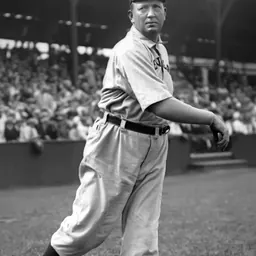


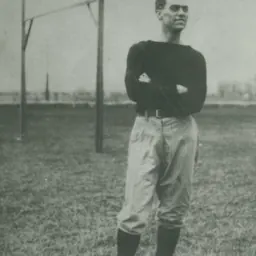
Contemporaries
People whose lives overlapped Frank Sexton's
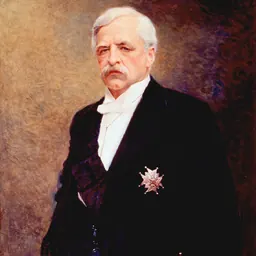


Frequently asked questions
Who was Frank Sexton?
Baseball player and coach
When was Frank Sexton born?
Frank Sexton was born on 8 July 1872 in Brockton.
When did Frank Sexton die?
Frank Sexton died on 4 January 1938 in Brighton.
What was Frank Sexton's occupation?
Frank Sexton was a baseball player.
What nationality was Frank Sexton?
Frank Sexton was American.
Sources & further reading
· DBpedia: Frank Sexton (baseball)
Cite this page
APA: Biography.guide. (2026). Frank Sexton. https://biography.guide/frank-sexton-baseball-player/
MLA: "Frank Sexton." Biography.guide, https://biography.guide/frank-sexton-baseball-player/.
Chicago: "Frank Sexton." Biography.guide. https://biography.guide/frank-sexton-baseball-player/.
Data last updated: 2026-09-20 · Spot an error? Report a correction.
Page generated 2026-09-27 05:28 UTC