
About Frank S. Farley
Lived 1901 – 1977 (aged 75). Frank S. Farley was an American politician.
Francis Sherman "Hap" Farley (December 5, 1901 – September 24, 1977) was a New Jersey State Senator from Atlantic County, New Jersey, described by The New York Times in 1977 as "probably the most powerful legislator in New Jersey history". In high school, Farley was an accomplished baseball, football, and basketball player. He was expelled from Atlantic City High School in 1920 after playing at the YMCA with teammates against a team of African American college students who were barred from playing on their collegiate teams. Atlantic City High School had a strict policy that no varsity players could play in any other league or competition. For his senior year, Farley attended the Wenonah Military Academy which recruited him for his athletic accomplishments. He went on to attend the University of Pennsylvania, before graduating from Georgetown Law School in 1925. After his education was complete, he married Marie Feyl and began practicing law in Atlantic City.
In the legislature
In 1937, Farley was elected to represent Atlantic County in the New Jersey Assembly, and in 1940 he was elected to the New Jersey Senate. In 1941, Enoch "Nucky" Johnson, boss of the Atlantic City/Atlantic County Republican political machine, was convicted of income tax evasion and sent to prison. Farley, after a struggle with rival Thomas D. Taggart, Jr., mayor of Atlantic City, succeeded Johnson as the leader of the organization.
Farley's first move as a crime boss was to separate the organization's political aspect from its criminal one. He appointed Jimmy Boyd, Nucky Johnson's former right-hand man and enforcer, as the overseer of all organized crime operations in Atlantic City. Unlike the two previous bosses of the organization, Farley was noted for fighting to distance himself from the American Mafia.
Farley rose through the leadership ranks of the State Senate to become Senate majority leader in January, 1944. By early 1945 he was Senate President. At different times during his tenure as state senator, Farley was chairman of all of the major Senate committees. He was also president of the Jersey Senate 21 Club, which was composed of all twenty-one New Jersey senators, Republican and Democrat, from 1941 to 1965. For many years, Senator Farley hosted "Senate at the Shore": a retreat for the senators and their wives in Atlantic City where Republicans and Democrats could share in relationship-building events. Farley was chairman of the Atlantic County Republican Committee from 1941 to 1972 and treasurer of Atlantic County from 1944 to 1971. He also re-instituted the New Jersey Republican Chairmen's Association and was elected president of that body from 1952 to 1972. Farley was Senate president pro tem in 1946, 1963, 1964, 1965, and 1968. Senator Farley was acting Governor of New Jersey on many occasions, serving for various governors. He was a delegate to the New Jersey Constitutional Convention in 1947 and 1966.
After leaving the legislature In 1971, Farley was defeated in his attempt for reelection by Dr. Joseph McGahn, the Democratic candidate.
In the early 1970s, after Farley left office, the Federal Aviation Administration planned to close the National Aviation Facilities Experimental Center (now known as the William J. Hughes Technical Center) located in the Pomona section of Galloway Township, which was, and still is, one of the largest employers in Atlantic County. Farley, at the request of community leaders, intervened in the fate of the center again by going to administration officials in Washington, ensuring the facility was not closed.
In 1974, supporters of legalized casino gambling in Atlantic City succeeded in having a referendum placed on the New Jersey general election ballot that would have permitted casino gambling throughout the state. After the proposal was soundly defeated by voters, some criticized the failure of proponents of the measure to involve Farley in the effort, and Farley also expressed disappointment in not having been involved. Farley successfully urged old political allies in other parts of the state to support the measure, including Bergen County Sheriff Joseph Job, and some observers estimated that these efforts resulted in hundreds of thousands of votes in favor of casinos. This time the referendum was approved by a wide margin. Sanford Weiner, the campaign strategist hired by the pro-casino organization, the Committee to Rebuild Atlantic City, considered obtaining Joseph Job's support for the measure to be the decisive factor in securing the victory.
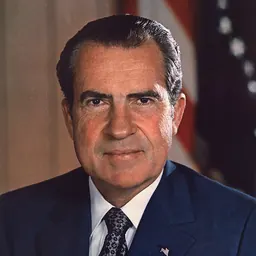
Farley died on September 24, 1977, at his home in Ventnor City, New Jersey. More than 7,000 letters and gifts were delivered to his home from constituents, peers, admirers, and others. Among those delivered to the Farley residence were personal notes from President Richard Nixon, Gerald R. Ford, governors, senators, and assemblymen. The New York Times described Farley as "probably the most powerful legislator in New Jersey history" further noting that he was "an artful negotiator whose backroom wheeling and dealing were legendary", and that he "was credited with pushing through more special legislation for his district, Atlantic City and Atlantic County, than any other legislator".
Don’t just read it —
keep it.
Full-length biographies made to live with: read them, listen on the way to work, watch them tonight.
- E-book
- Audio
- Video
Instant download · yours to keep · every purchase keeps this site free
Important facts
People in Frank S. Farley's life
Named in this biography and alive at the same time

Related people
Same field, nearest in time





Contemporaries
People whose lives overlapped Frank S. Farley's


Frequently asked questions
Who was Frank S. Farley?
New Jersey State Senator
When was Frank S. Farley born?
Frank S. Farley was born on 1 December 1901 in Atlantic City.
When did Frank S. Farley die?
Frank S. Farley died on 24 September 1977 in Ventnor City.
What was Frank S. Farley's occupation?
Frank S. Farley was a politician.
What nationality was Frank S. Farley?
Frank S. Farley was American.
Sources & further reading
Cite this page
APA: Biography.guide. (2026). Frank S. Farley. https://biography.guide/frank-s-farley/
MLA: "Frank S. Farley." Biography.guide, https://biography.guide/frank-s-farley/.
Chicago: "Frank S. Farley." Biography.guide. https://biography.guide/frank-s-farley/.
Data last updated: 2026-09-20 · Spot an error? Report a correction.
Page generated 2026-09-27 05:31 UTC