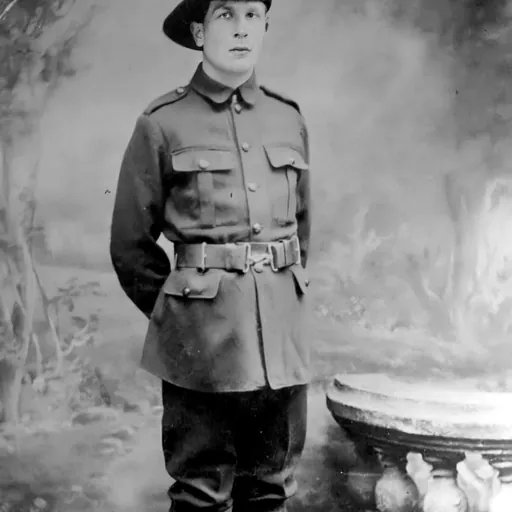
About Frank Robbins
Lived 1895 – 1979 (aged 83). Frank Robbins was a trade Unionist.
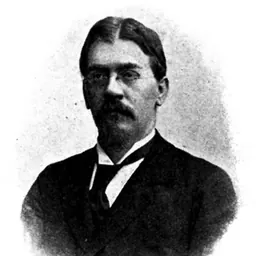
Frank Robbins (5 July 1895 – 31 January 1979) was an Irish trade unionist. Robbins came to prominence as a member of James Connolly's Irish Citizen Army, taking part in the Dublin Lockout in 1913 and the Easter Rising in 1916. Although Robbins did not involve himself in the ensuing Irish War of Independence or Irish Civil War, he continued to influence events in Ireland through his leadership in the trade union movement and as part of the Labour Party. During the Irish revolutionary period, Robbins was frustrated by the notion that Labour was considered outside of Irish Republicanism, rather than a strand within it. He was also frustrated by the lack of willingness by the labour movement to involve itself directly in the War of Independence.
In 1916, as part of the ICA, Robbins participated in the Easter Rising, when Irish republicans and socialists staged a rebellion against the United Kingdom in Dublin. Robbin was a part of the St Stephen's Green garrison, which occupied the College of Surgeons. In the aftermath Robbins was arrested and then interned at Knutsford detention barracks and then at Frongoch internment camp, both in Great Britain.
In 1918, Robbins returned to Ireland, where he set about trying to bring the Irish Volunteers and the Irish Citizen Army together. When the Irish War of Independence broke out, the much-depleted ICA did not participate. Nor did it participate in the Irish Civil War; alongside the Labour party it declared itself "Neutral" on the issue of the Anglo-Irish treaty. However, upon the assassination of Michael Collins in August 1922, Robbins gave serious consideration to joining the National Army. Robbins was highly critical of the lack of role played by the ICA in the War of Independence, stating:
In 1922, Robbins became an officer in the ITGWU, which became his primary focus. In 1931, he became secretary of the no. 7 branch of the ITGWU, a position he held until his retirement in 1960.
Robbins was considered to be on the "right" of the Labour movement in Ireland. Like William O'Brien, Robbins opposed the influence of Jim Larkin. Robbins also vocally opposed support for communism amongst Irish labour. In 1943, Robbins supported O'Brien when O'Brien lead the ITGWU to disaffiliate from the Labour party, opting instead to create their own party the National Labour Party. Robbins himself stood on behalf of the National Labour party in the 1944 general election and 1948 general election as a candidate in Dublin North-East. In 1945, Robbins helped create the Congress of Irish Unions after the ITGWU disaffiliated from the Irish Trades Union Congress because of its decision to send delegates to the World Federation of Trade Unions in London. O'Brien and Robbins maintained that the WFTU was dominated by Communists. Still an Irish nationalist, Robbins opposed the presence of British trade unions in Ireland. In 1956, Robbins became president of Dublin Council of Irish Unions, a split from the Dublin Council of Trade Unions. The two groups reunited in 1960, and Robbins had no involvement thereafter. In the 1950s, Robbins was also a director of Mianraí Teoranta, a semi-state mining company based in County Tipperary. In 1959, Robbins became a director of Irish Shipping Ltd.
In 1977, Robbins released his account of the history of the Irish Citizen Army in a book entitled "Under the Starry Plough".
Robbins died on 31 January 1979. He was predeceased by his wife and was survived by four children.
Don’t just read it —
keep it.
Full-length biographies made to live with: read them, listen on the way to work, watch them tonight.
- E-book
- Audio
- Video
Instant download · yours to keep · every purchase keeps this site free
Important facts
People in Frank Robbins's life
Named in this biography and alive at the same time
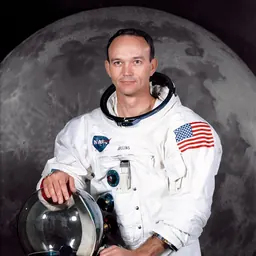
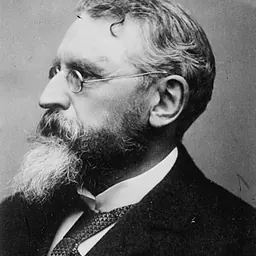
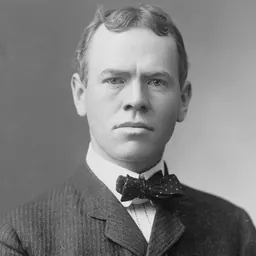

Related people
Same field, nearest in time




Contemporaries
People whose lives overlapped Frank Robbins's


Frequently asked questions
Who was Frank Robbins?
Irish trade unionists (1895–1979)
When was Frank Robbins born?
Frank Robbins was born on 5 July 1895.
When did Frank Robbins die?
Frank Robbins died on 31 January 1979.
What was Frank Robbins's occupation?
Frank Robbins was a trade Unionist.
Sources & further reading
· DBpedia: Frank Robbins (trade unionist)
Cite this page
APA: Biography.guide. (2026). Frank Robbins. https://biography.guide/frank-robbins-trade-unionist/
MLA: "Frank Robbins." Biography.guide, https://biography.guide/frank-robbins-trade-unionist/.
Chicago: "Frank Robbins." Biography.guide. https://biography.guide/frank-robbins-trade-unionist/.
Data last updated: 2026-09-22 · Spot an error? Report a correction.
Portrait: Wikimedia Commons · author & licence
Page generated 2026-09-27 05:04 UTC