
About Frank Minis Johnson
Lived 1918 – 1999 (aged 80). Frank Minis Johnson was an American lawyer and judge.
Frank Minis Johnson Jr. (October 30, 1918 – July 23, 1999) was a United States district judge and United States circuit judge, who served from 1955 to 1999 on the United States District Court for the Middle District of Alabama, United States Court of Appeals for the Fifth Circuit and United States Court of Appeals for the Eleventh Circuit. He made landmark civil rights rulings that helped end segregation and disenfranchisement of African Americans in the South. In the words of journalist and historian Bill Moyers, Judge Johnson "altered forever the face of the South."
Early life, education and career Johnson was born in 1918 in Delmar, Alabama, and grew up in nearby Haleyville in northern Alabama, a longtime independent-minded part of the state. Winston County had opposed secession during the American Civil War.
Johnson graduated from the University of Alabama and later the University of Alabama School of Law with a Bachelor of Laws in 1943, and was admitted to the bar. While a student, he was asked by a staunchly Democratic classmate why he insisted upon being a Republican, to which Johnson replied that there were "so few of us that one day I might be a federal judge." Another classmate, George Wallace, future governor of the state, overheard the remark and replied, "Well, that'll be the day. I'll be governor by then." Wallace would prove to be Johnson's bête noire during the civil rights era of the 1960s.
He married Ruth Jenkins, a classmate from the University of Alabama. Johnson served in the United States Army in Europe during World War II, while his wife Ruth served in the WAVES as an adviser to Hollywood directors making films about the war.
After military service, Johnson entered private law practice in Jasper from 1946 to 1953. Unlike most white voters of the time in Alabama, he became active in politics with the Republican Party, serving as a delegate to the 1948 Republican National Convention. He managed Alabama's "Veterans for Eisenhower" group during the 1952 campaign. Johnson was known as a foe of the Democratic Party's segregationist policies. He was appointed as the United States Attorney for the Northern District of Alabama from 1953 to 1955, during President Dwight D. Eisenhower's administration.
In March 1965, Johnson ruled that activists had the right to undertake the Selma to Montgomery march as a means to petition the government, overturning Governor George Wallace's prohibition of the march as contrary to public safety. Thousands of sympathizers traveled to Selma to join the march, which had 25,000 participants by its last leg into Montgomery on March 25, 1965. It was considered integral to gaining passage by Congress of the Voting Rights Act of 1965.
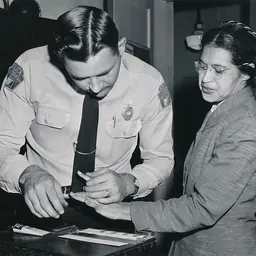
Johnson received death threats and ostracism for his role in advancing civil rights, and was protected by federal marshals for nearly two decades. A burning cross was placed on his lawn in 1956 following the Rosa Parks decision, and his mother's house was bombed in 1967, although she was not hurt.
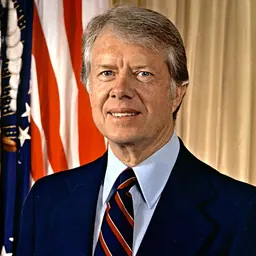
Johnson was nominated by President Jimmy Carter on April 2, 1979, to the United States Court of Appeals for the Fifth Circuit, to a new seat established by 92 Stat. 1629. He was confirmed by the Senate on June 19, 1979, and received his commission on June 21, 1979. His service terminated on October 1, 1981, due to reassignment to the Eleventh Circuit.
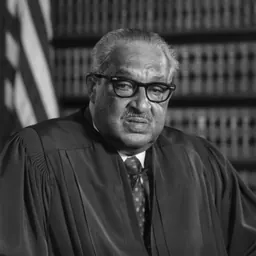
Legacy and honors 1978, Golden Plate Award of the American Academy of Achievement presented by Awards Council member Judge John Sirica 1979, inducted into the Alabama Academy of Honor 1992, Frank M. Johnson Jr. Federal Building and United States Courthouse, where Johnson served in Montgomery, Alabama, was named for him 1993, American Bar Association's annual Thurgood Marshall Award 1995, Presidential Medal of Freedom
The Judge Frank M. Johnson, Jr. Institute Judge Johnson's impact led to the creation of the Judge Frank M. Johnson, Jr. Institute. The Johnson Institute became a non-partisan voice that shares the stories of the American Constitution and the American Judiciary through programs that illuminate issues and perspectives, foster thoughtful and civil discourse, and inspire our national community in our nation's never-ending pursuit of a more perfect union.
Notable decisions
Browder v. Gayle (1956) Ordered the racial integration of the public transportation system of the city of Montgomery, Alabama. Gomillion v. Lightfoot (1961) Invalidated a plan by the city of Tuskegee, Alabama to dilute potential black voting strength by redrawing city boundaries so as to exclude concentrations of black voters from the city. United States v. Alabama (1961) Ordered that black persons be registered to vote if their application papers were equal to the performance of the least qualified white applicant accepted on the voting rolls. Lewis v. Greyhound (1961), Required desegregation of the bus depots of the city of Montgomery, as these served interstate buses operating under federal law. United States v. City of Montgomery (1961) Ordered the city of Montgomery to surrender its voting registration records to the US Department of Justice; DOJ was studying why so few African Americans were registered to vote in a state with numerous majority-black counties. United States v. City of Montgomery, 201 F. Supp. 590 - Dist. Court, MD Alabama 1962 Required desegregation of airport and related facilities at Dannelly Field in the city of Montgomery Sims v. Frink (1962) Required the state of Alabama to reapportion state legislative districts to adhere to the 'one man, one vote' principle as stipulated in its 1901 constitution. The state districts had not been reapportioned since that date, although such reapportionment was supposed to take place following every decennial census. This had resulted in marked under-representation of urban citizens, as demographic changes had created density of population in urbanized cities and areas Lee v. Macon County Board of Ed. (1963) Mandated, in Alabama, the first statewide desegregation of public schools. Williams v. Wallace (1965) Ordered Gov. George Wallace in March 1965 to permit the Selma to Montgomery march to take place, which was organized by the Southern Christian Leadership Conference (SCLC), DCVL and SNCC. White v. Crook (1966) Ruled that the state of Alabama must permit both male and female Blacks to serve on juries; they were qualified after regaining the ability to register and vote. The case was brought as a class action suit on behalf of black residents on Lowndes County, Alabama; other class members joined so that the decision applied to the state. It was "one of the first civil actions brought to remedy systematic exclusion of Negroes from jury service generally." United States v. Alabama (1966) Declared the Alabama poll tax unconstitutional. Weeks v. Southern Bell (1969) Ruled that women had a statutory right to choose, for themselves, whether to work in physically demanding jobs that were historically performed by men. Smith v. YMCA of Montgomery (1970) Ordered the desegregation of the Montgomery chapter of the YMCA. Wyatt v. Stickney (1971) Established a right to treatment for people with mental illness who have been involuntarily committed. NAACP v. Dothard (1974) Required the state of Alabama to continue hiring (as ordered by the court in 1972) to overcome decades of racial discrimination in the Dept. of Public Safety, wherein the department should hire 50% blacks in state trooper and support positions until racial parity of 25% representation was achieved. Garcia-Mir v. Meese (1986) Upheld that existing U.S. law superseded customary international law.
In popular culture Johnson is played by Martin Sheen in the 2014 film Selma.
Don’t just read it —
keep it.
Full-length biographies made to live with: read them, listen on the way to work, watch them tonight.
- E-book
- Audio
- Video
Instant download · yours to keep · every purchase keeps this site free
Important facts
People in Frank Minis Johnson's life
Named in this biography and alive at the same time





Related people
Same field, nearest in time



Contemporaries
People whose lives overlapped Frank Minis Johnson's


Frequently asked questions
Who was Frank Minis Johnson?
American judge
When was Frank Minis Johnson born?
Frank Minis Johnson was born on 30 October 1918 in Haleyville.
When did Frank Minis Johnson die?
Frank Minis Johnson died on 23 July 1999 in Montgomery.
What was Frank Minis Johnson's occupation?
Frank Minis Johnson was a lawyer and judge.
What nationality was Frank Minis Johnson?
Frank Minis Johnson was American.
Sources & further reading
· Wikipedia: Frank Minis Johnson
· DBpedia: Frank Minis Johnson
Cite this page
APA: Biography.guide. (2026). Frank Minis Johnson. https://biography.guide/frank-minis-johnson/
MLA: "Frank Minis Johnson." Biography.guide, https://biography.guide/frank-minis-johnson/.
Chicago: "Frank Minis Johnson." Biography.guide. https://biography.guide/frank-minis-johnson/.
Data last updated: 2026-09-20 · Spot an error? Report a correction.
Page generated 2026-09-27 05:33 UTC