
About Frank Johnson Goodnow
Lived 1859 – 1939 (aged 80). Frank Johnson Goodnow was an American historian, university teacher, jurist and political scientist.
Frank Johnson Goodnow (January 18, 1859 – November 15, 1939) was an American educator and legal scholar. He was the first president of the American Political Science Association and an elected member of both the American Academy of Arts and Sciences and the American Philosophical Society. He worked as an advisor to Yuan Shikai.
Personal life He married Elizabeth Lyall (1861–1942) in 1886 and had 3 children: Isabel C. (Mrs. E. Kendall Gillett), David F. and Lois R. (Mrs. John V. A. MacMurray).
Early life and education He was born in Brooklyn, New York. in 1903. Governor Theodore Roosevelt made him a member of the commission to draft a new charter for Greater New York, and President Taft chose him as a member of his Commission on Economy and Efficiency.
In 1914 he became the third president of Johns Hopkins University. At Hopkins, he is best remembered for his attempt to eliminate the bachelor's degree by cutting the first two years of undergraduate work. Called the Goodnow Plan or New Plan, students would have entered Hopkins after two years of study in other universities and would have worked toward an advanced degree, bypassing the bachelor's degree. (similar to the role of Senior Colleges) Although briefly implemented, the plan failed, largely because of the difficulty of persuading enough students to transfer to Hopkins halfway through their college education. The plan was attempted again in substantially the same form, in the early 1950s, under President Detlev W. Bronk, meeting with the same lack of success. Known as a good financial manager, Goodnow greatly increased the university's income during his fifteen-year presidency.
Goodnow resigned the Johns Hopkins University Presidency in 1929 and was succeeded by Joseph Sweetman Ames, but thereafter frequently gave graduate lectures in his special subjects. He was for some time a regent of the University of Maryland and a member of the Board of School Commissioners of Baltimore.
Public administration
Goodnow is considered an important early scholar in the field of public administration and administrative law, as well as an expert in government. Goodnow argued for the centrality of law in public administration. (Other public administration theorists have argued that other non-legal values ought to guide civil servants). His first book, Comparative Administrative Law: An Analysis of the Administrative Systems, National and Local, of the United States, England France and Germany (1893) brought two important contributions to the emerging field of political science. It was one of the first systematic studies of public administration and a pioneer work in the United States for the use of a comparative method of inquiry.
His most influential work Politics and Administration: A Study in Government was published in 1900 and triggered a long lasting controversy. Goodnow was also a well-known and influential Progressive, authoring a critical view of America's founding principles in his 1916 essay: The American Conception of Liberty. Influenced by previous studies by Woodrow Wilson, Goodnow carved a dichotomy between two distinct functions of government, politics as the sphere that “as to do with the guiding or influencing of governmental policy” and administration as the sphere that “has to do with the execution of that policy”. The distinction was severely criticized by Dwight Waldo in his Study of the Administration (1955) but later rehabilitated by scholars who argue that Goodnow intended the distinction as a “typological” one, useful for analytical purposes.
Imperialism and racial theory
Goodnow supported the development of an American empire after the Spanish-American War of 1898. In 1900, he began teaching a course on "The History and Principles of Colonial Administration" at Columbia University "to meet the demands occasioned by the new position assumed by the United States" by educating "those who desire to serve the country in its new possessions." Goodnow's course was offered at Columbia University until 1911. Goodnow may have intended to publish a textbook on the principles of colonial administration. A working manuscript, almost five hundred pages long, is preserved among his papers. There are also shorter manuscripts on the governance of dependencies and "race relations." Goodnow traveled to the dependencies, corresponded with colonial officials, and reviewed books on colonial administration by American and European scholars.
Goodnow's course at Columbia University and the accompanying manuscript were concerned with principles for the design of "administrative systems" in the dependencies. Goodnow distinguished between "colonies of occupation" – those in temperate climates suitable for white settlement – and "colonies of production" that were established mainly for trade or extraction of raw materials. In colonies of settlement, Goodnow said, there was "no need of determining the question of how shall the native races be treated, inasmuch as that question is settled . . . by the admission of the fact that the native races will be destroyed."
Goodnow conceded that colonization served the economic interests of white countries. But he quoted Rudyard Kipling and wrote about "the white man's burden"—the "duty or destiny" to bring "a higher and a better civilization" to "our less fortunate brothers." In the Philippines, Goodnow said that it would be misguided to "treat the Filipino as if he were a white man with centuries of experience and achievement back of him." He said that imperial states would be justified in applying "paternal and even despotic methods of government" in the process of spreading civilization.
Segregation at Johns Hopkins University In November 1925, W.E.B. Du Bois wrote to Goodnow, then President of Johns Hopkins University, requesting confirmation of a report that Black students had been ejected from an extension course offered by the university. One day later, Goodnow replied to Du Bois, stating that he intended to enforce "the educational policy of the State [of Maryland] . . . [which] is the segregation of all races in all the schools of the State." Du Bois replied four days later, urging Goodnow not to "surrender to provincialism and race discrimination.". There is no record of a response from Goodnow.
Constitutional advisor in China Goodnow also worked in China. In October 1912 he accepted, on the recommendation of the Carnegie Endowment for International Peace, the commission of constitutional adviser to the Republic of China which took him to China in March 1913. During the years 1913–1914 he served as legal adviser to the Yuan Shikai's government. Yuan had hired Goodnow at the recommendation of Charles Eliot, a former president of Harvard University, and had tasked him with drafting a new constitution. Between 1913 and 1915, Goodnow wrote two versions of the constitution. The first effectively made Yuan president for life, and granted him sweeping powers over the budget and foreign policy. The second version, completed in 1915, would have made Yuan emperor had he not died soon thereafter.
Goodnow's work in China helped convey Western legal thinking to the country.
Don’t just read it —
keep it.
Full-length biographies made to live with: read them, listen on the way to work, watch them tonight.
- E-book
- Audio
- Video
Instant download · yours to keep · every purchase keeps this site free
Important facts
People in Frank Johnson Goodnow's life
Named in this biography and alive at the same time


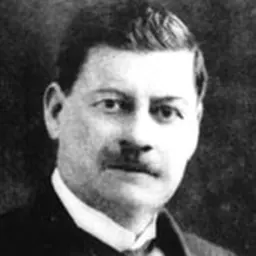



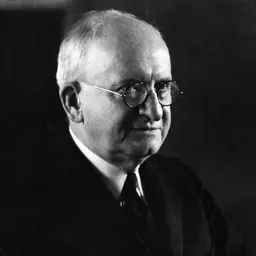
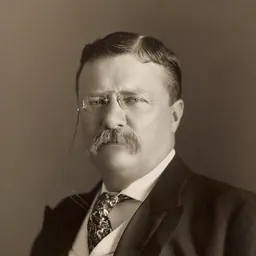
Related people
Same field, nearest in time

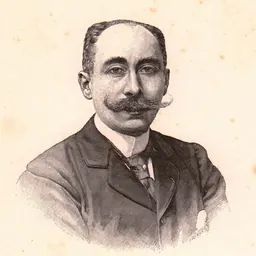

Contemporaries
People whose lives overlapped Frank Johnson Goodnow's



Frequently asked questions
Who was Frank Johnson Goodnow?
American historian (1859–1939)
When was Frank Johnson Goodnow born?
Frank Johnson Goodnow was born on 18 January 1859 in Brooklyn.
When did Frank Johnson Goodnow die?
Frank Johnson Goodnow died on 15 November 1939.
What was Frank Johnson Goodnow's occupation?
Frank Johnson Goodnow was a historian, university teacher, jurist and political scientist.
What nationality was Frank Johnson Goodnow?
Frank Johnson Goodnow was American.
Sources & further reading
· Wikipedia: Frank Johnson Goodnow
· DBpedia: Frank Johnson Goodnow
Cite this page
APA: Biography.guide. (2026). Frank Johnson Goodnow. https://biography.guide/frank-johnson-goodnow/
MLA: "Frank Johnson Goodnow." Biography.guide, https://biography.guide/frank-johnson-goodnow/.
Chicago: "Frank Johnson Goodnow." Biography.guide. https://biography.guide/frank-johnson-goodnow/.
Data last updated: 2026-09-20 · Spot an error? Report a correction.
Page generated 2026-09-27 05:26 UTC