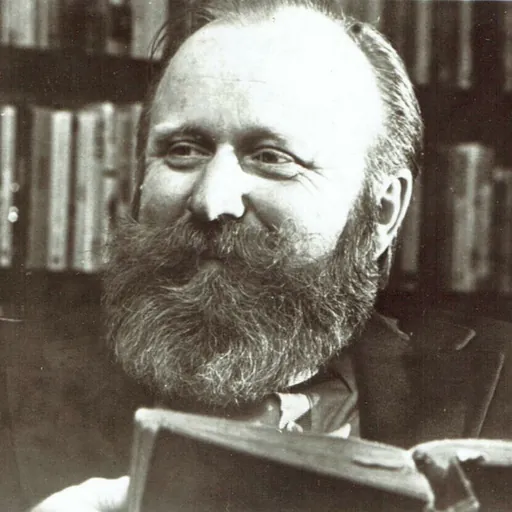
About Frank Herbert
Lived 1920 – 1986 (aged 65). Frank Herbert was an American writer, novelist, photographer, journalist, science fiction writer and prose writer.
Franklin Patrick Herbert Jr. (October 8, 1920 – February 11, 1986) was an American science-fiction author, best known for his 1965 novel Dune and five sequels to it. He also wrote short stories and worked as a newspaper journalist, photographer, book reviewer, ecological consultant, and lecturer.
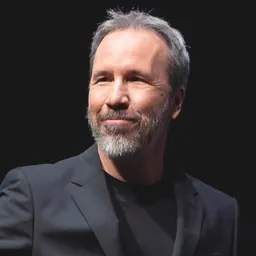
Dune is one of the best-selling science fiction novels of all time, and the series is a classic of the science-fiction genre. The series has been adapted numerous times, including the feature film David Lynch's Dune (1984), the miniseries Frank Herbert's Dune (2000) and Children of Dune (2003), and a motion picture trilogy currently in production, with Denis Villeneuve's Dune (2021) and Dune: Part Two (2024) having been released.
Biography Herbert's novella The Priests of Psi was the cover story for the February 1960 issue of Fantastic.
Early life Franklin Patrick Herbert Jr. was born on October 8, 1920, in Tacoma, Washington, to Franklin Patrick Herbert Sr. and Eileen (née McCarthy) Herbert. His paternal grandparents had come west in 1905 to join Burley Colony in Kitsap County, one of many utopian communes springing up in Washington State beginning in the 1890s. His upbringing included spending a lot of time on the rural Olympic and Kitsap Peninsulas. He was fascinated by books, could read much of the newspaper before the age of five, had an excellent memory, and learned quickly. He had an early interest in photography, buying a Kodak box camera at age ten, a new folding camera in his early teens, and a color film camera in the mid-1930s. Within weeks, Patricia moved back home. But Frank, 18, remained with his aunt and uncle.
Education He enrolled in high school at Salem High School (now North Salem High School), where he graduated the next year. Herbert then returned to Salem in 1940 where he worked for the Oregon Statesman newspaper (now Statesman Journal) in a variety of positions, including photographer. During 1942, after the U.S. entry into World War II, he served in the U.S. Navy's Seabees for six months as a photographer, but suffered a head injury and was given a medical discharge. Herbert subsequently moved to Portland, Oregon where he reported for The Oregon Journal.
After the war, Herbert attended the University of Washington, where he met Beverly Ann Stuart at a creative writing class in 1946. They were the only students who had sold any work for publication; Herbert had sold two pulp adventure stories to magazines, the first to Esquire in 1945 titled "Survival of the Cunning", and Stuart had sold a story to Modern Romance magazine. They married in Seattle in 1946, and had two sons, Brian (b. 1947) and Bruce Calvin Herbert who died from AIDS-related pneumonia (1951–1993). In 1949 Herbert and his wife moved to California to work on the Santa Rosa Press-Democrat. Here they befriended the psychologists Ralph and Irene Slattery. The Slatterys introduced Herbert to the work of several thinkers who would influence his writing, including Freud, Jung, Jaspers, and Heidegger; they also familiarized Herbert with Zen Buddhism.
Herbert never graduated from college. According to his son Brian, he wanted to study only what interested him and so did not complete the required curriculum. He returned to journalism and worked at the Seattle Star and the Oregon Statesman. He was a writer and editor for the San Francisco Examiner California Living magazine for a decade.
Early career In a 1973 interview, Herbert stated that he had been reading science fiction for "about ten years" before he began writing in the genre, and he listed his favorite authors as H. G. Wells, Robert A. Heinlein, Poul Anderson and Jack Vance.
Herbert's first science fiction story, "Looking for Something", was published in the April 1952 issue of Startling Stories, then a monthly edited by Samuel Mines. Three more of his stories appeared in 1954 issues of Astounding Science Fiction and Amazing Stories. It was a critical success but not a major commercial one. During this time Herbert also worked as a speechwriter for Republican senator Guy Cordon.
Dune The Oregon Dunes near Florence, Oregon, served as an inspiration for the Dune saga. Herbert began researching Dune in 1959. He was able to devote himself wholeheartedly to his writing career because his wife returned to work full-time as an advertising writer for department stores, becoming their breadwinner during the 1960s. He got overinvolved and ended up with far more raw material than needed for an article; while the article was never written, it planted in Herbert the seed that would become Dune.
Dune took six years of research and writing to complete, and was much longer than other commercial science fiction of the time. Herbert's environmental work in Oregon formed the basis of the speculative ecological work of the Fremen, which parallels real-world efforts and tactics of sand dune management.
Analog (formerly Astounding, but still edited by John W. Campbell) published it in two parts comprising eight installments, "Dune World" from December 1963 and "Prophet of Dune" in 1965. One editor prophetically wrote, "I might be making the mistake of the decade, but..."
Sterling E. Lanier, an editor of Chilton Book Company (known mainly for its auto-repair manuals), had read the Dune serials and offered a $7,500 advance plus future royalties for the rights to publish them as a hardcover book. Herbert rewrote much of his text.
Dune was soon a critical success. Although he could not yet take up a full-time career as a writer, Dune's success opened other doors for him. He was the Seattle Post-Intelligencer education writer from 1969 to 1972 and lecturer in general studies and interdisciplinary studies at the University of Washington (1970–1972). He then worked in Vietnam and Pakistan as a social and ecological consultant in 1972, and in 1973 he was director-photographer of the television show The Tillers.
By the end of 1972, Herbert had retired from newspaper writing and became a full-time fiction writer. During the 1970s and 1980s, he enjoyed considerable commercial success as an author. He divided his time between homes in Hawaii and Washington's Olympic Peninsula; his home in Port Townsend on the peninsula was intended to be an "ecological demonstration project". During this time he wrote numerous books and pushed ecological and philosophical ideas. He continued his Dune saga with Dune Messiah (1969), Children of Dune (1976), God Emperor of Dune (1981), Heretics of Dune (1984) and Chapterhouse: Dune (1985). Herbert planned to write a seventh novel to conclude the series, but his death in 1986 left storylines unresolved.
Other works by Herbert include The Godmakers (1972), The Dosadi Experiment (1977), The White Plague (1982) and the books he wrote in partnership with Bill Ransom: The Jesus Incident (1979), The Lazarus Effect (1983) and The Ascension Factor (1988), which were sequels to Herbert's 1966 novel Destination: Void. He also helped launch the career of Terry Brooks with a very positive review of Brooks' first novel, The Sword of Shannara, in 1977.
Success, family changes, and death Herbert's change in fortune was shadowed by tragedy. In 1974, his wife Beverly underwent treatment for lung cancer. She lived ten more years, but her health was adversely affected by the treatment. In October 1978, Herbert was the featured speaker at the Octocon II science fiction convention held at the El Rancho Tropicana in Santa Rosa, California. In 1979, he met anthropologist Jim Funaro with whom he conceived the Contact Conference. In June 1981, Herbert was a guest of honour at Advention '81 in Adelaide, South Australia. Beverly Herbert died on February 7, 1984. Herbert completed and published Heretics of Dune that year. In his afterword to 1985's Chapterhouse: Dune, Herbert included a dedication to Beverly.
The year 1984 was a tumultuous year in Herbert's life. During this same year of his wife's death, his career took off with the release of David Lynch's film version of Dune. Despite high expectations, a big-budget production design and an A-list cast, the movie drew mostly poor reviews in the United States. However, despite a disappointing response in the US, the film was a critical and commercial success in Europe and Japan. The same year he published Chapterhouse: Dune, which tied up many of the saga's story threads. This would be Herbert's final single work (the collection Eye was published that year, and Man of Two Worlds was published in 1986). He died of a massive pulmonary embolism while recovering from surgery for pancreatic cancer on February 11, 1986, in Madison, Wisconsin, aged 65.
Political views Herbert was a Republican and an environmentalist. His political views have been variously described as conservative, and libertarian.
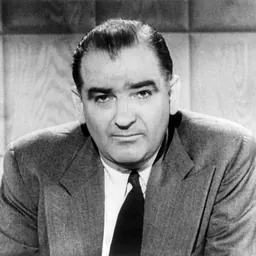
Herbert was a critic of the Soviet Union. He was a distant relative of the Republican senator Joseph McCarthy, whom he referred to as "Cousin Joe". However, he was appalled to learn of McCarthy's blacklisting of suspected communists from working in certain careers and believed that he was endangering essential freedoms of citizens of the United States. Herbert also opposed American involvement in the war in Vietnam. He was also critical of welfare, arguing that it increased dependence on the state. He considered Nixon a better president than John F. Kennedy, calling the latter "one of the most dangerous presidents this country ever had." He praised President Ronald Reagan, for his pro-family and pro-individualist stances, while opposing his foreign policy.
Ideas and themes
Herbert used his science fiction novels to explore complex ideas involving philosophy, religion, psychology, politics and ecology. The underlying thrust of his work was a fascination with the question of human survival and evolution. Herbert has attracted a dedicated fan base, many of whom have attempted to read everything he wrote (fiction or non-fiction); indeed, such was the devotion of some of his readers that Herbert was at times asked if he was founding a cult, a proposition which he very much rejected.
There are a number of key themes found in Herbert's work: A concern with leadership: Herbert explored the human tendency to slavishly submit to charismatic leaders. He delved into both the flaws and potentials of bureaucracy and government. and systems thinking. He stressed the need for humans to think both holistically and with regards to the long-term. The relationship between religion, politics and power. Human survival and adaptation: Herbert writes of the Fremen, the Sardaukar, and the Dosadi, who are molded by their terrible living conditions into dangerous super races. Algis Budrys wrote that Herbert's knowledge of language and linguistics was 'worth at least one PhD and the Chair of Philology at a good New England college'. Learning, teaching, and thinking. Herbert was a great popularizer of scientific ideas. In Dune, he helped popularize the term ecology. Gerald Jonas explains in The New York Times Book Review: "So completely did Mr. Herbert work out the interactions of man and beast and geography and climate that Dune became the standard for an emerging subgenre of 'ecological' science fiction." Dune is considered an example of literary world-building. The Library Journal reports that "Dune is to science fiction what The Lord of the Rings is to fantasy". Arthur C. Clarke is quoted as making a similar statement on the back cover of a paperback edition of Dune. Frank Herbert imagined every facet of his creation. He included glossaries, quotes, documents, and histories, to bring his universe alive to his readers.
Malcolm Edwards wrote, in The Encyclopedia of Science Fiction:
The Science Fiction Hall of Fame inducted Herbert in 2006.
Metro Parks Tacoma built Dune Peninsula and the Frank Herbert Trail at Point Defiance Park in July 2019 to honor the hometown writer.
Don’t just read it —
keep it.
Full-length biographies made to live with: read them, listen on the way to work, watch them tonight.
- E-book
- Audio
- Video
Instant download · yours to keep · every purchase keeps this site free
Important facts
more
Jr. Franklin Patrick HerbertFamily & relationships
People in Frank Herbert's life
Named in this biography and alive at the same time






Related people
Same field, nearest in time


Contemporaries
People whose lives overlapped Frank Herbert's




Frequently asked questions
Who was Frank Herbert?
American writer (1920–1986)
When was Frank Herbert born?
Frank Herbert was born on 8 October 1920 in Tacoma.
When did Frank Herbert die?
Frank Herbert died on 11 February 1986 in Madison.
What was Frank Herbert's occupation?
Frank Herbert was a writer, novelist, photographer, journalist, science fiction writer and prose writer.
What nationality was Frank Herbert?
Frank Herbert was American.
Sources & further reading
Cite this page
APA: Biography.guide. (2026). Frank Herbert. https://biography.guide/frank-herbert/
MLA: "Frank Herbert." Biography.guide, https://biography.guide/frank-herbert/.
Chicago: "Frank Herbert." Biography.guide. https://biography.guide/frank-herbert/.
Data last updated: 2026-09-23 · Spot an error? Report a correction.
Portrait: Wikimedia Commons · author & licence
Page generated 2026-09-27 05:06 UTC