
About Frank Fetter
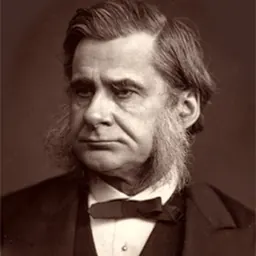
Lived 1863 – 1949 (aged 86). Frank Fetter was an American economist, university teacher and writer.
Frank Albert Fetter (; March 8, 1863 – March 21, 1949) was an American economist of the Austrian School. Fetter's treatise, The Principles of Economics, contributed to an increased American interest in the Austrian School, including the theories of Eugen von Böhm-Bawerk, Friedrich von Wieser, and Ludwig von Mises.
Fetter notably debated Alfred Marshall, presenting a theoretical reassessment of land as capital. Fetter's arguments have been credited with prompting mainstream economists to abandon the Georgist idea "that land is a unique factor of production and hence that there is any special need for a special theory of ground rent...." Fetter proved an able student as a youth, as demonstrated by his acceptance to Indiana University in 1879 when he was only sixteen years old. At Indiana, he joined the Phi Kappa Psi fraternity. Fetter was on track to graduate with the class of 1883, but left college to run his family's bookstore upon news of his father's declining health. Working in the bookstore offered an opportunity for the young man to acquaint himself with some of the economic ideas that would later prove formative. Chief among the intellectual influences Fetter encountered at this time was Henry George's Progress and Poverty (1879).
After eight years, Fetter returned to academia and finally completed his B.A. in 1891. In 1892, Jeremiah W. Jenks—who had taught Fetter at Indiana University—acquired a teaching position at Cornell University at the new President White School of History and Political Science and subsequently secured a fellowship for Fetter at that institution. Fetter completed his Master of Philosophy degree the same year. Jenks then convinced Fetter to study, as Jenks himself had, under Johannes Conrad at the Sorbonne in Paris, France. Fetter earned his Ph.D. in 1894 from the University of Halle in Germany, where he wrote his doctoral dissertation, a critique of Malthusian population theory. The appellation "Psychological School" is now generally considered to be synonymous with "Austrian School."
Fetter was a staunch opponent of Franklin D. Roosevelt's plan to end the gold standard and worked with other economists in lobbying against the move to a fiat currency. As some indication of Fetter's role in these efforts, In January 1933, a letter was sent to the president-elect, urging him not only to lower tariff barriers to revive international trade, but to maintain the gold standard "unflinchingly." The letter was signed by a number of prominent "traditional" economists, headed by the American "Austrian," Frank A. Fetter, of Princeton.
Theoretical contributions in economics
Land as capital Fetter participated in a notable debate with English economist Alfred Marshall, both through his 1904 Principles of Economics and a number of journal articles in the American Economic Association's journals and in the Quarterly Journal of Economics. He contested Marshall's position that land is theoretically distinct from capital. Fetter argued that such a distinction was impractical, stating that, The notion that it is a simple matter to distinguish between the yield of natural agents and that of improvements is fanciful and confusing.... The objective classification of land and capital as natural and artificial agents is a task that always must transcend the human power of discrimination.
Fetter's stand on this issue further led him to oppose Georgist ideas like the land value tax. Mark Blaug, a specialist in the history of economic thought, credits Fetter and John Bates Clark with influencing mainstream economists to abandon the idea "that land is a unique factor of production and hence that there is any special need for a special theory of ground rent.... This is in fact the basis of all the attacks on Henry George by contemporary economists and certainly the fundamental reason why professional economists increasingly ignored him."
Applications of subjective value theory Fetter believed in the subjective theory of value, and thus supported a pure time preference theory of interest. Richard Ebeling wrote that Fetter "constructed a consistent theory of value, price, cost, and production in the context of emphasizing the time-valuational element in all consumption and production choices." According to Jeffrey Herbener, Fetter asserted that "just as the price of each consumer good is determined solely by subjective value, the rate of interest is determined solely by time preference."
Reception in academia In 1909, at the age of forty-six, Fetter was awarded an honorary LL.D. from Colgate University, Additional honorary doctoral degrees were conferred on Fetter by Occidental College in 1930 and Indiana University in 1934. He was a fellow of the American Academy of Arts and Sciences and a member of the American Philosophical Society. In 1927, he was awarded the Karl Menger Medal by the Austrian Economic Society.
Books Versuch einer Bevölkerungslehre ausgehend von einer Kritik des Malthus'schen Bevölkerungsprinzips (Translation: "An Essay on Population Doctrine based on a Critique of the Population Principles of Malthus"). Jena: Gustav Fischer, 1894. The Principles of Economics. The Principles of Economics, With Applications to Practical Problems New York: The Century Co., 1905 Source Book in Economics. New York: The Century Co., 1912. Economics, Volume 1: Economic Principles. Economic Principles New York: The Century Co., 1915. Manual of References and Exercises in Economics for Use with, Vol. 1: Economic Principles. New York: The Century Co., 1916. Economics, Vol. 2: Modern Economic Problems. Modern Economic Problems New York: The Century Co., 1916. Revised 2nd edition, 1922. Manual of References and Exercises in Economics for Use with, Vol. 2: Modern Economics. New York: The Century Co., 1917. Masquerade of Monopoly. New York: Harcourt, Brace & Co., 1931. Capital, Interest and Rent: Essays in the theory of distribution. Capital, Interest, and Rent: Essays in the Theory of Distribution Institute for Humane Studies. Kansas City: Sheed Andrews and McMeel, Inc., 1977.
Articles "Recent Discussion of the Capital Concept " by Frank A. Fetter, Quarterly Journal of Economics, (1900)
Don’t just read it —
keep it.
Full-length biographies made to live with: read them, listen on the way to work, watch them tonight.
- E-book
- Audio
- Video
Instant download · yours to keep · every purchase keeps this site free
Important facts
People in Frank Fetter's life
Named in this biography and alive at the same time



Related people
Same field, nearest in time



Contemporaries
People whose lives overlapped Frank Fetter's

Frequently asked questions
Who was Frank Fetter?
American economist (1863-1949)
When was Frank Fetter born?
Frank Fetter was born on 8 March 1863 in Peru.
When did Frank Fetter die?
Frank Fetter died on 21 March 1949 in Princeton.
What was Frank Fetter's occupation?
Frank Fetter was an economist, university teacher and writer.
What nationality was Frank Fetter?
Frank Fetter was American.
Sources & further reading
Cite this page
APA: Biography.guide. (2026). Frank Fetter. https://biography.guide/frank-fetter/
MLA: "Frank Fetter." Biography.guide, https://biography.guide/frank-fetter/.
Chicago: "Frank Fetter." Biography.guide. https://biography.guide/frank-fetter/.
Data last updated: 2026-09-20 · Spot an error? Report a correction.
Page generated 2026-09-27 05:25 UTC