
About Frank Dikötter
Born 1961. Frank Dikötter is a Dutch historian, writer, university teacher and sinologist.
Frank Dikötter (; , born 1961) is a Dutch historian who specialises in modern China. Dikötter is the author of The People's Trilogy, which consists of Mao's Great Famine, The Tragedy of Liberation (2013), and The Cultural Revolution (2016), which aim to provide a description of Communist-led China.
Life Born in the Netherlands, Dikötter graduated from the University of Geneva, majoring in history and Russian language. After two years in China, he moved to England, where he obtained his PhD in history from the SOAS University of London in 1990. He stayed at SOAS as British Academy Postdoctoral Fellow and as Wellcome Research Fellow, before being promoted to a personal chair as Professor of the Modern History of China in 2002.
Work Patient Zero and Narcotic Culture In Patient Zero (2003) and Narcotic Culture (2004), Dikötter posits that the impact of the prohibition of opium on the Chinese people led to greater harm than the effects of the drug itself. Historian Kathleen L. Lodwick saying that "Narcotic Culture appears to be one of the revisionist histories of which there have been several lately that have aimed at convincing us that imperialism wasn't all that bad, or at least that we should not blame the imperialists, in this case the opium traders who made vast fortunes from the trade, for the social problems they created. Closer attention to accuracy in the bibliography would have caught some errors, which appear more than once and so are not simply typos." Alan Baumler wrote in his review of Narcotic Culture, "the authors' unwillingness to engage with the secondary literature, poor conceptualization, and questionable use of evidence make the study less useful than it could be." Timothy Brook wrote that the authors of Narcotic Culture "float some extraordinary propositions that go not only beyond received wisdom, but beyond actual evidence and even common sense."
The People's Trilogy
Dikötter is the author of The People's Trilogy, three books that document the impact of Communist-led China on the lives of ordinary people on the basis of new archival material. The first volume, titled Mao's Great Famine, won the 2011 Samuel Johnson Prize (now called the Baillie Gifford Prize) for nonfiction, Britain's most prestigious book award for non-fiction, in 2010. The second installment, The Tragedy of Liberation: A History of the Chinese Revolution, 1945–1957, was shortlisted for the Orwell Prize in 2014, losing out to This Boy by Alan Johnson. The Cultural Revolution: A People's History, 1962–1976, concludes the trilogy and was shortlisted for the PEN International Hessell-Tiltman Prize in 2017.
Mao's Great Famine is a 2010 book about the Great Chinese Famine. The book was well received and won the Samuel Johnson Prize in 2011. Pankaj Mishra described Dikötter's work as "boldly and engagingly revisionist" in his article for The New Yorker, leading to a public dispute between the two. Roderick MacFarquhar said that Mao's Great Famine is "Pathbreaking ... a first-class piece of research. ... [Mao] will be remembered as the ruler who initiated and presided over the worst man-made human catastrophe ever. His place in Chinese history is assured. Dikötter's book will have done much to put him there." Felix Wemheuer, lecturer in Chinese history and politics at the University of Vienna, criticized Dikötter for his book's lack of explanation of local variations in destruction and death toll, his ignorance of Mao's efforts to deal with the problems, and his lack of sophisticated arguments due to his political agenda: to reduce Chinese Communism to terror. Economic historian Cormac Ó Gráda criticised the book as "more like a catalogue of anecdotes about atrocities than a sustained analytic argument", and stated that it failed to note that "many of the horrors it describes were recurrent features of Chinese history during the previous century or so." Anthony Garnaut, a social historian of China, said that Dikötter's juxtaposition and sampling techniques fall short of academic best practice, and the allegations Dikötter levels at Yang Jisheng's work are bewildering. In Garnaut's view, Dikötter selectively uses Yang's archival research to tell "an idiosyncratic vignette of totalitarian folly" without historical context. Garnaut also mentioned Dikötter's neglect of the plain wording of the archival document on which he hangs his case. According to Andrew G. Walder, Dikötter's high death estimate cannot be reconciled with age-specific population data.
The Tragedy of Liberation examines the establishment and first decade of the People's Republic of China. In the book, Dikötter describes the early years of the state as an era of "calculated terror and systematic violence". For Financial Times, Julia Lovell wrote that " remarkable work of archival research. Dikötter rarely, if ever, allows the story of central government to dominate by merely reporting a top-down directive. Instead, he tracks the grassroots impact of Communist policies – on farmers, factory workers, industrialists, students, monks – by mining archives and libraries for reports, surveys, speeches and memoirs. In so doing, he uncovers astonishing stories of party-led inhumanity and also popular resistance." For The Guardian, historian Rana Mitter wrote that The Tragedy of Liberation is an "excellent book" that is "horrific but essential reading for all who want to understand the darkness that lies at the heart of one of the world's most important revolutions". Mitter also wrote that it is "an angry book, but its fury is always contained within a framework of impressive research and elegant prose". In his review, Felix Wemheuer wrote, "Dikötter is retelling an old story about the early years of the Cold War based on new sources. While many journalists celebrate The Tragedy of Liberation in their reviews, most Western historians, political scientists, and sociologists offer a much more complicated version of early PRC history that includes diverse experiences and local variations. Finding credible alternative narratives is a huge task that warrants future research by modern China scholars. Unfortunately, Dikötter's condemning of the Chinese revolution in his People's Trilogy requires an academic response that consists of more than a few novel local case studies." Brian DeMare has criticized Dikötter's The Tragedy of Liberation for implying that landlords were a communist-invented fiction. DeMare writes, "Due to Dikötter's choice of phrasing, many readers believe that he is arguing that there were no landlords in China. His citation, however, refers to my UCLA dissertation, where I discuss how the term land lord (dizhu) was an alien word in the countryside [...] There were, to be sure, many landlords in China." Daniel Leese pointed out four issues about the book: lack of analysis or explanation of many local examples within their particular environment, lack of comprehensive analysis on causes and effects, problematic neglect of the role of ideology in Mao Zedong's launch of the Cultural Revolution, and a lack of clarity between analytical concepts and party language. In his review of the book, Fabio Lanza wrote that Dikötter repeatedly made controversial statements without providing sufficient evidence, and he described events with salacious, if very dubious, details. Lanza concluded that Dikötter's work "does not add anything to our understanding of the Cultural Revolution. Rather, as a mass-marketed assessment of the period, it goes against a long-standing effort in the field of PRC history to produce nuanced, well-sourced, complex, historically rich, and truly innovative analyses." In his review, Ian Johnson wrote about Dikötter's lack of nuance and the absence of grounding for his contrarian views (for example, Dikötter wrote that literacy and public health decreased during the Mao period).
Mao Zedong's biographer Philip Short wrote that "Dikötter's errors are strangely consistent. They all serve to strengthen his case against Mao and his fellow leaders." In reference to Dikötter's errors and misleading comments, Short said the main problem with the author's book was that it did not offer a credible explanation of why Mao and his colleagues acted as they did. Short posited that Dikötter's book "set out to make the case for the prosecution, rather than providing balanced accounts of the periods they describe."
Awards 2011: Samuel Johnson Prize for Mao's Great Famine 2017: honorary doctorate from Leiden University
List of works
1992: The Discourse of Race in Modern China – digital edition 1995: Sex, Culture and Modernity in China: Medical Science and the Construction of Sexual Identities in the Early Republican Period 1997: The Construction of Racial Identities in China and Japan 1998: Imperfect Conceptions: Medical Knowledge, Birth Defects and Eugenics in China 2002: Crime, Punishment and the Prison in Modern China 2003: Patient Zero: China and the Myth of the Opium Plague – digital edition 2004: Narcotic Culture: A History of Drugs in China 2007: Exotic Commodities: Modern Objects and Everyday Life in China 2008: The Age of Openness: China Before Mao 2010: Mao's Great Famine: The History of China's Most Devastating Catastrophe, 1958–1962 2013: The Tragedy of Liberation: A History of the Chinese Revolution, 1945–1957 2016: The Cultural Revolution: A People's History, 1962–1976 2019: How to Be a Dictator: The Cult of Personality in the Twentieth Century 2022: China After Mao: The Rise of a Superpower 2026: Red Dawn Over China: How Communism Conquered a Quarter of Humanity
Don’t just read it —
keep it.
Full-length biographies made to live with: read them, listen on the way to work, watch them tonight.
- E-book
- Audio
- Video
Instant download · yours to keep · every purchase keeps this site free
Important facts
People in Frank Dikötter's life
Named in this biography and alive at the same time

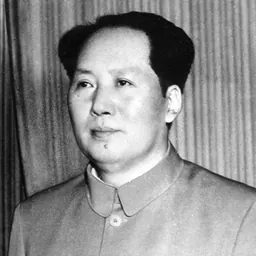





Related people
Same field, nearest in time


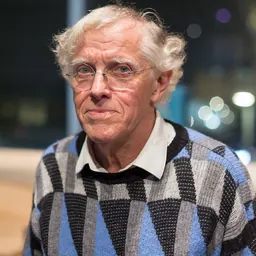
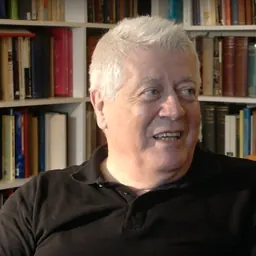

Contemporaries
People whose lives overlapped Frank Dikötter's

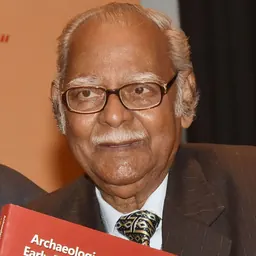

Frequently asked questions
Who is Frank Dikötter?
Dutch historian
When was Frank Dikötter born?
Frank Dikötter was born on 30 November 1961 in Stein.
What is Frank Dikötter's occupation?
Frank Dikötter is a historian, writer, university teacher and sinologist.
What nationality is Frank Dikötter?
Frank Dikötter is Dutch.
Sources & further reading
Cite this page
APA: Biography.guide. (2026). Frank Dikötter. https://biography.guide/frank-dikotter/
MLA: "Frank Dikötter." Biography.guide, https://biography.guide/frank-dikotter/.
Chicago: "Frank Dikötter." Biography.guide. https://biography.guide/frank-dikotter/.
Data last updated: 2026-09-22 · Spot an error? Report a correction.
Page generated 2026-09-27 05:29 UTC