
About Frank Close
Born 1945. Frank Close is a British physicist, non-fiction writer, university teacher, scientist and theoretical physicist.
Francis Edwin Close (born 24 July 1945) is a particle physicist who is Emeritus Professor of Physics at the University of Oxford and a Fellow of Exeter College, Oxford.
Education Close was a pupil at King's School, Peterborough (then a grammar school), where he was taught Latin by John Dexter, brother of author Colin Dexter. He took a BSc in physics at St Andrews University graduating in 1967, before researching for a DPhil in theoretical physics at Magdalen College, Oxford, under the supervision of Richard Dalitz, which he was awarded in 1970. He is an atheist.
Career In addition to his scientific research, he is known for his lectures and writings making science intelligible to a wider audience and promoting physics outreach.
From Oxford he went to Stanford University in California for two years as a Postdoctoral Fellow on the Stanford Linear Accelerator Center. In 1973 he went to the Daresbury Laboratory in Cheshire and then to CERN in Switzerland from 1973 to 1975. He joined the Rutherford Appleton Laboratory in Oxfordshire in 1975 as a research physicist and was latterly head of Theoretical Physics Division from 1991. He headed the communication and public education activities at CERN from 1997 to 2000. From 2001, he was professor of theoretical physics at Oxford. He was a visiting professor at the University of Birmingham from 1996 to 2002.
Close lists his recreations as writing, singing, travel, squash and Real tennis, and he is a member of Harwell Squash Club.
Honours and awards He became a Fellow of the Institute of Physics (FInstP) in 1991. The Institute of Physics awarded him its 1996 Kelvin Medal and Prize, which is given "for outstanding contributions to the public understanding of physics". From 1993 to 1999, he was vice-president of the British Association for the Advancement of Science. He was appointed an OBE in 2000. Since 2003, he has been Chairman of the British team (BPhO) in the International Physics Olympiad, based at the University of Leicester. 2013 Awarded the Royal Society Michael Faraday Prize. He became a Fellow of the Royal Society (FRS) in 2021.
Christmas lectures His Royal Institution Christmas Lectures in 1993, entitled The Cosmic Onion, gave their name to one of his books. He was a member on the council of the Royal Institution from 1997 to 1999. From 2000 to 2003 he gave public lectures as professor of astronomy at Gresham College, London.
Publications In his book, Lucifer's Legacy: The Meaning of Asymmetry, Close wrote: "Fundamental physical science involves observing how the universe functions and trying to find regularities that can be encoded into laws. To test if these are right, we do experiments. We hope that the experiments won't always work out, because it is when our ideas fail that we extend our experience. The art of research is to ask the right questions and discover where your understanding breaks down."
His 2010 book Neutrino discusses the tiny, difficult-to-detect particle emitted from radioactive transitions and generated by stars. Also discussed are the contributions of John Bahcall, Ray Davis, Bruno Pontecorvo, and others who made a scientific understanding of this fundamental building block of the universe.
In The Infinity Puzzle: Quantum Field Theory and the Hunt for an Orderly Universe (2013), Close focuses on the discovery of the mass mechanism, the so-called Higgs-mechanism.
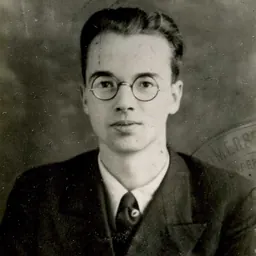
In his 2019 book, Trinity: The Treachery and Pursuit of the Most Dangerous Spy in History, Close recounts the life and the espionage of Klaus Fuchs who passed atomic secrets to the Soviets during the race for development of the nuclear bomb. He concludes that "it was primarily Fuchs who enabled the Soviets to catch up with Americans".
Other books include: Particle Physics: A Very Short Introduction , Antimatter and Nothing .
Contested claims about lunar helium‑3
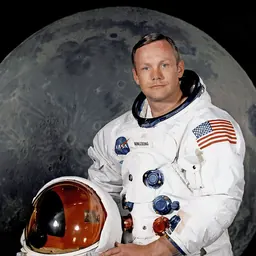
However, the existence of helium‑3 on the Moon was well established long before Close’s 2007 article. Apollo mission samples had confirmed the presence of solar-wind–implanted 3He in lunar regolith as early as the 1970s, with peer-reviewed publications reporting concentrations in the parts-per-billion range. For example, soil samples from Neil Armstrong's bulk sample 10084 from Apollo 11 was measured to contain approximately 11.8 ppb of 3He. By the early 2000s, remote sensing data from missions like Clementine and Lunar Prospector had been used to generate global models reaffirming the presence and distribution of helium‑3 in the lunar regolith, especially in mature, titanium-rich mare soils. Given the widespread availability of this data in the scientific literature, Close’s suggestion that “we don’t even know for certain if there is any helium‑3 on the Moon” was a significant misrepresentation. This assertion contradicts decades of well-documented lunar science.
Many of Close’s technical criticisms of helium‑3 fusion are supported by the scientific literature. It is widely accepted that deuterium–helium‑3 (D–³He) fusion is significantly more challenging to sustain than deuterium–tritium (D–T) fusion and that D–³He plasmas are not truly neutron-free. Side reactions, especially deuterium–deuterium fusion, inevitably produce tritium and neutrons, undermining claims of a “clean” process. In this respect, Close correctly challenged oversimplified narratives around lunar helium‑3 fusion.
However, Close overstated the extent of these challenges. Studies estimate that neutron production in optimized D–³He systems can be reduced to a small fraction of total fusion energy—far lower than in D–T fusion. His suggestion that using helium‑3 would effectively recreate a D–T machine overlooks this important distinction. Additionally, his claim that helium‑3 reactions produce deuterium was inaccurate; the standard helium‑3–helium‑3 fusion reaction produces two protons, not deuterium, consistent with well-established nuclear physics.
Don’t just read it —
keep it.
Full-length biographies made to live with: read them, listen on the way to work, watch them tonight.
- E-book
- Audio
- Video
Instant download · yours to keep · every purchase keeps this site free
Important facts
People in Frank Close's life
Named in this biography and alive at the same time





Related people
Same field, nearest in time

Contemporaries
People whose lives overlapped Frank Close's


Frequently asked questions
Who is Frank Close?
Particle physicist
When was Frank Close born?
Frank Close was born on 24 July 1945 in Peterborough.
What is Frank Close's occupation?
Frank Close is a physicist, non-fiction writer, university teacher, scientist and theoretical physicist.
What nationality is Frank Close?
Frank Close is British.
Sources & further reading
Cite this page
APA: Biography.guide. (2026). Frank Close. https://biography.guide/frank-close/
MLA: "Frank Close." Biography.guide, https://biography.guide/frank-close/.
Chicago: "Frank Close." Biography.guide. https://biography.guide/frank-close/.
Data last updated: 2026-09-20 · Spot an error? Report a correction.
Page generated 2026-09-27 05:04 UTC