
About François-Marie Bigex
Lived 1751 – 1827 (aged 75). François-Marie Bigex was an Italian catholic priest and catholic bishop.
François-Marie Bigex (24 September 1751 – 19 February 1827) was a prominent Savoyard churchman who was appointed Bishop of Pinerolo in 1817 and then, in 1824, Archbishop of Chambéry. His life and career were greatly affected by the French wars, which impacted Savoy directly between 1792 and 1815. He spent the most dangerous years of that period exiled in Lausanne, from where he was able to direct and undertake various missionary projects designed to combat the false doctrines that had arrived with the revolutionary armies from the west. His principal weapon in these endeavours was the pen.
Biography Provenance and early years François-Marie Bigex was born at La Balme-de-Thuy, a small town, even then in the Genevois province, set high in the mountains east of Annecy. The family was closely involved with the church. One of his uncles was a priest, as was one of his great-uncles, and the two of them took care of his early schooling. In due course, in 1787, Joseph-Marie Paget was consecrated to succeed Mgr. Biord. Paget would be the last bishop to retain the geographically misleading title, Bishop of Geneva. He lost little time in reappointing Bigex to the leading administrative position of diocesan vicar general. From Lausanne Bigex was able to watch over his "flock" of church members back in the occupied former Duchy of Savoy who found themselves in very great danger. He supported them with frequent exhortations and through the zeal of evangelising priests who risked their own lives by secretly distribution the practical tools for practicing the faith, whose difficult and dangerous missions he directed and co-ordinated, providing them with instruction appropriate to the terrible times through which the church and its congregations were passing. Very few weeks passed by when the diocesan clergy did not receive advices and communications of comfort and consolation, helping them in the vital matter of keeping The Faith. Eventually, after twelve years, the French police suppressed "Étrennes catholiqueses" in 1810. The author now made a direct appeal to Félix-Julien-Jean Bigot de Préameneu, the "Minister of Cults" and succeeded in having the suppression of "Étrennes ..." referred for arbitration to Bishop Duvoisin of Nantes. General Buonaparte had in 1804 appointed himself Emperor of the French. Bishop Duvoisin, a pragmatic scholar and who was one of the very few Christian leaders who enjoyed the emperor's confidence, undertook the arbitration as requested and found in favour of Bigex's "Étrennes catholiqueses". Despite this, the suppression of the publication persisted because, it was stated, existing editions "contained some articles touching upon the supremacy of the sovereign pontiff". (As it happened the sovereign pontiff was in Savona as a prisoner of the French at this point.) Two actions of enduring impact were the creation of two new Suffragan dioceses, established during 1824/25, one of them to look after the towns and villages of the Tarentaise valley and the other at Saint-Jean-de-Maurienne.
At the start of 1827 Archbishop Bigex was still full of plans and projects for advancing the work of the church in his archdiocese, but with little warning his incumbency was cut short. At the end of a pastoral mission to Bourget, during which the weather was exceptionally cold, he caught a chill. The condition was bad enough to force him to take to his bed, and after a few days it became clear that he was seriously ill. On 15 February 1827 he drafted and issued a final "mandement" (set of written instructions) filled with wise and loving advice, addressed to those under his care. Still preoccupied with his episcopal work, and still fervent in his piety, he received the last rites and died at around 10 in the morning on 17 February 1827, widely mourned. One source refers to the "universal regrets" which followed his death.
Don’t just read it —
keep it.
Full-length biographies made to live with: read them, listen on the way to work, watch them tonight.
- E-book
- Audio
- Video
Instant download · yours to keep · every purchase keeps this site free
Important facts
People in François-Marie Bigex's life
Named in this biography and alive at the same time
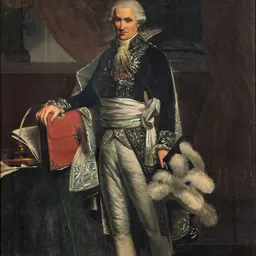
Related people
Same field, nearest in time


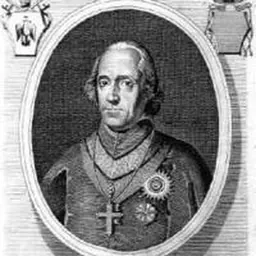
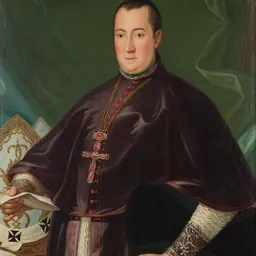
Contemporaries
People whose lives overlapped François-Marie Bigex's





Frequently asked questions
Who was François-Marie Bigex?
French archbishop
When was François-Marie Bigex born?
François-Marie Bigex was born on 24 September 1751 in La Balme-de-Thuy.
When did François-Marie Bigex die?
François-Marie Bigex died on 19 February 1827 in Chambéry.
What was François-Marie Bigex's occupation?
François-Marie Bigex was a catholic priest and catholic bishop.
What nationality was François-Marie Bigex?
François-Marie Bigex was Italian.
Sources & further reading
· Wikipedia: François-Marie Bigex
· DBpedia: François-Marie Bigex
Cite this page
APA: Biography.guide. (2026). François-Marie Bigex. https://biography.guide/francois-marie-bigex/
MLA: "François-Marie Bigex." Biography.guide, https://biography.guide/francois-marie-bigex/.
Chicago: "François-Marie Bigex." Biography.guide. https://biography.guide/francois-marie-bigex/.
Data last updated: 2026-09-20 · Spot an error? Report a correction.
Page generated 2026-09-27 05:22 UTC