
About François Joseph Lagrange-Chancel
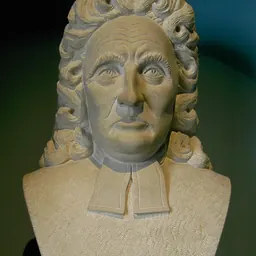
Lived 1677 – 1758 (aged 81). François Joseph Lagrange-Chancel was a French playwright, writer and poet.
François Joseph Lagrange-Chancel (January 1, 1677 – December 26, 1758) was a French playwright and satirist.
Biography He was an extremely precocious boy, and at Bordeaux in Gascony, where he was educated, he produced a play when he was nine years old. Five years later his mother took him to Paris, where he found a patron. in the princesse de Conti, to whom he dedicated his tragedy of Jugurtha or, as it was called later, Adherbal (1694). Racine had given him advice and was present at the first performance, although he had long lived in complete retirement. Other plays followed: Oreste et Pylade (1697), Méleagre (1699), Amasis (1701), and Ino et Mélicerte (1715).
Lagrange hardly realized the high hopes raised by his precocity, although his only serious rival on the tragic stage was Campistron, but he obtained high favour at court, becoming maître d'hôtel to the duchess of Orléans.
This prosperity ended with the publication in 1720 of his Philippiques, odes accusing the regent, Philip, duke of Orléans, of the most odious crimes, such as committing incest with his eldest daughter, Marie Louise Élisabeth d'Orléans, Duchess of Berry, a debauched young widow rumored to have hidden several pregnancies by her father and who died at age 23, her health prematurely destroyed by her secret maternities. Lagrange might have escaped the consequences of this libel but for the bitter enmity of a former patron, the duc de La Force. He found sanctuary at Avignon, but was enticed beyond the boundary of the papal jurisdiction, when he was arrested and sent as a prisoner to the Île Sainte-Marguerite.
He contrived, however, to escape to Sardinia and thence to Spain and Holland, where he produced his fourth and fifth Philippiques. On the death of the Regent he was able to return to France. He was part author of a Histoire de Périgord left unfinished, and made a further contribution to history, or perhaps, more exactly, to romance, in a letter to Élie Fréron on the identity of the Man with the Iron Mask. Lagrange's family life was embittered by a long lawsuit against his son. He died at Périgueux at the end of December 1758.
He had collected his own works (5 vols, 1758) some months before his death. His most famous work, the Philippiques, was edited by M. de Lescure in 1858, and a sixth philippic by M. Diancourt in 1886.
Works Literary legacy When Lagrange-Chancel appeared in Paris, some wanted to see in him the successor to Racine. But none of his plays - some of which were successful - justified hopes. The best of them, Amasis, suffers from the comparison with the Merope (1743) by Voltaire, on the same subject. "If the author has a sense of theater and dramatic situations, the characters are cold and false and versification is hard and prosaic" (Gustave Vapereau).
The Philippics are not without talent and are animated by a breath, but it's one of hatred and more exaggeration than poetry.
Theatre 1694: Adherbal roy de Numidie (ou Jurgurtha), tragedy, presented 8 January 1697: Oreste et Pylade, tragedy, 1699: Méléagre, tragedy, 1699: Athénaïs, tragedy, 1701: Amasis, tragedy, 1702: Médus, Roi des Mèdes, tragédie lyrique in 5 acts and a prologue, music by François Bouvard, presented at the Académie royale de musique, 23 July 1703: Alceste, tragedy 1706: Cassandre, tragédie lyrique, presented at the Académie royale de musique, 22 June 1713: Ino et Mélicerte, tragedy, 1713: La Fille supposée, comedy in five acts in verse, presented without success at the Théâtre-Français, 11 May, not printed. 1717: Ariane, tragédie lyrique in 5 acts and one prologue, in collaboration with Pierre-Charles Roy, music by Jean-Joseph Mouret, presented at the Académie royale de musique, 6 April 1729: Les Jeux olympiques ou le prince malade, comédie héroïque, premiered at the Comédie-Italienne, 12 November 1731: Erigone, tragedy played in Versailles 20 December. This play was not successful 1732: Cassius et Victorinus, martyrs, Christian tragedy after Grégoire de Tours, presented 6 October 1736: Orphée, tragedy in machinery, not shown, La Mort d'Ulysse, tragedy, not shown, Le Crime puni, tragedy, not shown, which appears in the 4th volume of the works of Chancel. It is an imitation of Dom Juan ou le Festin de pierre.
Don’t just read it —
keep it.
Full-length biographies made to live with: read them, listen on the way to work, watch them tonight.
- E-book
- Audio
- Video
Instant download · yours to keep · every purchase keeps this site free
Important facts
People in François Joseph Lagrange-Chancel's life
Named in this biography and alive at the same time



Related people
Same field, nearest in time
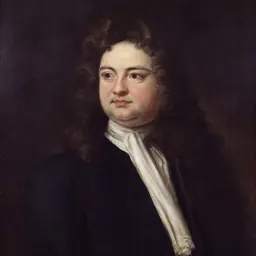
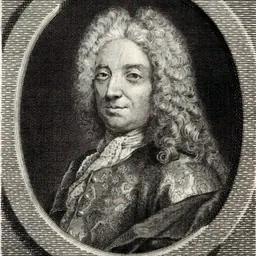

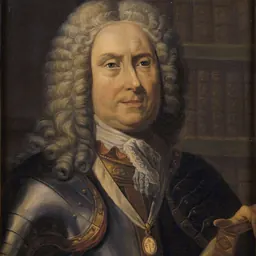

Contemporaries
People whose lives overlapped François Joseph Lagrange-Chancel's



Frequently asked questions
Who was François Joseph Lagrange-Chancel?
French dramatist
When was François Joseph Lagrange-Chancel born?
François Joseph Lagrange-Chancel was born on 1 January 1677 in Razac-sur-l'Isle.
When did François Joseph Lagrange-Chancel die?
François Joseph Lagrange-Chancel died on 29 December 1758 in Razac-sur-l'Isle.
What was François Joseph Lagrange-Chancel's occupation?
François Joseph Lagrange-Chancel was a playwright, writer and poet.
What nationality was François Joseph Lagrange-Chancel?
François Joseph Lagrange-Chancel was French.
Sources & further reading
· Wikipedia: François Joseph Lagrange-Chancel
· DBpedia: François Joseph Lagrange-Chancel
Cite this page
APA: Biography.guide. (2026). François Joseph Lagrange-Chancel. https://biography.guide/francois-joseph-lagrange-chancel/
MLA: "François Joseph Lagrange-Chancel." Biography.guide, https://biography.guide/francois-joseph-lagrange-chancel/.
Chicago: "François Joseph Lagrange-Chancel." Biography.guide. https://biography.guide/francois-joseph-lagrange-chancel/.
Data last updated: 2026-09-22 · Spot an error? Report a correction.
Page generated 2026-09-27 05:34 UTC