
About François Hemsterhuis
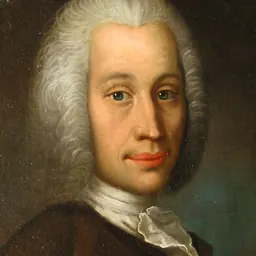
Lived 1721 – 1790 (aged 68). François Hemsterhuis was a Dutch philosopher, writer, instrument maker and archaeologist.
François Hemsterhuis (also Frans Hemsterhuis; 27 December 1721 – 7 July 1790) was a Dutch writer on aesthetics and moral philosophy.
Biography The son of Tiberius Hemsterhuis, he was born at Franeker in the Netherlands. He was educated at the University of Leiden, where he studied Plato. Failing to obtain a professorship, he entered the service of the state, and for many years acted as secretary to the state council of the United Provinces. He died at the Hague on 7 July 1790. Through his philosophical writings he became acquainted with many distinguished persons—Goethe, Herder, Princess Adelheid Amalie Gallitzin, and especially Jacobi, with whom he had much in common. His most valuable contributions are in the department of aesthetics or the general analysis of feeling. His philosophy has been characterized as Socratic in content and Platonic in form. Its foundation was the desire for self-knowledge and truth, untrammelled by the rigid bonds of any particular system.
Works His most important works, all of which were written in French, are: Lettre sur la sculpture (1769), in which occurs the well-known definition of the Beautiful as "that which gives us the greatest number of ideas in the shortest space of time" its continuation, Lettre sur les désirs (1770) Lettre sur l'homme et ses rapports (1772), in which the "moral organ" and the theory of knowledge are discussed Sophyle (1778), a dialogue on the relation between the soul and the body, and also an attack on materialism Aristée (1779), the "theodicy" of Hemsterhuis, discussing the existence of God and his relation to man Simon (1787), on the four faculties of the soul, which are the will, the imagination, the moral principle (which is both passive and active) Alexis (1787), an attempt to prove that there are three golden ages, the last being the life beyond the grave Lettre sur l'athéisme (1787).
A collected edition of his works was made by P. S. Meijboom (1846-1850); see also S. A. Gronemann, F. Hemsterhuis, de Nederlandische Wijsgeer (Utrecht, 1867); E. Grucker, François Hemsterhuis, sa vie et ses œuvres (Paris, 1866); E. Meyer, Der Philosoph Franz Hemsterhuis (Breslau, 1893), with bibliographical notice; Augustinus P. Dierick, "Pre-Romantic Elements in the aesthetic and moral writings of François Hemsterhuis (1721-1790)." Studies in Eighteenth Century Culture 26 (1998), 247–271. A bilingual French-Dutch edition was published, introduced and commented on by Michael John Petry in 2001, titled Wijsgerige werken – Frans Hemsterhuis.
Don’t just read it —
keep it.
Full-length biographies made to live with: read them, listen on the way to work, watch them tonight.
- E-book
- Audio
- Video
Instant download · yours to keep · every purchase keeps this site free
Important facts
People in François Hemsterhuis's life
Named in this biography and alive at the same time
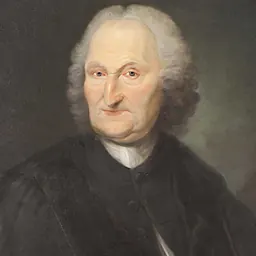
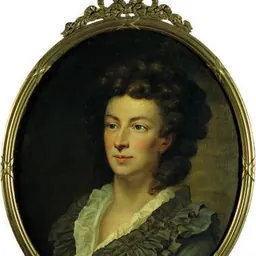
Related people
Same field, nearest in time



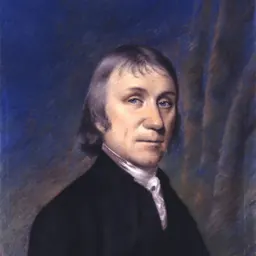
Contemporaries
People whose lives overlapped François Hemsterhuis's



Frequently asked questions
Who was François Hemsterhuis?
Dutch philosopher (1721-1790)
When was François Hemsterhuis born?
François Hemsterhuis was born on 27 December 1721 in Franeker.
When did François Hemsterhuis die?
François Hemsterhuis died on 7 July 1790 in The Hague.
What was François Hemsterhuis's occupation?
François Hemsterhuis was a philosopher, writer, instrument maker and archaeologist.
What nationality was François Hemsterhuis?
François Hemsterhuis was Dutch.
Sources & further reading
· Wikipedia: François Hemsterhuis
· DBpedia: François Hemsterhuis
Cite this page
APA: Biography.guide. (2026). François Hemsterhuis. https://biography.guide/francois-hemsterhuis/
MLA: "François Hemsterhuis." Biography.guide, https://biography.guide/francois-hemsterhuis/.
Chicago: "François Hemsterhuis." Biography.guide. https://biography.guide/francois-hemsterhuis/.
Data last updated: 2026-09-20 · Spot an error? Report a correction.
Page generated 2026-09-27 05:18 UTC