
François Guiter
French advertising executive
About François Guiter
Lived 1928 – 2014 (aged 86). François Guiter was a French.
François Émile Jean Guiter (7 May 1928 — 9 November 2014) was a French businessman who served as Elf's head of marketing from 1967 to 1989. Through his control over the French state-owned oil company's marketing budget, he became one of Formula One's most important power brokers. Joe Saward of Autoweek described Guiter as one of "the primary forces in creating modern F1".
Guiter facilitated Formula One's path to broadcast television, winning a struggle with the BBC to permit large-scale advertising in the sport. He was the chief financial backer of Matra, Tyrrell, and Renault, the first two of which won titles while being sponsored by Elf. He championed Renault's introduction of turbocharged engines to Formula One in 1977, ushering in a new era of racing dominated by wealthy multinational automakers. Although Renault disbanded its Formula One works team in 1985, Elf helped persuade the company to resume building engines in 1989. Renault-powered Williams and Benetton won five Drivers' Championships and six Constructors' Championships in the 1990s.
Through Elf, Guiter pursued Charles de Gaulle and Georges Pompidou's goal to restore the reputation of French auto racing. Jackie Stewart won three Drivers' Championships in cars sponsored by Elf and painted in French racing blue. Led by Stewart, Équipe Matra won the Constructors' Championship in ; as of the season, it is the only constructor physically headquartered outside the United Kingdom or Italy to win the title. Through his involvement in the French junior racing pyramid, Guiter supported the junior careers of many future Formula One drivers, including four-time world champion Alain Prost. He also backed the Alpine-Renault endurance racing team, which won the 1978 24 Hours of Le Mans.
Early life Guiter was born in the 7th arrondissement of Paris, France, on 7 May 1928. His parents were , a politician, and Odette Formigé, the daughter of architect Jules Formigé.
During World War II, a young Guiter joined the French Resistance. He worked as a frogman. He was missing several fingers, and the rumor in the racing press was that he lost the fingers while attaching a limpet mine to an enemy ship. He later studied architecture, but found it boring and quit after two years. He also spent time with the SDECE, France's secret service. Many years later, he would call on his secret service connections to have François Cevert's body promptly transported back to France after Cevert died in 1973.
After leaving the secret service, Guiter joined the film industry, producing several underwater films with Jacques Cousteau and Haroun Tazieff. In the 1960s, he worked on several episodes of the French television show . However, in 1955, his brother Jean-Claude was killed during a television shoot with Tazieff. He got lost exploring a dangerous water-filled underground cavern at . Guiter dived to find him, He searched for a way to promote his company's new name. Although Guiter admitted that he "had never watched a race before and knew nothing about [the sport]", market research convinced him that Elf's relatively young and urbanized customer base wanted to buy cutting-edge products and were interested in auto racing. In response, the company adopted the slogan "Elf looks at things from a different angle" . Guiter went into auto racing,
Guiter and Elf enjoyed the support of Charles de Gaulle, the president of France at the time. The Gaullist philosophy of de Gaulle and his successor, Georges Pompidou, encouraged France to grow self-reliant. Elf was located in the strategically valuable oil sector, and thus became "an instrument of the national independence and the grandeur of France", in contrast to Renault, the state-owned auto manufacturer. Elf used its political favor to influence Renault corporate policy. Elf also intertwined its operations with those of Renault's, each using its position to promote the other's products.
De Gaulle also wanted to restore the reputation of French auto racing. It was said that while "de Gaulle saw only a grand design for France" in auto racing, Pompidou actually liked cars. At various points, Elf also supplied race fuel to Matra, Williams, Benetton, Brabham, Lotus, McLaren, and Ligier. To reach this point, however, Guiter had to overcome opposition from the British Broadcasting Corporation, which disfavoured obtrusive advertising. In March 1976, the BBC decided to black out the 1976 Formula One season to protest the Surtees Racing Organisation's sponsorship with condom manufacturer Durex. In the end, British audiences demanded to watch local star James Hunt challenge Niki Lauda for the Drivers' Championship at the 1976 Japanese Grand Prix. After ITV agreed to broadcast Formula One, the BBC caved in.
Guiter's struggle with the BBC continued into the season. The BBC accused Elf of "intransigence" and said that it would refuse to broadcast the season until Elf agreed to shrink its advertising decals from 15 inches to a maximum height of five inches. In response, Guiter filmed the entire Formula One and Formula Two seasons at Elf's expense and offered to give away the footage to the BBC's rivals for free. He also accused the BBC of hypocrisy for broadcasting Hunt's victory at the 1977 British Grand Prix, as Hunt's McLaren car advertised sponsors Marlboro and Texaco. In 1978, the BBC introduced Murray Walker's long-running TV programme Grand Prix to provide consistent coverage of all races, all season long.
Elf also tried to grow the sport. Upon arriving in Formula One, Guiter was unimpressed with the quality of the racing press. He pushed to further professionalise media coverage. Outlets he backed included TF1 television show and the French edition of Autosport magazine. He paid photojournalists Just Jaeckin and and film director Alain Boisnard to cover the sport. Working with Bernie Ecclestone, he also encouraged improvements to television coverage, including the introduction of onboard cameras. In addition, he was one of the first sponsors to provide centralized catering for racing journalists at Formula One races.
In his later years, Guiter clashed with Ecclestone and his ally Max Mosley, who wanted to maximise television revenue. His Elf "mae no bones about the fact that if Mr. Ecclestone and Mr. Mosley want[ed] to turn Formula 1 into a public spectacle and an entertainment above all else, with no thought for the future other than money-making[,] then [it would] pull out".
Matra: France's first champion Driving the Matra MS80, Jackie Stewart won the 1969 French Grand Prix on his way to his first title. When the team was still new, Guiter promised that Matra would work its way up from Formula Three to Formula One and then Le Mans. Tyrrell praised Matra's commitment, explaining that "the manufacturing methods they use are very expensive. I don't think any of the British Formula One manufacturers could afford to pay what it costs to produce a Matra Formula One". and Matra-Ford finished third in the Constructors' Championship. However, the Matra works team (which used in-house Matra engines) finished eighth. The new Matra MS80 was the class of the field.
However, Matra's success was complicated by Elf's close relationship with Renault. Although Renault did not compete with Matra in Formula One, both automakers wanted to win the 24 Hours of Le Mans. According to reporter Jabby Crombac, the Renault-Matra rivalry was so intense that Georges Pompidou personally ordered Elf to stop sponsoring Matra. As a result, Tyrrell left Matra and started a fully independent racing team, the British Tyrrell Racing Organisation. Guiter threw his support behind Tyrrell, as the Matra parent company had recently partnered with French automaker Simca, which was allied with Elf's rival Shell. Guiter later revealed that Matra considered partnering with Renault instead of Simca, but negotiations with Renault fell through. Matra shifted its focus to endurance racing and shut down its Formula One team after the season. In 1976, Guy Ligier acquired Matra's racing assets and started his own F1 team, which competed until 1996.
Although Tyrrell Racing was a British team, it retained a certain French flavour. Tyrrell agreed to keep painting his cars French racing blue, Guiter's spending on the team rivaled even that of tobacco companies; by the mid-1970s, Tyrrell was spending six times as much money as Team Lotus in 1968, the year Lotus became the first major F1 team to sign a tobacco sponsorship deal. Aided by French money, the Tyrrell team continued to succeed: Jackie Stewart won two more titles with Tyrrell in and , and Tyrrell won the Constructors' Championship in 1971. but none of these plans ever came to fruition and Renault started its own works team. Guiter claimed that Tyrrell was scared of "unnamed problems" with the turbo project and "gave up" on Renault. One Tyrrell engineer said that Keith Duckworth (whose Cosworth engine company would have lost Tyrrell as a customer if Guiter’s plan had succeeded) helped sway Tyrrell against turbos. However, by 1984 Motor Sport reported that Renault was affirmatively refusing to supply Tyrrell with turbo engines. Regardless of the reason, Tyrrell eventually campaigned to ban turbos from Formula One, and Elf stopped financially supporting the team. By this time, the Renault works team was already on its way out. although neither team sourced its fuel from Elf.
French talent pipeline According to Joe Saward, Guiter, Formula One Group's Bernie Ecclestone, and Marlboro's John Hogan were "the primary forces in creating modern F1, not only by providing money for the sport, but also by putting together great teams". Guiter poured "vast sums of petro-francs" into building a French driver pipeline. Due to his significant influence, Jean Alesi said that Guiter "was like a king in France". Patrick Tambay said that Guiter and Enzo Ferrari were the only two people he met who demonstrated "absolute natural authority". alt=See caption
Formula France (later Formula Renault): Elf sponsored the junior series from its introduction in 1967. The Winfield Racing School: Winfield maintained two junior driver academies at Magny-Cours and Paul Ricard. The winner of this junior competition for young drivers received a fully funded season in Formula Renault. As such, the competition "quickly became the fast route for hopefuls to reach F1". Formula Three: At a time when Formula Three was "wasting away because it was prohibitively expensive to run", Guiter commissioned a new Formula Three engine for junior drivers to use. Women in motorsport: Guiter sponsored the Ecurie Elf Ladies' Team, which competed in endurance racing events. Lella Lombardi and raced for an Elf team at the 1975 24 Hours of Le Mans.
Guiter did more than write checks. Winfield School's Simon de Lautour said that Guiter "would go up to people in the F1 pits and say: 'I want you to try this driver' - and they'd jump to it. He had a lot of charisma and a lot of clout." Guiter also stepped in to fund Rene Arnoux's junior career when Arnoux's prior benefactor, Shell, cut its funding during the 1973 oil crisis.
The most famous beneficiary of Guiter's support was Alain Prost, France's only Formula One World Champion, who credited Guiter with helping him "at a time when I was stuck". After Prost won the French Formula Three Championship in 1978, Guiter "took a personal interest" in the young man. He encouraged John Hogan—the power broker at McLaren—to give the young Prost a chance. Although McLaren team boss Teddy Mayer favored a different driver, Hogan helped persuade Mayer to let Prost spend his rookie year with McLaren. Prost later said that Guiter "opened the doors of F1 to me". Upon Guiter's death, he added that "French Formula 1 owes him a lot. I owe him everything."
Despite his staunch support for Formula One, Guiter was ambivalent about the junior program, citing the sport's unimpressive safety record at the time he began sponsoring the sport. He said that "when Elf started competing ... many people died in accidents. I felt that I was sending all of these boys to disaster. It was not consistent with what I used to do." Elf contributed 110 million francs (around £8.7m in 1972, or £101m in 2024) to the Alpine-Renault-Elf teams before the Renault takeover in 1973.
Over the next decade, Guiter overcame Renault's resistance to auto racing by bankrolling Renault teams in less expensive competitions until Renault finally agreed to join Formula One during the season. Because of his key role in Renault's racing operation, it was said that when the Renault F1 team had a bad day, Guiter and not Renault would "receive [the] phone calls from very high up in the French Government asking what [was] going on". Jean-Pierre Jabouille said that "if Guiter had never existed, Renault F1 would have never existed". Although Renault's leadership was not enthusiastic, Guiter "simply handed the budget to a new generation of engineers at Gordini's Viry-Châtillon factory and told them to get on with it".
Guiter also pressed on in formula racing. After the Tyrrell-Matra split, Elf began sponsoring an Alpine French Formula Three team, which won the 1971 title. Alpine progressed to Formula Two for the 1972 season, but Renault declined to develop a new engine, so Alpine purchased customer Ford-Hart engines, which were less successful.
Bringing turbos to Formula One
It has been a long project. — Guiter after Renault won its first Grand Prix That same year, Renault centralised and formalised its racing operations (including Alpine and Gordini) under one banner, Renault Sport. Two years after destroying the Alpine A350, Renault authorised Alpine to design a new car, the Alpine A500, which eventually developed into the Renault RS01, the team's first Formula One car. Renault eventually agreed to join Formula One for the season. Elf signed a ten-year contract with Renault to become the team's title sponsor. In addition, Ken Tyrrell had advised him that it would be easier to invent something new than to out-develop the dominant, naturally aspirated Ford Cosworth engines. To sway Renault leadership, Guiter promised that Elf would pay for two engines itself.
The engines' increased power was offset by decreased reliability, and Renault endured two difficult seasons in 1977 and 1978. Engine chief Bernard Dudot explained that Renault had not predicted how difficult it would be to perfect the new turbo technology, but pointed out that it was "because we didn't have a complete view of the problems ... [that] we were able to convince the president of the company that this was the way". However, his team continued improving the engine, and two years after Renault entered Formula One, Renault's Jean-Pierre Jabouille won the 1979 French Grand Prix. Guiter was finally able to celebrate what Autosport called "victory in France for a French driver, with a French chassis, engine, tyres, fuel. French everything." Looking back, Niki Lauda called Renault's win "the real beginning of the turbo era." thumb
The power of the Renault turbos eventually shifted the balance of power in Formula One from small, mostly British racing teams to large automakers who could afford to develop complex engines. The British teams initially sought to ban or limit turbos. By contrast, Ferrari adopted turbochargers in 1981. The more powerful British teams eventually relented and found their own large automakers to build turbo engines for them, with Honda joining Williams, Porsche joining McLaren, and BMW joining Brabham. By 1983, every major team was using turbo engines. Guiter warned FOCA to compromise before FISA cancelled the season, which eventually went ahead.
1983 title controversy and decline By 1980, Renault was competing at the top of Formula One. It finished 4th, 3rd, 3rd, and 2nd in the Constructors' Championship from 1980 to 1983. In , Alain Prost narrowly lost the drivers' title to Brabham-BMW's Nelson Piquet. Post-race testing determined that Piquet's fuel (supplied by Elf's rival Wintershall) had an octane rating of 102.9, slightly above the limit of 102. Guiter wanted to challenge the result; through unknown means, he had acquired one of the fuel samples that Brabham had submitted to the regulators, and Elf independently confirmed the findings. However, FISA's Jean-Marie Balestre ruled in Piquet's favour, costing his countryman Prost the title. One writer characterised Balestre's decision as an attempt "to underline the new entente cordiale" between FISA and FOCA. Renault shut down its Formula One team after the 1985 season. Renault did not resume constructing cars until 2000, when it acquired Benetton Formula (renamed Renault in 2001). Alain Prost won the championship in an Elf-sponsored Williams-Renault. After losing Senna, Guiter pivoted back to Renault, which agreed to return to Formula One as an engine supplier in , the year turbochargers were banned. As before, Guiter took a close interest in the Renault engine project. To secure Renault power, Williams broke its contract with Mobil to sign with Elf. However, he remained involved with Elf as an advisor for another seven years. He pushed Frank Williams to sign Prost for , but Williams balked at Prost's high demands, and Prost went to Ferrari instead.
After Williams dominated the 1992 season, the FIA's Max Mosley attempted to "make racing more interesting for the public" by outlawing the special fuel that Elf had been supplying Williams, on the logic that Formula One should try to use the same petrol as ordinary consumers. During the 1993 season, Mosley accused Elf of violating this directive and threatened to disqualify Prost from several races, although no penalty was given. Guiter later complained that "the FIA was always trying to trap us"; Mosley had previously been accused of targeting Prost to "enliven" the competition, as Prost had by far the best car on the grid. After Prost won the title, Guiter remarked that "coming back to a problem you failed and succeeding ten years later is very rare".
Schumacher and Benetton Elf also supported non-Renault teams. Michael Schumacher won the drivers' title in an Elf-sponsored Benetton-Ford. Elf supplied fuel to at least six other teams during the Williams-dominated 1990s, including Williams' strongest competitor, Benetton Formula. The following year, Benetton's Michael Schumacher won the drivers' title. Even so, Max Mosley felt that some kind of penalty was necessary for the sake of "the whole system", so the teams lost their championship points while the drivers' disqualifications were reversed. Guiter commented that because Elf's fuel was not illegal, the FIA had to "reclassify Schumacher to avoid ridicule". Despite the penalty, Schumacher and Benetton-Renault won a double world championship that year. Although the move was principally attributed to cost cuts associated with Elf's 1994 privatisation, Guiter's contemporary Mike Knight put some of the blame on Guiter, arguing that he could have done more to ensure that that his successor at Elf was also a supporter of auto racing.
Elf returned to Formula One after Renault purchased Benetton in 2000.
Personal life Guiter and his wife Françoise (née Grandidier) had three children, named Jean-Claude, Sophie, and Florence. and the niece of sculptor Germaine Richier.
Guiter died on 9 November 2014 in the 15th arrondissement of Paris.
Don’t just read it —
keep it.
Full-length biographies made to live with: read them, listen on the way to work, watch them tonight.
- E-book
- Audio
- Video
Instant download · yours to keep · every purchase keeps this site free
Important facts
People in François Guiter's life
Named in this biography and alive at the same time



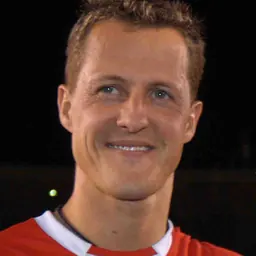
Contemporaries
People whose lives overlapped François Guiter's


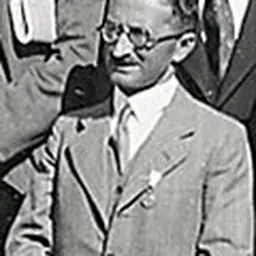


Frequently asked questions
Who was François Guiter?
French advertising executive (1928–2014)
When was François Guiter born?
François Guiter was born on 7 May 1928 in 7th arrondissement of Paris.
When did François Guiter die?
François Guiter died on 9 November 2014 in 15th arrondissement of Paris.
What nationality was François Guiter?
François Guiter was French.
Sources & further reading
Cite this page
APA: Biography.guide. (2026). François Guiter. https://biography.guide/francois-guiter/
MLA: "François Guiter." Biography.guide, https://biography.guide/francois-guiter/.
Chicago: "François Guiter." Biography.guide. https://biography.guide/francois-guiter/.
Data last updated: 2026-09-20 · Spot an error? Report a correction.
Page generated 2026-09-27 05:01 UTC