
François-Edmond Fortier
French photographer and publisher, 1862-1928
About François-Edmond Fortier
Lived 1862 – 1928 (aged 65). François-Edmond Fortier was a French photographer and ethnographer.
François-Edmond Fortier (2 September 1862 – 8 February 1928) was a French photographer, publisher of postcards and visual ethnographer. In his more than 3,300 images and postcards of French West Africa (Afrique Occidentale Française), he documented landscapes, African and colonial buildings, the urban developments in Dakar, everyday life in the countryside, as well as political and economic leaders. His postcards encompass both ethnographic documentation and staged portraiture, some of which showing eroticized depictions of indigenous women. Photographs and reprints of his work have since been reproduced as documents of visual culture of life in French West Africa.
Prints of Fortier's historical photographs have been collected as examples of early 20th-century photography in Africa by the Metropolitan Museum of Art, the Library of Congress, the Smithsonian Institution, the Museum of Fine Art, Boston, UNESCO, as well as by collections in France.
Biography Fortier was born in the small village of Plaine, in the Vosges region of France in 1862. His parents were farmers on land with scarce harvests. In July 1883, Fortier moved to Paris, where he worked as an accountant for a wholesale company in the textiles business. He got married in 1884 to a woman of Alsatian background, and they had their first daughter the following year. thumb Woman from the Wolof ethnic groupIn 1900, Fortier moved to Dakar, which became the new capital as of 1902. From 1902 to 1903, he explored Fouta-Djalon, then Haute-Guinée, and from 1905 to 1906 he travelled in the former French Sudan (present-day Mali), staying in Bamako, Djenné and the military territory of Tombouctou, where he photographed Tuareg horsemen who had been fighting the French.
Reception
Scholarly studies Fortier's original plates or negatives having been lost, research about his work relies on publications and collections of original prints. From 1986 to 1988, French scholar Phillip David published three volumes of Fortier's comprehensive catalogue documenting his numerous postcards. In 1995, the association Images & Mémoires (I&M) started a project in order to rescue, preserve and study West African photography. With the support of UNESCO's World Memory Programme, the association published a CD-ROM with over 3,000 reproductions of postcards depicting West Africa from 1895 to 1930. About 900 of the images in this collection had been published by Fortier. The selection from his legacy notably did not include Fortier's images of nude women. One of these covered Fortier's travels to Toumbouctu in 1906, and another one his journey to Dahomey from 1908 to 1909. In her 2007 paper, Patricia Hickling discussed the professional relationship between photographer Émile Noal and Fortier. Based on historical evidence and stylistic comparison of several images, she posited that these images had actually been taken and published by Noal and were later published by Fortier under his own name. As the new owners of a photographic studio often kept and republished photographs by the previous photographer, cultural anthropologist Christraud M. Geary also wrote that Fortier had published his earliest postcard series with images by Noal and another French photographer under his own name. Another notable African leader portrayed by Fortier was the son of El Hadj Omar, Aguibou Tall.
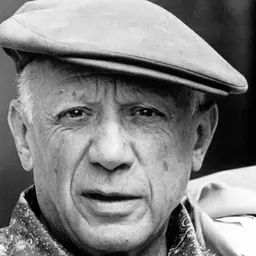
As Pablo Picasso owned about 40 photographs by Fortier and other images of African women, influences by these photographs on his 1907 painting Les Demoiselles d'Avignon have been proposed. Thus, scholar Janie Cohen posited "a framework for its final composition, specific poses, elements that contributed to his [Picasso's] nascent interest in simultaneous multiple perspectives."
As a conclusion of her study of Fortier and his legacy, Moreau wrote in 2018: Further, the museum owns photomechanical reproductions of postcards titled Afrique Occidentale – Danseurs "Miniankas" and West Africa, young Wolof girls. Further, the Smithsonian Institution and the Museum of Fine Art, Boston, hold images by Fortier in their collections. The Library of Congress also has photographs by Fortier in their Africana Historic Postcard Collection. In France, the Musée Picasso has 40 photographs by Fortier from the artist's private collection, and the Centre Edmond Fortier and the Association Images & Mémoires have published his work and a complete catalogue online.
Gallery
Don’t just read it —
keep it.
Full-length biographies made to live with: read them, listen on the way to work, watch them tonight.
- E-book
- Audio
- Video
Instant download · yours to keep · every purchase keeps this site free
Important facts
People in François-Edmond Fortier's life
Named in this biography and alive at the same time

Related people
Same field, nearest in time




Contemporaries
People whose lives overlapped François-Edmond Fortier's




Frequently asked questions
Who was François-Edmond Fortier?
French photographer and publisher, 1862-1928 (1862–1928)
When was François-Edmond Fortier born?
François-Edmond Fortier was born on 2 September 1862 in Celles-sur-Plaine.
When did François-Edmond Fortier die?
François-Edmond Fortier died on 24 February 1928 in Dakar.
What was François-Edmond Fortier's occupation?
François-Edmond Fortier was a photographer and ethnographer.
What nationality was François-Edmond Fortier?
François-Edmond Fortier was French.
Sources & further reading
· Wikipedia: François-Edmond Fortier
· DBpedia: François-Edmond Fortier
Cite this page
APA: Biography.guide. (2026). François-Edmond Fortier. https://biography.guide/francois-edmond-fortier/
MLA: "François-Edmond Fortier." Biography.guide, https://biography.guide/francois-edmond-fortier/.
Chicago: "François-Edmond Fortier." Biography.guide. https://biography.guide/francois-edmond-fortier/.
Data last updated: 2026-09-20 · Spot an error? Report a correction.
Page generated 2026-09-27 05:04 UTC