
About François Blouet de Camilly
Lived 1664 – 1723 (aged 59). François Blouet de Camilly was a French catholic priest and catholic bishop.
François Blouet de Camilly, Comte de Saint-Pierre-sur-Dives, D.D., François's choice of a career in the Catholic Church was influenced by the examples of his father's brothers and sisters. When he was still at the Sorbonne, he was posted to the Church of Saint-Sulpice, Paris, for two years, beginning in November 1683, and then lived at the Missions Etrangères seminary, also in Paris. He was ordained as the Bishop on 12 November 1705 and installed on 13 December 1705. he tried to stay in the middle throughout the furore. He favoured the Jansenists in his diocese but he also corresponded with the Archbishop of Cambrai, François Fénelon, who was against the Jansenists. When Pope Clement XI issued his Apostolic constitution, Vineam Domini, in 1705 against Jansenism, the Bishop published it for his diocese as a mild command. In 1713, he was one of the forty bishops who received Unigenitus, the Papal Bull against Jansenism from Pope Clement XI, but he was also the first to withdraw his support.
The Archbishop of Tours Nevertheless, on 9 January 1721, again by letters patent, Blouet de Camilly became the Archbishop of Tours.
The promotion might have been engineered by the Duke of Lorraine, Leopold. When François was still the Bishop of Toul, Leopold made several attempts to remove his duchy from the Bishop's authority. He tried to have the Diocese dismembered and its parts given to its neighboring dioceses but the Parliament of Metz would not allow him. Neither would the Bishop and he did not wish to speak to him, either. The Duke then tried to get the help from his brother-in-law, the Regent of France, Philippe II, the Duke of Orléans, but the Regent refused. Then François was given the transfer to Tours.
Blouet de Camilly held his new office from 1721 to 1723. His appointment was finally confirmed on 20 January 1723
The Archbishop's body was brought to Tours for burial. He left behind his personal library of over 2,211 books. He left behind a house in Liverdun, 9.6 miles (15.5 kilometers) northeast of Toul. As the Bishop of Toul, he had it built to be the official residence of the Bishops of Toul. It is still standing today with the name of "Hôtel de Camilly".
Don’t just read it —
keep it.
Full-length biographies made to live with: read them, listen on the way to work, watch them tonight.
- E-book
- Audio
- Video
Instant download · yours to keep · every purchase keeps this site free
Important facts
People in François Blouet de Camilly's life
Named in this biography and alive at the same time
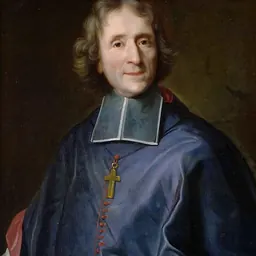
Related people
Same field, nearest in time



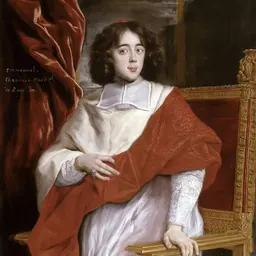
Contemporaries
People whose lives overlapped François Blouet de Camilly's



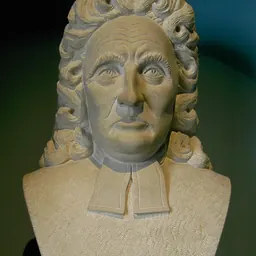

Frequently asked questions
Who was François Blouet de Camilly?
Roman Catholic Archbishop (1664-1723)
When was François Blouet de Camilly born?
François Blouet de Camilly was born on 22 May 1664 in Rouen.
When did François Blouet de Camilly die?
François Blouet de Camilly died on 17 October 1723 in Ligueil.
What was François Blouet de Camilly's occupation?
François Blouet de Camilly was a catholic priest and catholic bishop.
What nationality was François Blouet de Camilly?
François Blouet de Camilly was French.
Sources & further reading
· Wikipedia: François Blouet de Camilly
· DBpedia: François Blouet de Camilly
Cite this page
APA: Biography.guide. (2026). François Blouet de Camilly. https://biography.guide/francois-blouet-de-camilly/
MLA: "François Blouet de Camilly." Biography.guide, https://biography.guide/francois-blouet-de-camilly/.
Chicago: "François Blouet de Camilly." Biography.guide. https://biography.guide/francois-blouet-de-camilly/.
Data last updated: 2026-09-20 · Spot an error? Report a correction.
Page generated 2026-09-27 05:19 UTC