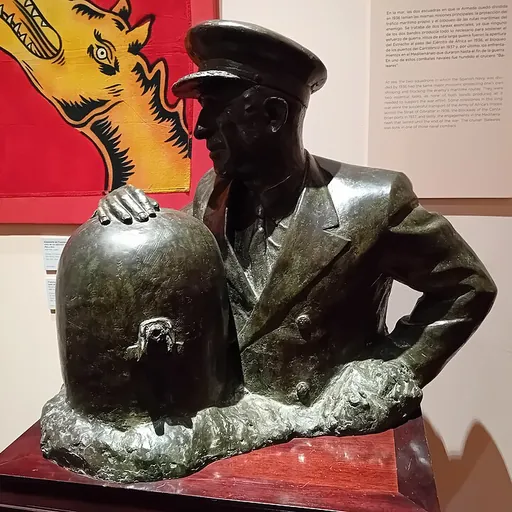
About Francisco Moreno Fernández
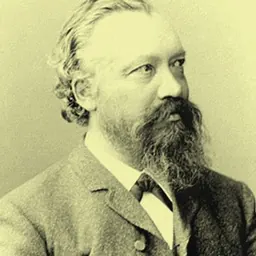
Lived 1883 – 1945 (aged 61). Francisco Moreno Fernández was a Spanish military personnel and admiral.
Francisco Moreno Fernández (7 November 1883 – 21 January 1945) was a Spanish Navy admiral who fought in the Rif War and later participated in the coup d'état in Spain against the Second Spanish Republic in July 1936 that triggered the Spanish Civil War (1936–1939). He fought on the Nationalist side during the war, rising to the rank of vicealmirante (vice admiral) in the Nationalist fleet and was both its commander-in-chief throughout the war and the commander of its Mediterranean Blockade Forces from 1937 to 1939. He later reached the rank of almirante (admiral). For his service, General Francisco Franco posthumously awarded him the title of 1st Marquis of Alborán on 1 April 1950.
Biography Early life and career Moreno was born in San Fernando in the Kingdom of Spain on 7 November 1883, the eldest child of Salvador Moreno y de Eliza — a Spanish Navy teniente de navío de 2ª clase (ship-of-the-line lieutenant second class) who later rose to the rank of vicealmirante (vice admiral) and was commander-in-chief of the Spanish Navy when he died in 1918 — and María Asunción Fernández y Antón. A few months after his birth, his father was transferred to duties in Ferrol, Spain, where Moreno grew up. He also found that the seaplane carrier , although she had a very useful and efficient aircraft-repair workshop, was a slow and old steamer whose service life was reaching its end.
Between 28 June and 11 July 1933 Moreno embarked on Almirante Cervera to serve as deputy chief of staff of the Spanish fleet during maneuvers. He made a study trip to visit foreign shipyards and several foreign warships, leaving Madrid on 6 August 1933, stopping at Barcelona on 7 August, and arrived in Toulon in France on 8 August. He then headed for Fascist Italy, where he arrived in Genoa on 10 August and visited the Ansaldo shipyards. He arrived in on 11 August, Rome on 14 August, and Naples — where he visited the torpedo factory at nearby Castellammare di Stabia — on 16 August. After a final stop at Venice on 19 August, he returned to Spain at Portbou on 29 August and arrived in Madrid on 31 August 1933. On 30 July 1935 the court-martial placed him on compulsory leave until 4 July, then on administrative leave until 2 August, when he began serving a sentence of two months' suspension from active duty. After completing his sentence, he returned to naval service on 2 October, but again was placed on mandatory leave until 13 November 1935, when on a compulsory basis he began an assignment to oversee the construction of the heavy cruisers and , then fitting out at the Arsenal de Ferrol in Ferrol.
When Moreno learned that the Republican fleet had deployed most of its strength to the Bay of Biscay, leaving only a small force of destroyers to blockade the coasts of southern Spain and North Africa in and around the Strait of Gibraltar, he saw an opportunity to break the Republican blockade so that Nationalist troops in Spanish Morocco could reach Spain and reinforce the Nationalist forces there. On 27 September 1936 he put to sea aboard Canarias in company with (which was under the command of his brother Salvador), headed south from Ferrol under radio silence, held gunnery exercises along the way, and approached the Strait of Gibraltar during the night of At dawn on 29 September, the cruisers sighted the Republican destroyer , and the Battle of Cape Spartel began. set out in pursuit, but her guns were badly worn, and she managed to hit Gravina only twice before Gravina reached safety at Casablanca in French Morocco. Meanwhile, Canarias sighted a shape on the horizon and Moreno, guessing that it was another Republican destroyer, ordered Canarias to give chase. The shape turned out to be the Republican destroyer and Canarias opened fire on her at 06:40 at a range of , hitting and setting her on fire with her second salvo. By 07:05 Canarias had begun to fire full broadsides, and by 07:20 was a burning wreck. suffered a series of explosions and sank, bringing the battle to an end. The Battle of Cape Spartel was one of the most decisive actions of the Spanish Civil War: Republican forces never again controlled the Strait of Gibraltar, and the lifting of the Republican blockade allowed Nationalist reinforcements to stream into Spain, preventing Republican ground forces from gaining the upper hand there. Nationalist forces captured Málaga during the Battle of Málaga in early February 1937, and on 8 February 1937 Moreno's cruisers took part in the Málaga–Almería road massacre — also known in Spain as La Desbandá, a term conveying the sense of a panicked dispersal of people — in which Canarias, Baleares, Almirante Cervera, and Nationalist aircraft, tanks, and artillery indiscriminately bombarded civilians fleeing en masse along the N-340 road from Málaga to Almería after the fall of Málaga to Nationalist forces, killing between 3,000 and 5,000 people according to even the most conservative estimates provided by various sources.
Moreno's brother Salvador took command of Canarias on 12 February 1937. He transferred his flag to the auxiliary cruiser Mar Cantabria in October 1937.
In 2024 the Association for Democratic Military Memory submitted a petition to the Ministry of Defense requesting the exhumation of Moreno's remains and the removal of his commemorative plaque and tombstone from the Pantheon of Illustrious Mariners in accordance with the 2022 Democratic Memory Law. The law mandates the removal from public spaces of commemorative elements related to the Nationalist uprising, the Francoist dictatorship, and Francoist repression.
After the end of the Francoist regime, the Spanish government suppressed Moreno's posthumous title of Marquis of Alborán.
Don’t just read it —
keep it.
Full-length biographies made to live with: read them, listen on the way to work, watch them tonight.
- E-book
- Audio
- Video
Instant download · yours to keep · every purchase keeps this site free
Important facts
People in Francisco Moreno Fernández's life
Named in this biography and alive at the same time
Related people
Same field, nearest in time
Contemporaries
People whose lives overlapped Francisco Moreno Fernández's

Frequently asked questions
Who was Francisco Moreno Fernández?
Spanish military personnel (1883-1945)
When was Francisco Moreno Fernández born?
Francisco Moreno Fernández was born on 7 November 1883 in San Fernando.
When did Francisco Moreno Fernández die?
Francisco Moreno Fernández died on 21 January 1945 in Ferrol.
What was Francisco Moreno Fernández's occupation?
Francisco Moreno Fernández was a military personnel and admiral.
What nationality was Francisco Moreno Fernández?
Francisco Moreno Fernández was Spanish.
Sources & further reading
· Wikipedia: Francisco Moreno Fernández
· DBpedia: Francisco Moreno Fernández (admiral)
Cite this page
APA: Biography.guide. (2026). Francisco Moreno Fernández. https://biography.guide/francisco-moreno-fernandez-military-personnel/
MLA: "Francisco Moreno Fernández." Biography.guide, https://biography.guide/francisco-moreno-fernandez-military-personnel/.
Chicago: "Francisco Moreno Fernández." Biography.guide. https://biography.guide/francisco-moreno-fernandez-military-personnel/.
Data last updated: 2026-09-30 · Spot an error? Report a correction.
Portrait: Wikimedia Commons · author & licence
Page generated 2026-10-05 04:29 UTC