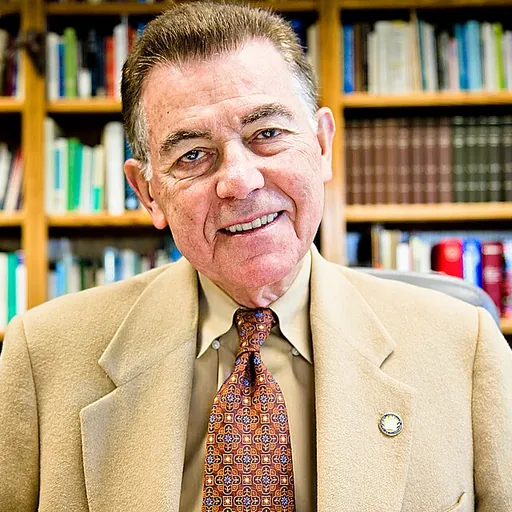
Francisco J. Ayala
Spanish-American philosopher and biologist
About Francisco J. Ayala
Lived 1934 – 2023 (aged 88). Francisco J. Ayala was a Spanish and American biologist, geneticist, philosopher, university teacher and dipterologist.
Career Ayala is known for his research on population and evolutionary genetics, and has been called the "Renaissance Man of Evolutionary Biology". His "discoveries have opened up new approaches to the prevention and treatment of diseases that affect hundreds of millions of individuals worldwide", including demonstrating that the reproduction of Trypanosoma cruzi, the agent of Chagas disease, is mostly the product of cloning, and that only a few clones account for most of this widespread disease. Although Ayala generally did not discuss his religious views, he has stated that "science is compatible with religious faith in a personal, omnipotent and benevolent God." He also briefly served, in 1960, as a Dominican priest. Ayala did not say whether he remained a religious believer, not wanting to be "tagged by one side or the other." Ayala served as an expert witness in McLean v. Arkansas Board of Education, a court case that overturned the mandatory teaching of creationism alongside evolution in grade school science classes.
Ayala attended the Beyond Belief symposium in November 2006. Ayala debated Christian apologist William Lane Craig in November 2009 on the topic of intelligent design.
On October 18, 2011, the University of California, Irvine (UCI) announced that Ayala would be donating $10 million to the university's School of Biological Sciences. The gift was to be "$1 million a year for the next decade."
Sexual harassment investigation Four women (professor Kathleen Treseder, another professor, an assistant dean, and one graduate student), alleged that Ayala had sexually harassed them, prompting an investigation led by Erik Pelowitz at UC Irvine's Office of Equal Opportunity and Diversity. The American Association for the Advancement of Science removed his fellowship status. The U.S. National Academy of Sciences rescinded Ayala's membership for violation of Section 4 of the NAS Code of Conduct, effective June 23, 2021.
Awards and honors In 2001, Ayala was awarded the National Medal of Science. On April 13, 2007, he was awarded the first of 100 bicentennial medals at Mount Saint Mary's University for lecturing there as the first presenter for the Bicentennial Distinguished Lecture Series. His lecture was entitled "The Biological Foundations of Morality". Other awards he received include the Gold Honorary Gregor Mendel Medal of the Czech Academy of Sciences, the Gold Medal of the Accademia Nazionale dei Lincei, the Gold Medal of the Stazione Zoologica in Naples, the President's Award of the American Institute of Biological Sciences, the AAAS Award for Scientific Freedom and Responsibility and 150th Anniversary Leadership Medal of the AAAS, the Medal of the College of France, the UCI Medal of the University of California, the 1998 Distinguished Scientist Award from the SACNAS, and Sigma Xi's William Procter Prize for Scientific Achievement, 2000. In 2010, he was awarded the Templeton Prize. The science library at UCI was named after him from 2010 until 2018, when his name was removed after a university investigation concluded that his conduct with respect to three women violated university policies. UCI removed his name from the library and school in 2018, after finding that he sexually harassed at least four women. He was a member of the American Philosophical Society. He was also a foreign member of the Russian Academy of Sciences, the Accademia Nazionale dei Lincei in Rome, the Spanish Royal Academy of Sciences, the Mexican Academy of Sciences, and the Serbian Academy of Sciences and Arts. He had honorary degrees from the University of Athens, the University of Bologna, the University of Barcelona, the University of the Balearic Islands, the University of León, the University of Madrid, the University of Salamanca, the University of Valencia, the University of Vigo, Far Eastern National University, Masaryk University and University of Warsaw.
Personal life Francisco Ayala was born to Francisco Ayala and Soledad Pereda. In the late 1960s he met Mary Henderson, they married on May 27, 1968. They had two sons: Francisco José (born 1969) and Carlos Alberto (born 1972). Their marriage ended in divorce, and in 1985 he married an ecologist named Hana Ayala (née Lostáková, born 1956). They lived in Irvine, California. He died from a heart attack on March 3, 2023, in Newport Beach, at age 88.
Books Ayala has published 950 publications and 30 books. Recently published books include: Ayala, F.J. Evolution, Explanation, Ethics and Aesthetics: Towards a Philosophy of Biology. Academic Press: 2016. Ayala, F.J. Am I a Monkey: Six Big Questions About Evolution. Johns Hopkins University Press: Baltimore, MD, US 2010. Ayala, F.J. and Robert Arp, eds. Contemporary Debates in Philosophy of Biology. Wiley-Blackwell: London, 2009. Avise, J.C. and F.J. Ayala, eds. In the Light of Evolution: Adaptation and Complex Design. National Academy Press: Washington, DC. 2007. Cela Conde, C.J. and F.J. Ayala. Human Evolution. Trails from the Past. Oxford University Press: Oxford, 2007. Ayala, F.J. Darwin y el Diseño Inteligente. Creacionismo, Cristianismo y Evolución. Alianza Editorial: Madrid, Spain, 231 pp. 2007. Ayala, F.J. Darwin's Gift to Science and Religion. Joseph Henry Press: Washington, DC, xi + 237 pp. 2007 Ayala, F.J. La Evolución de un Evolucionista. Escritos Seleccionados. University of Valencia: Valencia, Spain, 441 pp. 2006. Ayala, F.J. Darwin and Intelligent Design. Fortress Press: Minneapolis, MN, xi + 116 pp. 2006. Ayala, F.J. and C.J. Cela Conde. La piedra que se volvió palabra. Las claves evolutivas de la humanidad. Alianza Editorial: Madrid, Spain. 184 pp. 2006 Hey, J., W.M. Fitch and F.J. Ayala, eds. Systematics and the Origin of Species. On Ernst Mayr's 100th Anniversary. National Academies Press: Washington, DC. xiii + 367 pp. 2005 Wuketits, F.M. and F.J. Ayala, eds. Handbook of Evolution: The Evolution of Living Systems (Including Hominids), Volume 2. Wiley-VCH: Weinheim, Germany. 292 pp. 2005. Ayala, F.J. Le Ragioni dell’ Evoluzione. Di Renzo Editore: Rome. 109 pp. 2005. Ayala, F.J. Human Evolution: Biology, Culture, Ethics. In: J.B. Miller, ed., The Epic of Evolution. Science and Religion in Dialogue (Pearson Education, Inc.: Upper Saddle River, New Jersey), pp. 166–180. 2004.
Don’t just read it —
keep it.
Full-length biographies made to live with: read them, listen on the way to work, watch them tonight.
- E-book
- Audio
- Video
Instant download · yours to keep · every purchase keeps this site free
Important facts
People in Francisco J. Ayala's life
Named in this biography and alive at the same time





Related people
Same field, nearest in time


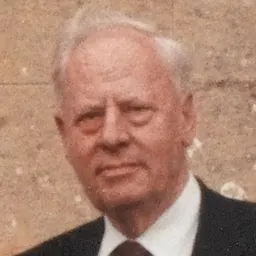

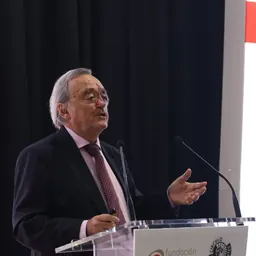
Contemporaries
People whose lives overlapped Francisco J. Ayala's



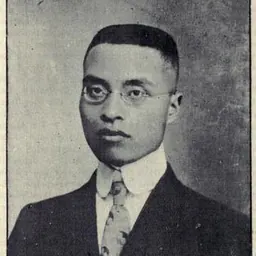


Frequently asked questions
Who was Francisco J. Ayala?
Spanish-American philosopher and biologist (1934–2023)
When was Francisco J. Ayala born?
Francisco J. Ayala was born on 12 March 1934 in Madrid.
When did Francisco J. Ayala die?
Francisco J. Ayala died on 5 March 2023 in Newport Beach.
What was Francisco J. Ayala's occupation?
Francisco J. Ayala was a biologist, geneticist, philosopher, university teacher and dipterologist.
What nationality was Francisco J. Ayala?
Francisco J. Ayala was Spanish and American.
Sources & further reading
· Wikipedia: Francisco J. Ayala
Cite this page
APA: Biography.guide. (2026). Francisco J. Ayala. https://biography.guide/francisco-j-ayala/
MLA: "Francisco J. Ayala." Biography.guide, https://biography.guide/francisco-j-ayala/.
Chicago: "Francisco J. Ayala." Biography.guide. https://biography.guide/francisco-j-ayala/.
Data last updated: 2026-09-23 · Spot an error? Report a correction.
Portrait: Wikimedia Commons · author & licence
Page generated 2026-09-27 05:05 UTC