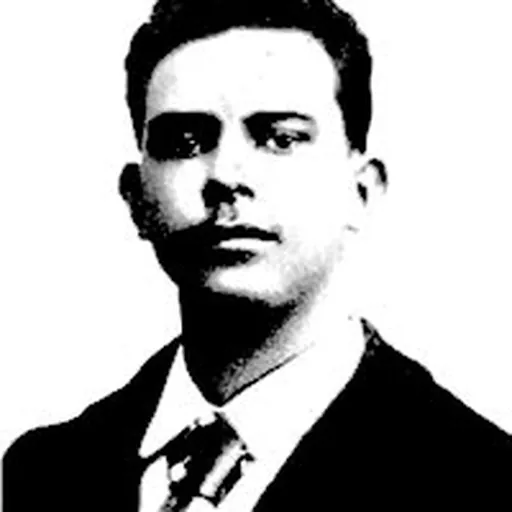
About Francisco Gómez Toro
Lived 1876 – 1896 (aged 20). Francisco Gómez Toro was a Cuban military personnel.
Francisco "Panchito" Gómez Toro was a Cuban lieutenant and war hero in the Cuban War of Independence. He was known for being the son of Máximo Gómez and for his death at the Battle of San Pedro at the young age of 20.
Early years On the afternoon of March 11, 1876, the La Reforma farm in Jatibonico saw the birth of Panchito, the fourth son of Máximo Gómez Báez and or Manana. His father couldn't be close with his son in the first months of his life due to his participation in the Ten Years War, which Cuba had already become his homeland. He couldn't even be there when Manana and his children had to leave for Jamaica and it was not until March 1878 that the whole family managed to reunite. Still an infant, Panchito, by assuming simple household chores, showed his sense of responsibility, which was distributed daily in the midst of the family's economic hardship. Marti said of Panchito:
He stands out for his discretion and tenderness, I don't think I've ever had him by my side, a creature with fewer imperfections, his heart so attached to mine that I feel he was born of me.
On November 2, Maceo received the note from Gómez. Two letters from Eusebio Hernández Pérez and Colonel Juan Masó Parra allowed him to understand the seriousness of the situation. He couldn't believe it. Concerned, he immediately responded to the call of the Generalissimo despite the fact that his stay in Pinar del Río was vital.
To get to Las Villas, he repeatedly tried to cross the 32 km long Mariel-Majana trail. In one of his attempts, he collapsed from his horse before regaining consciousness a few moments later. He stated that “he had been dizzy, and blamed it on the humidity of the night since he had fallen asleep a few minutes after having sucked a cane." Some have speculated that the reason was a precognitive dream in which he had seen his wife covered by a veil and all his brothers killed in the war. A stream of blood gushed from his wound and stained his jacket; He remained upright for two or three seconds, released the bridles, the machete fell off and he collapsed.
They were approached by Division General Pedro Díaz Molina, the highest-ranking officer in San Pedro, Brigadier José Miró Argenter, Chief of Staff of the 6th Corps, Colonels Máximo Zertucha, a physician to the lieutenant general, Alberto Nodarse Bacallao, his aide-de-camp during the invasion, and Commander Juan Manuel Sánchez Amat, head of the General Headquarters escort, who, seeing him collapsed, held his lifeless body and asked him in dismay: “What's wrong with you, general?".
Maceo didn't answer as had lost his speech and was pale without blood on his face with the deadly condition of the wound that took his life in just a minute. Miró Argenter left the place propelled, without looking back, ignoring Zertucha's cries asking for help to carry the corpse. After a few seconds of uncertainty, the doctor made the same decision and left scared, demoralized. Three days later, he would take advantage of the Spanish pardon; then he would request to rejoin the contest. Pedro Díaz also left with the three having same argument that they were waiting for reinforcements that never arrived.
Alberto Nodarse, an engineer and architect, who had already received seven gunshot wounds, together with Juan Manuel Sánchez led the resistance that the escort from the General Headquarters planted in the open field to try to remove Maceo's corpse that weighed 209 pounds. His movements drew Spanish fire and the place became an inferno. After great effort, they put him on a horse that was shot in the enemy camp. Sánchez brought his own and they tried to lift Maceo's corpse but a closed discharge hit both knees of the brave commander and he was neutralized. Bathing in blood from the copious bleeding caused by two projectiles that fractured his humerus and ribs, Nodarse had to give up, almost fainting. All the Cuban resources were used up after more than two hours of combat with the position becoming untenable and the last Mambises withdrew seriously wounded.
During the battle, Panchito got wounded during the fighting and was ordered to stay at the camp. Upon learning of the tragedy however, Panchito, with one arm in a sling, went as he put it to "...die next to the general." He went out to the battlefield once again to search for Maceo's corpse, making himself an open target for the Spanish soldiers despite the warns of the other Cuban soldiers. Weakened from blood loss, Panchito tried to commit suicide in order to prevent his capture but while writing his suicide note, a Spanish soldier caught him and stabbed him with a machete. After the battle, Juan Delgado González as well as eighteen other men managed to retrieve both Panchito's and Maceo's corpses after rigorous fighting against the Spanish and gave both proper burials.
His father Máximo was devastated as added to the outrageous effect of the Government Council's attitude was the death of his own son and his old companion with his skin weathered by so much fighting. Suddenly, he began to cry stating{ “Another great misfortune, the most terrible that could befall me. How much truth he expressed when he had the idea to say: 'Evils never come alone'" he recorded on December 16 in his diary. And on the 28th, in the privacy of his hammock, he poured out his pain: “Sad, very sad, more than sad, the year 96 has been for me! It leaves me heartbroken and battered. […] today, on this day, in these moments, I feel in my soul the deepest sorrow and I almost feel overwhelmed by a sorrow that I make an effort to bear”.
Panchito hadn't even turn 21 and his blood flooded the fields of the country. Days later the news of his death would reach his father, plunging him into a deep depression that lead him to express:
Don’t just read it —
keep it.
Full-length biographies made to live with: read them, listen on the way to work, watch them tonight.
- E-book
- Audio
- Video
Instant download · yours to keep · every purchase keeps this site free
Important facts
People in Francisco Gómez Toro's life
Named in this biography and alive at the same time

Related people
Same field, nearest in time





Contemporaries
People whose lives overlapped Francisco Gómez Toro's

Frequently asked questions
Who was Francisco Gómez Toro?
Cuban military personnel
When was Francisco Gómez Toro born?
Francisco Gómez Toro was born on 11 March 1876 in Jatibonico.
When did Francisco Gómez Toro die?
Francisco Gómez Toro died on 7 December 1896.
What was Francisco Gómez Toro's occupation?
Francisco Gómez Toro was a military personnel.
What nationality was Francisco Gómez Toro?
Francisco Gómez Toro was Cuban.
Sources & further reading
· Wikipedia: Francisco Gómez Toro
· DBpedia: Panchito Gómez Toro
Cite this page
APA: Biography.guide. (2026). Francisco Gómez Toro. https://biography.guide/francisco-gomez-toro/
MLA: "Francisco Gómez Toro." Biography.guide, https://biography.guide/francisco-gomez-toro/.
Chicago: "Francisco Gómez Toro." Biography.guide. https://biography.guide/francisco-gomez-toro/.
Data last updated: 2026-09-23 · Spot an error? Report a correction.
Portrait: Wikimedia Commons · author & licence
Page generated 2026-09-27 05:05 UTC