
About Eusebio Hernández Pérez
Lived 1853 – 1933 (aged 80). Eusebio Hernández Pérez was a gynecologist, teacher, obstetrician, politician and military physician.
Eusebio Hernández Pérez (18 January 1853 – 23 November 1933) was a Cuban eugenicist, obstetrician, and mambí in the Ten Years' War, Little War, and Cuban War of Independence. He reached the rank of brigadier general in the Ejército Mambí and was professor at the University of Havana. Sarduy Nápoles named him "The Father of Cuban Obstetrics". He and Domingo Ramos Delgado posited the idea of homiculture, which integrated into the eugenics movement with the two diverging in thought.
Struggle for Cuban independence Early life, initial revolutions, and education Hernández was born in Colón, Cuba on 18 January 1853 to Francisco Hernández and Rosario Pérez. In 1881, he left for Honduras and arrived in Puerto Cortés with Carlos Roloff. He then worked at the and the National Autonomous University of Honduras. His involvement in the Gómez-Maceo Plan, the 1884–1886 attempt to organize further revolution after the failure of the Little War, had him travel to Guatemala and El Salvador to raise funds and recruit men. He went to Madrid, graduating from the Central University with his medical license, In 1891, he visited Berlin to study. In 1893, he returned to Cuba and worked towards his doctorate at the University of Havana; he submitted his thesis, Nueva causa de rigidez anatómica del cuello uterino durante el parto, in 1899, at which point he became Doctor of Medicine. From 1893 to 1895, he was head of gynaecology and obstetrics at the Practical School of Medicine of Havana. He published a memoir of his experiences entitled El período revolucionario de 1879 a 1895 in 1914.
Later life U.S. occupations and early republic On 9 January 1899, he returned to Cuba to pay respects to the deceased García by the request of his son, Carlos García Vélez. He continued to combat annexionist calls and supported progressive causes. There was public outrage at the suffrage grants drafted by the American administration in 1900, which only lent the right to men who owned at least $250 in assets and were literate. They were deemed as worse than those in the Autonomy Charter of Cuba of 25 November 1897 that established universal manhood suffrage. Hernández was a member of the Cuban commission that collaborated with the administration on this policy, (The commission's collaboration was not unanimous: its designated members were mainly men who were seen as friendly to the administration, such as Enrique José Varona, Manuel Sanguily Garritte, Even Pierra, and Autonomistas.) but agreed with the dissidents. He did not support President Tomás Estrada Palma but also detested those in the 1906 August Revolution. In a 1907 speech during the Provisional Government of Cuba's administration, he demanded sovereignty be restored and declared that since the beginning of the 19th century, geopolitics had been consumed by American imperialism.
Homicultura and death
In 1911, with Domingo F. Ramos Delgado (1881–1961), another student of Pinard, he published Homicultura . They posited an expansive eugenicist concept based on Pinard's puericulture; it outlined a national project for maternal and child health, which were seen as linked, and "took a holistic view of view of influences on human development, linking 'human fitness to a nation’s capacity for peace, order, and prosperity.'" Ramos established the Pan American Central Office of Eugenics and Homiculture which had its first international conference in 1927. 28 delegates, representing 16 countries, and other unofficial members attended; included were Mexican Rafael Santamarina Sola (1884–1966), Peruvian , and American Charles Davenport. Ramos, supported by Davenport, suggested a white supremacist code entailing the classification of non-white immigrants and indigenous people as inferior and promoted policies of forced sterilization and racial segregation, as done in the United States. The code was unpopular and the Argentine, Costa Rican, Mexican, and Peruvian delegates in particular contested. In addition to positing homiculture, Hernández modified the Tarnier forceps and Farabeuf's pelvimeter, and developed method for an open-air symphysiotomy. Hernández's son, Eusebio Adolfo Hernández, was a professor of social sciences here. He also participated in the Soviet solidarity movement with his father. In 1926, he became a member of the Cuban Academy of Sciences and French Society of Obstetrics. That year, Hernández self-diagnosed colon cancer and went to Berlin for his successful colostomy. On 23 November 1933, he died in Havana from pulmonary edema. He was veiled in the Cuban Academy of Sciences rather than the due to pressure from President Ramón Grau. He was buried in Colon Cemetery, Havana and was awarded the Grand Cross of Carlos Manuel de Céspedes and the Order of the . On 18 January 2016, his remains were moved to the veterans' area of the cemetery in a ceremony headed by José Ramón Machado Ventura, , Roberto Morales Ojeda, and Eusebio Leal.
Works
Source:
Monographs and articles Estudio clínico del fórceps en el estrecho inferior (1891) Progresos de la Obstetricia contemporánea en Francia. Enseñanzas del profesor A. Pinard (1891) La sinfisiotomía. Sigault (1763), Baudelocque (1776), Pinard (1891) (1892) Tratamiento del cáncer del útero grávido (1893) Diagnóstico del embarazo vesicular (1895) El parto consciente sin dolor (1911) Cirugía obstétrica de las estrecheces pélvicas (1917) La sinfisiotomía en el tratamiento curativo de la insuficiencia pelviana (1924)
Published books Homicultura (1911) (1914) Historia crítica de las pelviotomías. Estado actual, según la práctica del autor (1922) Dos conferencias históricas (1935)
Don’t just read it —
keep it.
Full-length biographies made to live with: read them, listen on the way to work, watch them tonight.
- E-book
- Audio
- Video
Instant download · yours to keep · every purchase keeps this site free
Important facts
People in Eusebio Hernández Pérez's life
Named in this biography and alive at the same time






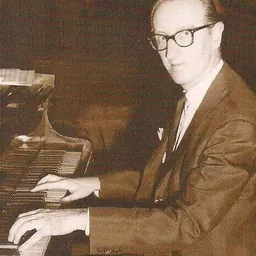
Related people
Same field, nearest in time


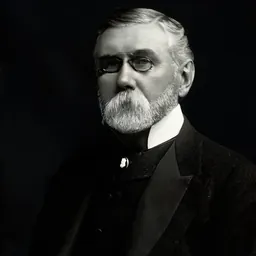

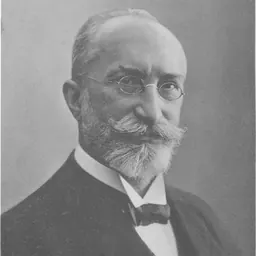

Contemporaries
People whose lives overlapped Eusebio Hernández Pérez's
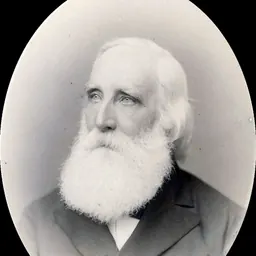


Frequently asked questions
Who was Eusebio Hernández Pérez?
Cuban guerilla and doctor (1853–1933)
When was Eusebio Hernández Pérez born?
Eusebio Hernández Pérez was born on 18 January 1853.
When did Eusebio Hernández Pérez die?
Eusebio Hernández Pérez died on 23 November 1933.
What was Eusebio Hernández Pérez's occupation?
Eusebio Hernández Pérez was a gynecologist, teacher, obstetrician, politician and military physician.
Sources & further reading
· Wikipedia: Eusebio Hernández Pérez
· DBpedia: Eusebio Hernández Pérez
Cite this page
APA: Biography.guide. (2026). Eusebio Hernández Pérez. https://biography.guide/eusebio-hernandez-perez/
MLA: "Eusebio Hernández Pérez." Biography.guide, https://biography.guide/eusebio-hernandez-perez/.
Chicago: "Eusebio Hernández Pérez." Biography.guide. https://biography.guide/eusebio-hernandez-perez/.
Data last updated: 2026-09-20 · Spot an error? Report a correction.
Page generated 2026-09-27 05:24 UTC