
About Francisco de Eliza
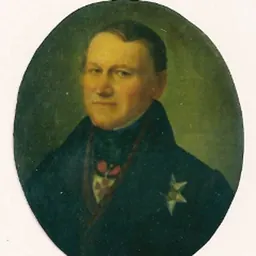
Lived 1759 – 1825 (aged 65–66). Francisco de Eliza was a Spanish explorer and military personnel.
Francisco de Eliza y Reventa (1759 – February 19, 1825) was a Spanish naval officer, navigator, and explorer. He is remembered mainly for his work in the Pacific Northwest. He was the commandant of the Spanish post in Nootka Sound on Vancouver Island, and led or dispatched several exploration voyages in the region, including through the Strait of Juan de Fuca and the Strait of Georgia.
Early life Francisco de Eliza was born in El Puerto de Santa María, Spain, in 1759. He began his career with the Spanish Navy in 1773, graduating from the Real Compañía de Guardia Marinas (Royal Company of Maritime Guards) in Cádiz. In 1775 he served in the Spanish expedition against Algiers. He was sent to America in 1780 and later took part in the capture of Pensacola, Florida during the American Revolution.
Pacific Northwest
Nootka Sound and the Nuu-chah-nulth In 1789 Eliza and several other officers were chosen by Juan Francisco de la Bodega y Quadra to serve at San Blas, the naval station on the west coast of Mexico, then part of New Spain. Bodega y Quadra was the newly appointed commandant of San Blas. The San Blas naval department was responsible for supporting and exploring the coast north of Mexico, including Alta California and the Pacific Northwest to southern Alaska. The viceroy of New Spain, Juan Vicente de Güemes, Count of Revillagigedo, gave Eliza command of an expedition to reoccupy the Spanish establishment at Nootka Sound on Vancouver Island. The outpost, which the Spanish called Santa Cruz de Nuca, had been established by Esteban José Martínez in 1789 and then abandoned in October of the same year, after the "Nootka Incident", which triggered an international crisis between Spain and Great Britain known as the Nootka Crisis.
Eliza sailed to Nootka Sound in command of the ships Concepción, San Carlos (el Filipino), and Princesa Real (formerly the British ship Princess Royal), arriving on April 3, 1790. There were no Europeans present when they arrived. For several years the Spanish pressed their territorial claims to the Pacific Northwest, with Nootka Sound, Francisco Eliza, and other Spanish commanders playing key roles. In addition to the sailing crews of the three ships, Eliza's expedition included 76 soldiers of the Free Company of Volunteers of Catalonia, under the command of Pere d'Alberni. This group of people constructed a small fort, and various buildings, planted a garden, and began to organize exploring parties.
In May 1790 two exploring voyages were dispatched by Eliza. Salvador Fidalgo made a voyage north to visit the Russian outposts in Alaska, while Manuel Quimper examined the Strait of Juan de Fuca. Quimper's pilot was Gonzalo López de Haro. Some of the important sites found and charted during Quimper's expedition include Neah Bay, Esquimalt Harbour, Admiralty Inlet, Haro Strait, Rosario Strait, and Deception Pass.
Narváez explored the inner waters of Clayoquot Sound and Barkley Sound while Eliza, investigating the outer edge of Clayoquot Sound, met and befriended Wickaninnish, chief of the Tla-o-qui-aht people. Narváez and Eliza entered the Strait of Juan de Fuca separately, rejoining at Esquimalt (called "Cordova" by the Spanish) on June 11, 1791. Eliza's pilots then took the Santa Saturnina and a longboat and spent ten days exploring Haro Strait and the found it opened up into a wide body of water to the north. This was the Strait of Georgia, which was previously unknown to Europeans. Eliza remained at Esquimalt during this time. After the pilots returned to Eliza and reported their findings, a longer exploration expedition was fitted out. Narváez led the voyage in the Santa Saturnina. Eliza considered taking the San Carlos along, but his pilots convinced him of that the larger ship would find the narrow channels hazardous. In addition, Eliza fell sick. The entire expedition moved its base of operations from Esquimalt to Port Discovery ("Puerto de Quadra" to the Spanish). Then on July 1, 1791, Narváez, with Carrasco, sailed north, passing through Rosario Strait, past Bellingham Bay, and into the Strait of Georgia.
At the start of Narváez's voyage the Santa Saturnina passed Admiralty Inlet, the entrance to Puget Sound (called "Ensenada de Caamaño" by the Spanish). Narváez saw that it was a large channel leading to the south and planned to explore it after returning from the north. But the Strait of Georgia proved larger than expected and Narváez ran out of food, the Santa Saturnina being very small. Narváez had to return directly to Port Discovery, and then Eliza was eager to then return to Nootka Sound and send a report about the Strait of Georgia. The Spanish thus missed the opportunity of preempting the British exploration of Puget Sound, which took place a year later under George Vancouver. Eliza, with Narváez in the San Carlos, returned to Nootka Sound in August, 1791. The Santa Saturnina, under Carrasco during the return to Nootka, was unable to beat upwind to Nootka and instead sailed to Monterey, California.
Over time Eliza has received most of the credit for the discoveries made and places named during the 1791 expedition, but he actually did no exploring himself. Most of the credit should go to his pilots Narváez, Carrasco, Pantoja, and Verdía.
The winter of 1791-1792 was easier than the previous one. Shipments of food from Mexico and assistance from the Nootkas helped Eliza's small outpost survive.
On July 24, 1792, Francisco de Eliza left Nootka Sound for Mexico, having completed his mission of re-establishing the Spanish outpost there. The position of commandant at Nootka Sound passed to Juan Francisco de la Bodega y Quadra.
Later life In 1793 Eliza commanded an expedition that explored the coast of California. From 1795 to 1801 he was the commander of the naval base at San Blas. In 1803 he was transferred to Cádiz, Spain.
Eliza continued to serve in the Spanish navy. When Spain was occupied by Napoleon from 1808 to 1814, Eliza held a number of political posts at Cádiz.
Legacy Eliza Island was named in his honor.
Don’t just read it —
keep it.
Full-length biographies made to live with: read them, listen on the way to work, watch them tonight.
- E-book
- Audio
- Video
Instant download · yours to keep · every purchase keeps this site free
Important facts
People in Francisco de Eliza's life
Named in this biography and alive at the same time


Related people
Same field, nearest in time



Contemporaries
People whose lives overlapped Francisco de Eliza's





Frequently asked questions
Who was Francisco de Eliza?
Spanish explorer
When was Francisco de Eliza born?
Francisco de Eliza was born in 1759 in El Puerto de Santa María.
When did Francisco de Eliza die?
Francisco de Eliza died on 19 February 1825 in Cádiz.
What was Francisco de Eliza's occupation?
Francisco de Eliza was an explorer and military personnel.
What nationality was Francisco de Eliza?
Francisco de Eliza was Spanish.
Sources & further reading
· Wikipedia: Francisco de Eliza
Cite this page
APA: Biography.guide. (2026). Francisco de Eliza. https://biography.guide/francisco-de-eliza/
MLA: "Francisco de Eliza." Biography.guide, https://biography.guide/francisco-de-eliza/.
Chicago: "Francisco de Eliza." Biography.guide. https://biography.guide/francisco-de-eliza/.
Data last updated: 2026-09-20 · Spot an error? Report a correction.
Page generated 2026-09-27 05:15 UTC