
About Francisco Adolfo Coelho
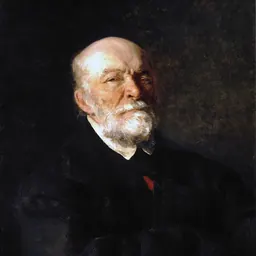
Lived 1847 – 1919 (aged 72). Francisco Adolfo Coelho was a Portuguese pedagogue, philologist, writer, university teacher, romanist and linguist.
Francisco Adolfo Coelho (Coimbra, 15 January 1847 — Carcavelos, 9 February 1919) was a Portuguese self-taught philologist and pedagogist. He is known for his monograph of Portuguese dialects spoken outside of Portugal, being the first person to have recorded the use of Macanese Patois ("Patuá", a critically endangered creole language spoken in Macau), as well as his compilation of Portuguese folklore, Tales of Old Lusitania.
Biography His childhood was filled with hardships. When he was 19 months old, his dad died. He went secondary school in Coimbra. At 15, he enrolled in the Mathematics course at university. Unsatisfied with the environment he found himself in, he drops out two years after. He then imposed himself a study program centered around German authors, learning effectively German.
During his life he did notable work in pedagogy, linguistics, ethnography and anthropology, He taught at the Higher Course of Letters, teaching Comparative Roman Philology and Portuguese Philology and watched its transformation into the Faculty of Letters of the University of Lisbon. He was the director of the Superior Primary School of Rodrigues Sampaio, created by him. He also taught at the Superior Normal School of Lisbon. He participated in numerous commissions of middle and upper school, as a member or president, having elaborated important reports. He spoke in the famous Casino Conferences, organized by Antero de Quental and Jaime Batalha Reis. In A Questão do Ensino (1872), Coelho talks about the need and ends of teaching; examines its forms and types; the education in Portugal in decadence due to the alliance of Church and State, defends their separation; promotes the freedom of thinking.
His pedagogical conceptions were based on the conviction that through education it would be possible to regenerate the country. He combated against the submission of education to religious ideas. He organized an important Pedagogical Museum in the Old School of the Primary Magistracy of Lisbon.
His collaboration in periodical publications is found on: Renascença (1878-1879?), O Pantheon (1880-1881), Froebel (1882-1884), Branco e Negro (1896-1898), Serões (1901-1911) and in the Jornal dos Cegos (1895-1920).
Don’t just read it —
keep it.
Full-length biographies made to live with: read them, listen on the way to work, watch them tonight.
- E-book
- Audio
- Video
Instant download · yours to keep · every purchase keeps this site free
Important facts
People in Francisco Adolfo Coelho's life
Named in this biography and alive at the same time

Related people
Same field, nearest in time




Contemporaries
People whose lives overlapped Francisco Adolfo Coelho's


Frequently asked questions
Who was Francisco Adolfo Coelho?
philologist
When was Francisco Adolfo Coelho born?
Francisco Adolfo Coelho was born on 15 January 1847 in Coimbra.
When did Francisco Adolfo Coelho die?
Francisco Adolfo Coelho died on 9 February 1919 in Freguesia de Carcavelos.
What was Francisco Adolfo Coelho's occupation?
Francisco Adolfo Coelho was a pedagogue, philologist, writer, university teacher, romanist and linguist.
What nationality was Francisco Adolfo Coelho?
Francisco Adolfo Coelho was Portuguese.
Sources & further reading
· Wikipedia: Francisco Adolfo Coelho
· DBpedia: Francisco Adolfo Coelho
Cite this page
APA: Biography.guide. (2026). Francisco Adolfo Coelho. https://biography.guide/francisco-adolfo-coelho/
MLA: "Francisco Adolfo Coelho." Biography.guide, https://biography.guide/francisco-adolfo-coelho/.
Chicago: "Francisco Adolfo Coelho." Biography.guide. https://biography.guide/francisco-adolfo-coelho/.
Data last updated: 2026-09-20 · Spot an error? Report a correction.
Page generated 2026-09-27 05:24 UTC