
About Francis X. Murphy
Lived 1915 – 2002 (aged 86–87). Francis X. Murphy was an American historian, regular priest and catholic theologian.
Francis Xavier Murphy, CSsR (June 16, 1914 – April 11, 2002) was a Redemptorist chaplain and theology professor. He is best known for his articles about the Second Vatican Council, first published in The New Yorker magazine under the pseudonym Xavier Rynne.
"He was very open-minded and felt that the church ought not keep secrets and (should) be open. With (his articles on) Vatican II, he gave the inside view," said Redemptorist priest Rev. Denis J. Sweeney.
Early life Born in The Bronx, New York City, on June 16, 1914, Murphy was the first of Denis (1889–1932) and Anna Elizabeth "Nano" (née Rynne) (1894–1967) Murphy's three children. Murphy's parents eloped together, leaving their native Ireland, emigrated to the US and married in the Bronx upon their arrival in the States.
Murphy was baptized in The Church of St. Angela Merici on Morris Avenue in the Bronx, July 6, 1914.
Family influences Murphy's father was a New York police officer who directed his son's early education. He chose to send young Murphy to the school of the Immaculate Conception. The German-American parish had a reputation for being academically challenging.
Murphy said his mother's interest in New York politics "...stimulated his interest in Vatican intrigue". His mother was the maitresse d'hotel at the Bronx Concourse Plaza Hotel and came to know the politicians who frequented the place. For years it was considered the best location in the Bronx for social, business and fraternal events. and then entered the Redemptorist novitiate at St. Mary's College, Ilchester, Maryland, and completed his theological training at Mount St. Alphonsus Seminary in Esopus, New York.
Murphy made his first profession as a Redemptorist in August 1935. On the eve of his first profession, he wrote in a journal about how courage was the true test of a cleric. "To be a success as a Religious," he wrote, "one must have 'courage': not the precipitate quality of throwing oneself into hazard without a moment's delay, but the persistent ability to face the facts and perform one's duty from day to day, no matter what the cost. And that is the genius of sanctity!" Murphy made his final profession in September 1938.
Priesthood He was ordained at Esopus on June 23, 1940. Sent for further studies, Murphy first earned both a master's degree and, then in 1945, a Ph.D. in Medieval History from the Catholic University of America writing Rufinus of Aquileia (345-411): His Life and Works.
The Baltimore Province of the Redemptorists positively reviewed Murphy's Second Vatican Council reporting, saying "Keenly appreciating Pope John XXIII's declared intention in calling the Council, 'to open a window' and 'let in fresh air,' Father Murphy not only reported on the Church's view of the modern world, but in doing so, let the modern world see the workings of the Church".
The collected articles were published in a book, Vatican Council II in 1968 and reprinted by Orbis Books in 1999. In a New York Times review, author Gustav Niebuhr called the book "a landmark history of the council".
The search for "Xavier Rynne" Officials in the Vatican tried for years to prove Murphy had written the articles. Murphy was once called before Archbishop Pietro Parente, Assessor of the Vatican "Holy Office" (often referred to as "the Inquisition"). In the Xavier Rynne articles, Murphy had unflatteringly referred to Parente as "a strange personality who has few friends and sees heresy everywhere". The archbishop held up a copy of a Xavier Rynne book. Murphy asked, "Do you want me to take an oath about that book?" and said, "I'm not the author of that book." Murphy later explained he saw himself as author not of the books, but of the individual articles. Murphy said he used "casuistry - making subtle distinctions intended to mislead - which we were taught to do".
Murphy escaped the consequences of the interrogation when Archbishop Parente referred to Pius XI as "a little feeble-minded" or "crazy in the head". Murphy told his American monsignor who was serving as Murphy's secretary during the meeting, "Write down that he said Pius XI was feeble-minded." The archbishop, worried he would be censured for the remark, simply walked out. Murphy was free to go.
The quest by the church to discover the true identity of "Xavier Rynne" continued. When Murphy's mother was told by a son-in-law the Auxiliary Bishop of New York Edwin Broderick had asked him what his mother-in-law's maiden name was, Mrs. Murphy immediately suspected something, saying "Damn that Frank. He's in trouble again".
Public admission of authorship In 1998, Murphy said he would like to be remembered "as a footnote in the history of the church in the modern age". Murphy publicly admitted to having written the "Xavier Rynne" articles, saying "I was afraid that if I went to my grave without making it known, the damned Jesuits would have claimed it was one of theirs and the Redemptorists would have been just as happy". Regarding his pseudonym, he said "thanks to the (Vatican) Council, my mother's maiden name is known all over the world".
Later life During the 1970s Murphy served as a visiting professor at Princeton University and later was connected with Johns Hopkins University. From 1977 through 1981 he served as rector of Holy Redeemer College in Washington, D.C.
Murphy suffered a heart attack in 1979 and was stricken with Parkinson's disease in 1987.
Death and burial Murphy died April 12, 2002, at Anne Arundel Medical Center in Annapolis, Maryland, of complications from cancer surgery. He was 87. He was buried at the Redemptorist Cemetery at St. Mary's Catholic Church in Annapolis.
Awards 1998 - Lifetime Achievement Award, given by the National Arts Club in New York.
Don’t just read it —
keep it.
Full-length biographies made to live with: read them, listen on the way to work, watch them tonight.
- E-book
- Audio
- Video
Instant download · yours to keep · every purchase keeps this site free
Important facts
People in Francis X. Murphy's life
Named in this biography and alive at the same time



Related people
Same field, nearest in time


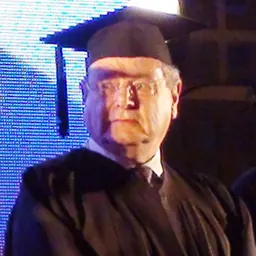
Contemporaries
People whose lives overlapped Francis X. Murphy's

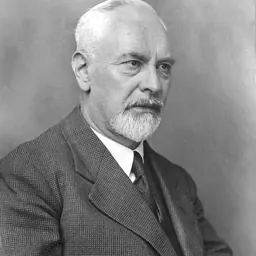


Frequently asked questions
Who was Francis X. Murphy?
American theologian
When was Francis X. Murphy born?
Francis X. Murphy was born in 1915 in New York City.
When did Francis X. Murphy die?
Francis X. Murphy died on 12 April 2002 in Annapolis.
What was Francis X. Murphy's occupation?
Francis X. Murphy was a historian, regular priest and catholic theologian.
What nationality was Francis X. Murphy?
Francis X. Murphy was American.
Sources & further reading
· Wikipedia: Francis X. Murphy
Cite this page
APA: Biography.guide. (2026). Francis X. Murphy. https://biography.guide/francis-x-murphy/
MLA: "Francis X. Murphy." Biography.guide, https://biography.guide/francis-x-murphy/.
Chicago: "Francis X. Murphy." Biography.guide. https://biography.guide/francis-x-murphy/.
Data last updated: 2026-09-20 · Spot an error? Report a correction.
Page generated 2026-09-27 05:13 UTC