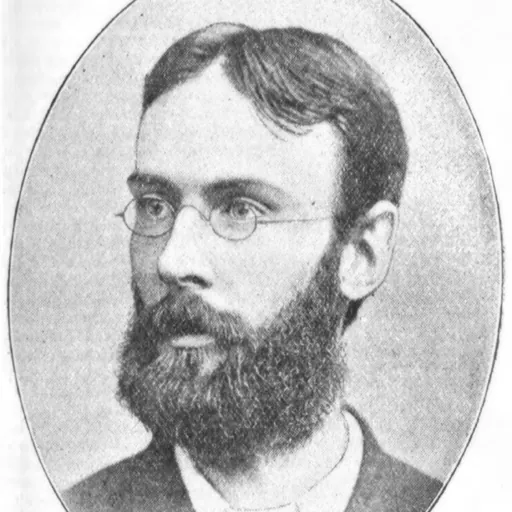
Francis William Lauderdale Adams
English essayist, poet, dramatist, novelist and journalist
About Francis William Lauderdale Adams
Lived 1862 – 1893 (aged 30). Francis William Lauderdale Adams was an Australian and British journalist, poet and writer.
Francis William Lauderdale Adams (27 September 1862 – 4 September 1893) was a British writer of anti-capitalist views. Adams was a representative British fin de siècle figure whose time in Australia contributed to its radical nationalism of the period, socialist ideas and aesthetics.
His health failing rapidly from tuberculosis, Adams spent the winter of December 1892 to February 1893 in Alexandria. Letters are extant from this time that he wrote to Wilfrid Scawen Blunt. Adams worked on finishing a book attacking the British rule in Egypt. Adams shot himself dead at a boarding house in Margate, England, on 4 September 1893. He shot himself in the mouth during a severe tubercular haemorrhage; he carried a pistol for this purpose. He was survived by his second wife, Edith (née Goldstone). It was an assisted suicide but she was not charged with any crime.
Early years He was born in Valletta, Malta, the son of Andrew Leith Adams FRS, an army surgeon and scientist, and his wife the novelist Bertha Jane Grundy. By 1878, when his father took up a chair in Cork, and his mother had published a novel and was moving into magazine journalism, his parents may have separated. The family home was in Maida Vale, London.
After completing his education at Shrewsbury School, Adams was in Paris from 1878 to 1880. He served from 1879 as an attaché there at the British Embassy. His father died in 1882, and his mother married again, in 1883, to Robert De Courcy Laffan.
In July 1884 Adams married Helen Uttley whom he knew from his lodgings in Ventnor; he had divided his time, some spent there with periods based in London. His poem on the West India Docks in Songs of the Army of the Night came with comments beginning "The spectacle of the life of the London Dock labourers is one of the most terrible examples of the logical outcome of the present social system."
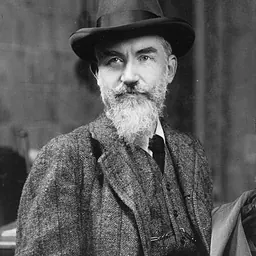
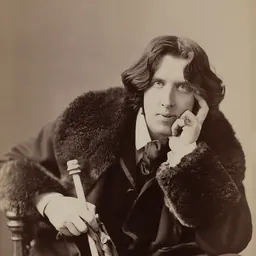
At this period Adam befriended Frank Harris, whom he approached after Harris made a speech at Speaker's Corner. He considered Harris a more brilliant conversationalist than Oscar Wilde, whom he also knew. He visited Henry Stephens Salt and his wife at Tilford, where he encountered George Bernard Shaw. They travelled separately, Francis Adams taking the clipper Rodney in mid-1884.
Later Adams was in Brisbane, where Helen died of rheumatic fever after giving birth to a baby boy, Leith, who also died. Adams remained in Brisbane until the early part of 1887. From Sydney, he went on a sea voyage to China and Japan.
Adams returned to Brisbane, where he lived until around the end of 1889. In Queensland politics, he admired Thomas McIlwraith. His Courier colleague Reginald Spencer Browne thought highly of the quality of his leaders. Sydney Jephcott, a friend of Adams, first encountered Lane while staying with Adams. Mary Gilmore wrote in 1953 that Adams dominated the field of "revolutionary verse" in Australia in his time. Since the Labour Annual gave the date 1888, a context for Adams's involvement is in Lane's political novel The Workingman's Paradise (1892), of which "the first part is laid during the summer of 1888–89", ahead of the 1891 Australian shearers' strike.
His younger brother Harry Beardoe Adams died of tuberculosis at Dunwich, Queensland, on 13 September 1892, at age 25.
Later years and death Adams returned to England in early 1890.
His health failing rapidly from tuberculosis, Adams spent the winter of December 1892 to February 1893 in Alexandria. Letters are extant from this time that he wrote to Wilfrid Scawen Blunt; Blunt visited Egypt, returning to the United Kingdom in May 1893. Adams worked on finishing a book attacking the British rule in Egypt. He name-checked Blunt in it ("Mr Wilfrid Blunt, to whose writings I owe several suggestions").
Adams shot himself dead at a boarding house in Margate, England, on 4 September 1893. He shot himself in the mouth during a severe tubercular haemorrhage; he carried a pistol for this purpose. He was survived by his second wife, Edith (née Goldstone). It was an assisted suicide but she was not charged with any crime. At the inquest, Margate coroner Toke Harvey Boys asked Edith Adams if she could have prevented the death. She replied in the affirmative, but said that to do so would have been the act of a "contemptible coward". Bernard Shaw subsequently took an interest in her. The local medical officer of health, Dr. Arthur William Scatliff, testified that Adams had already lost so much blood that death was inevitable.
The Clarion wrote "By the sad death of Francis Adams Socialism loses one of its best friends and most fervid singers". The Westminster Gazette printed his self-penned epitaph:
Bury me with clenched hands, And eyes open wide, For in storm and struggle I lived, And in struggle and storm I died.
Don’t just read it —
keep it.
Full-length biographies made to live with: read them, listen on the way to work, watch them tonight.
- E-book
- Audio
- Video
Instant download · yours to keep · every purchase keeps this site free
Important facts
People in Francis William Lauderdale Adams's life
Named in this biography and alive at the same time

Related people
Same field, nearest in time


Contemporaries
People whose lives overlapped Francis William Lauderdale Adams's




Frequently asked questions
Who was Francis William Lauderdale Adams?
English essayist, poet, dramatist, novelist and journalist (1862–1893)
When was Francis William Lauderdale Adams born?
Francis William Lauderdale Adams was born on 27 September 1862 in Malta.
When did Francis William Lauderdale Adams die?
Francis William Lauderdale Adams died on 4 September 1893 in Margate.
What was Francis William Lauderdale Adams's occupation?
Francis William Lauderdale Adams was a journalist, poet and writer.
What nationality was Francis William Lauderdale Adams?
Francis William Lauderdale Adams was Australian and British.
Sources & further reading
· Wikipedia: Francis William Lauderdale Adams
· DBpedia: Francis Adams (writer)
Cite this page
APA: Biography.guide. (2026). Francis William Lauderdale Adams. https://biography.guide/francis-william-lauderdale-adams/
MLA: "Francis William Lauderdale Adams." Biography.guide, https://biography.guide/francis-william-lauderdale-adams/.
Chicago: "Francis William Lauderdale Adams." Biography.guide. https://biography.guide/francis-william-lauderdale-adams/.
Data last updated: 2026-09-22 · Spot an error? Report a correction.
Portrait: Wikimedia Commons · author & licence
Page generated 2026-09-27 05:04 UTC