
Francis T. King
Nineteenth-century Baltimore merchant
About Francis T. King
Lived 1817 – 1891 (aged 73–74).
Francis Thompson King (February 25, 1819 – December 18, 1891) was a nineteenth-century Baltimore merchant, a prominent American Quaker, and a founding member of the Johns Hopkins University and Johns Hopkins Hospital inaugural board of trustees.
Early life and education Born in Baltimore on February 25, 1819, King was the eldest of five children of Joseph King Jr. and Tacey Ellicott King. He began his education at St. Mary's College in Baltimore before transferring to Haverford College in 1833, following its establishment by Orthodox Quakers. He was among those in the first graduating class of 1835.
In 1846, King married Elizabeth Green Taber, and together they had three children, Mary, Annie and Bessie King.
Upon returning to Baltimore from college, King pursued a career in commerce, initially working as a clerk for the dry goods firm Janney, Hopkins, and Hull before establishing his own company, King, Carey, and Howe. Over time, he accumulated considerable wealth, and following his retirement, he dedicated most of his time to religious and philanthropic endeavors.
King was actively involved in numerous philanthropic and educational organizations. He served as president of the Maryland Bible Society and was the founding president of the Thomas Wilson Sanitarium for the care of sick children. Additionally, he was the president of the Board of Trustees of Bryn Mawr College and held directorial positions in various other charitable organizations, banks, and insurance companies. King frequently hosted visiting Friends from abroad, reinforcing his role as a “weighty Quaker” in the Society of Friends.
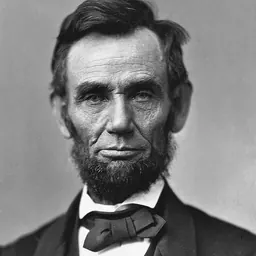
During the Civil War, King led a delegation to Washington, D.C., to lobby Secretary of War Edwin Stanton for the exemption of Quakers from military service. He also secured a pass from President Abraham Lincoln, allowing him to travel through Confederate territory without detention.
Following the war, King played a significant role in Reconstruction efforts. As the founding president of the Association of Friends to Advise and Assist the Friends in the Southern States, he worked to support Southern Quakers and newly emancipated African Americans. He personally traveled to North Carolina to assess the war-related devastation and advocated for the expansions of educational opportunities for Black communities there. In recognition of his contributions, King Hall at Guilford College was named in his honor.
In 1867, Johns Hopkins selected King to serve as a trustee of his charities—the Johns Hopkins University, Johns Hopkins Hospital, and Johns Hopkins Colored Orphans Asylum—and named him one of three executors of his will. King later became the hospital's first president.
Death Francis Thompson King died of pneumonia in Baltimore on December 18, 1891.
Don’t just read it —
keep it.
Full-length biographies made to live with: read them, listen on the way to work, watch them tonight.
- E-book
- Audio
- Video
Instant download · yours to keep · every purchase keeps this site free
Important facts
People in Francis T. King's life
Named in this biography and alive at the same time


Contemporaries
People whose lives overlapped Francis T. King's




Frequently asked questions
Who was Francis T. King?
Nineteenth-century Baltimore merchant
When was Francis T. King born?
Francis T. King was born in 1817.
When did Francis T. King die?
Francis T. King died in 1891.
Sources & further reading
Cite this page
APA: Biography.guide. (2026). Francis T. King. https://biography.guide/francis-t-king/
MLA: "Francis T. King." Biography.guide, https://biography.guide/francis-t-king/.
Chicago: "Francis T. King." Biography.guide. https://biography.guide/francis-t-king/.
Data last updated: 2026-09-20 · Spot an error? Report a correction.
Page generated 2026-09-27 04:58 UTC