
Francis Locke, Sr.
Plantation owner, businessman, politician; hero at Battle of Ramseur's Mill
About Francis Locke, Sr.
Lived 1722 – 1796 (aged 73–74). Francis Locke, Sr. was a military officer.
Francis Locke Sr. (1732–1796) was a plantation owner, businessman, politician, and a participant in the American War of Independence, where he led the American Patriots to the decisive victory at Ramseur's Mill, which turned the tide of the American War for Independence in the south.
Personal and family life Francis Locke was born in 1732 in Lancaster, Pennsylvania. He was the son of John Locke, Sr. and Elizabeth Locke. After his father died in 1744, his mother married John Brandon, who eventually moved the family to Anson County, North Carolina Colony. That area of the county was later split off as Rowan County, North Carolina.
Locke settled a plantation near Salisbury, in Rowan County, in 1753, on 640 acres of land he had purchased from his step-father. He and his brother, Matthew Locke, ran a regional transportation company with several wagons based out of the plantation. during the War of the Regulation. Lt. Colonel, in the Rowan County Regiment of the North Carolina militia (1775) Colonel over the 1st Rowan County Regiment of the North Carolina militia (1775-1776) Colonel over the 2nd Battalion of Volunteers in the Halifax District Brigade of the North Carolina militia (1776-1777) Colonel over the Rowan County Regiment of North Carolina militia (1777-1782) Colonel over the 1st Rowan County Regiment of North Carolina militia (1782-1783)
Ramseur's Mill
On June 18, 1780, Rutherford learned that a large force of Loyalists, or "Tories," was assembling at Ramseur's Mill (near present-day Lincolnton). Rutherford began moving his troops in that direction, and on June 19, he sent orders to Lieutenant Colonel Locke and the other militia leaders in the region to call up their men. Locke quickly gathered a force of 400 cavalry and infantry at Mountain Creek about to the northeast of Lincolnton. Locke and his second-in-command, Captain John Dickey, decided to attack early the next morning—without waiting for Rutherford's forces to join up—counting on the element of surprise to be to their advantage. The threat of expected additional reinforcements to the Tory force also compelled them to this action.
The battle, in which muskets were sometimes used as clubs because of a lack of ammunition, was fought between "neighbors, near relations, and friends". At first, the battle went Locke's way. When the battle turned against the Patriots, however, Locke ordered a retreat, but Dickey stubbornly refused to retreat from the superior force, and instead sought higher ground, and dug in. Following this, most of Locke's men returned to the battle, flanking the Tories. Dickey is credited with turning the tide of battle. The action delayed the Loyalists long enough for Rutherford's forward detachment to arrive and force the Loyalist surrender. The defeat so badly demoralized the mid-southern Loyalists that they could never organize again in that region.
Other action Locke also was involved in engagements at Battle of Ninety-Six (November 1775); the Brier Creek expedition (1779); Colson's Mill (July 1780), and in Nathanael Greene's "Race to the Dan" (1782). On November 8, 1784, he resigned his commission and retired from the military. In 1794 the Rowan court appointed Locke to succeed William Sharpe as attorney for the state.
Death Locke died in early 1796, and is buried in the Thyatira Presbyterian Church cemetery, Mill Bridge, North Carolina.
Don’t just read it —
keep it.
Full-length biographies made to live with: read them, listen on the way to work, watch them tonight.
- E-book
- Audio
- Video
Instant download · yours to keep · every purchase keeps this site free
Important facts
People in Francis Locke, Sr.'s life
Named in this biography and alive at the same time
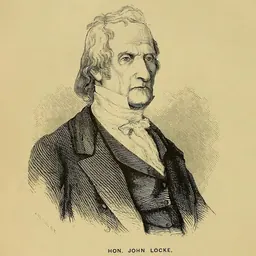
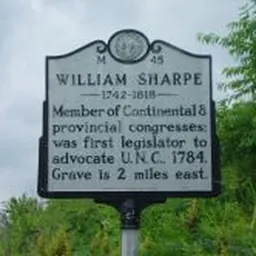


Related people
Same field, nearest in time


Contemporaries
People whose lives overlapped Francis Locke, Sr.'s




Frequently asked questions
Who was Francis Locke, Sr.?
plantation owner, businessman, politician; hero at Battle of Ramseur's Mill
When was Francis Locke, Sr. born?
Francis Locke, Sr. was born in 1722 in Éire.
When did Francis Locke, Sr. die?
Francis Locke, Sr. died in 1796 in Mill Bridge.
What was Francis Locke, Sr.'s occupation?
Francis Locke, Sr. was a military officer.
Sources & further reading
· Wikipedia: Francis Locke, Sr.
Cite this page
APA: Biography.guide. (2026). Francis Locke, Sr.. https://biography.guide/francis-locke-sr/
MLA: "Francis Locke, Sr.." Biography.guide, https://biography.guide/francis-locke-sr/.
Chicago: "Francis Locke, Sr.." Biography.guide. https://biography.guide/francis-locke-sr/.
Data last updated: 2026-09-20 · Spot an error? Report a correction.
Page generated 2026-09-27 05:03 UTC