
About Francis John Linnell
Lived 1892 – 1944 (aged 52). Francis John Linnell was a British aircraft pilot and military officer.
Air Marshal Sir Francis John Linnell, (16 March 1892 – 3 November 1944) was a senior Royal Air Force commander during the Second World War. He was Controller of Research and Development of the Ministry of Aircraft Production during the development of the Bouncing bomb, the weapon eventually employed in Operation Chastise. 'Jack' was dubbed Sir Francis in the desert in front of the British press by King George VI and posthumously appointed Commander of the Legion of Merit by U.S. President Franklin D. Roosevelt.
Career Francis John Linnell was born on Isle of Thanet, Margate and was educated at Bloxham School.
First World War Linnell joined the Royal Naval Reserve as temporary warrant-telegraphist in September 1914, serving with the Royal Naval Air Service in France and Belgium. He learnt to fly at the Grahame-White Flying School Hendon. Flying a Grahame-White Biplane he gained Royal Aero Club Certificate No.1338 in June 1915. Flt Sub-Lt Linnell was responsible for carrying out trials in a special Blackburn-built B.E.2c. The unique aircraft No.3999 was ordered by Admiralty for W/T experiments, it was fitted with a 70 hp Renault engine and had a top speed of 72 mph. Blackburn-built B.E.2cs are recognisable by the ringed airscrew motif on the fin and saw active service in every theatre during the war.
From March 1916 till the end of 1919 he served with the Grand Fleet as a pilot on , and and was mentioned in despatches twice. He ended the Great War with a permanent commission of captain in the newly formed Royal Air Force.
The Dunning Memorial Cup, given annually to the officer that has done the most to further aviation in connection with the fleet, was awarded Linnell in 1920 "... for flights which led to important developments in artillery and reconnaissance observation."
His first command on 20 October 1930 was No. 9 Squadron RAF located at RAF Manston and then in September 1931 Wg Cdr Linnell was Officer Commanding RAF Malta. He spent 1933 attending the course at RN Staff College Greenwich after which he took command of No. 99 Squadron RAF
He became the first Station Commander at RAF Mildenhall four days before it hosted 70,000 people for the start of the RAeC MacRobertson Air Race (England to Australia) of 1934. Then in July 1935, the year of the Silver Jubilee, RAF Mildenhall welcomed King George V for the first ever Royal review of the RAF. Linnell returned to the Air Ministry in July 1935 as Deputy Director of Organisation, Department of A.M.S.O.
Second World War After attending Imperial Defence College from the beginning of 1939 until 25 August, he was attached to HQ RAF Bomber Command as Air Officer in Charge of Administration and Mentioned in Despatches in 1940. In February 1941 he joined the Air Ministry as Assistant Chief of the Air Staff in charge of Training. In March 1941 he was awarded the Companion of the Order of the Bath. He was appointed Controller of Research and Development Ministry of Aircraft Production and an additional Member of the Air Council on 5 June of the same year. A post that he held until 19 April 1943.
From May 1943 Air Marshal Linnell was Deputy AO C-in-C, RAF Mediterranean and Middle East He was advanced from an Officer to a Knight Commander of the Order of the British Empire (KBE) in June 1943, and knighted in the field by King George VI, at an operational airport in the Tunisian desert. Linnell rejoined the Air Ministry in July 1944 for special duties. He died on active service, 3 November 1944, in a car accident in Oxfordshire, aged fifty-two. He was cremated at Charing (Kent County) Crematorium.
Linnell was posthumously invested as a Commander of the United States Legion of Merit in recognition of his outstanding services in the Mediterranean theatre of operations from 29 February – 29 June 1944. The decoration was presented to his widow, Lady Linnell, by Brigadier General E. F. Koenig at a special ceremony in London.
Project Upkeep Linnell was apparently against the idea of a bouncing bomb reasoning that it was drawing development resources away from the prototype high altitude bomber Vickers Windsor, his thinking may have been influenced by Charles Craven, the Chairman at Vickers.
Early in 1943, tests authorised by Linnell in June 1942 at the instigation of Sir Henry Tizard,
Personal life Only son of William Henry and Kate Linnell, he had one sister, Marjorie Clare. On 26 May 1917, 'Jack' married Margaret Christabel Carpenter of St Leonards-on-Sea, Sussex, at Christ Church, Turnham Green. They had no children.
Don’t just read it —
keep it.
Full-length biographies made to live with: read them, listen on the way to work, watch them tonight.
- E-book
- Audio
- Video
Instant download · yours to keep · every purchase keeps this site free
Important facts
People in Francis John Linnell's life
Named in this biography and alive at the same time


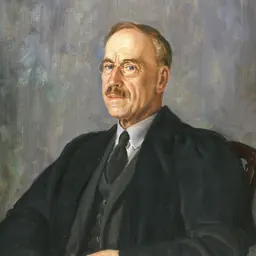
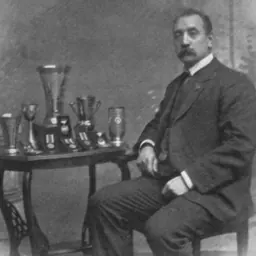
Related people
Same field, nearest in time
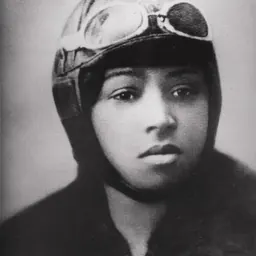
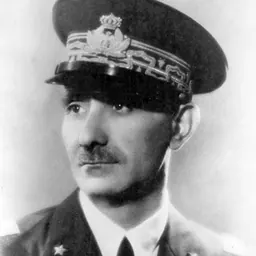


Contemporaries
People whose lives overlapped Francis John Linnell's

Frequently asked questions
Who was Francis John Linnell?
Royal Air Force air marshals
When was Francis John Linnell born?
Francis John Linnell was born on 16 March 1892 in Margate.
When did Francis John Linnell die?
Francis John Linnell died on 3 November 1944 in Tetsworth.
What was Francis John Linnell's occupation?
Francis John Linnell was an aircraft pilot and military officer.
What nationality was Francis John Linnell?
Francis John Linnell was British.
Sources & further reading
· Wikipedia: Francis John Linnell
· DBpedia: Francis John Linnell
Cite this page
APA: Biography.guide. (2026). Francis John Linnell. https://biography.guide/francis-john-linnell/
MLA: "Francis John Linnell." Biography.guide, https://biography.guide/francis-john-linnell/.
Chicago: "Francis John Linnell." Biography.guide. https://biography.guide/francis-john-linnell/.
Data last updated: 2026-09-20 · Spot an error? Report a correction.
Page generated 2026-09-27 05:20 UTC